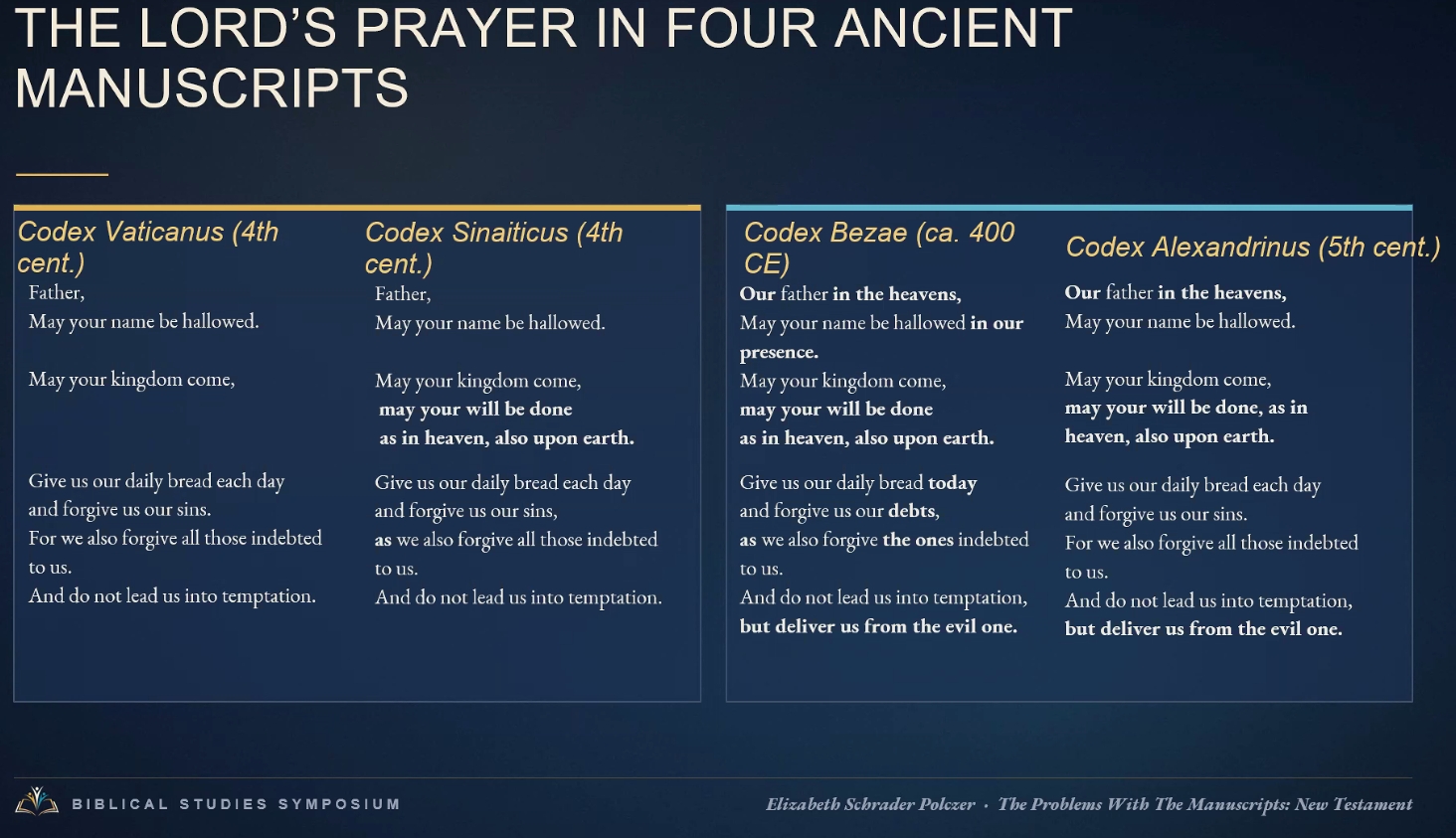
This post contains a slide from a lecture by Elizabeth Schrader Poltzer at the 2026 Bible Studies Symposium at BSA. Below that is ChatGPT’s OCR version of the four text versions in her slide plus that Decalogue from the Shapiro Scrolls based on Ross Nichols interpretation here.
ChatGPT’s OCR Response:
All four versions are of Luke 11:2–4, the shorter form of the Lord’s Prayer. The image shows differences among manuscript witnesses to that passage.
- Codex Vaticanus, 4th Century: “Father, may your name be hallowed. May your kingdom come. Give us our daily bread each day and forgive us our sins. For we also forgive all those indebted to us. And do not lead us into temptation.”
- Codex Sinaiticus, 4th Century: “Father, may your name be hallowed. May your kingdom come, may your will be done as in heaven, also upon earth. Give us our daily bread each day and forgive us our sins, as we also forgive all those indebted to us. And do not lead us into temptation.”
- Codex Bezae, ca 400 CE: “Our father in the heavens, may your name be hallowed in our presence. May your kingdom come, may your will be done as in heaven, also upon earth. Give us our daily bread today and forgive us our debts, as we also forgive the ones indebted to us. And do not lead us into temptation, but deliver us from the evil one.”
- Codex Alexandrinus, , 5th Century: “Our father in the heavens, may your name be hallowed. May your kingdom come, may your will be done, as in heaven, also upon earth. Give us our daily bread each day and forgive us our sins. For we also forgive all those indebted to us. And do not lead us into temptation, but deliver us from the evil one.”
From Ross Nichols’ post to Patreon 8/12/2025.
The Ten Words with their corresponding blessings and curses as they appear in the Shapira fragments.
The blessed man loves Elohim his Elohim, and worships and serves Him alone.
The blessed man sanctifies the seventh day and ceases thereon.
The blessed man honors his father and mother.
The blessed man does not take vengeance, nor hold a grudge against his brother’s soul.
The blessed man does not defile his neighbor’s woman.
The blessed man does not wrong his neighbor.
The blessed man does not swear in Elohim’s name to deceive.
The blessed man does not deal falsely, nor practice deceit with his neighbor.
The blessed man does not lift his eyes toward the property of his neighbor.
The blessed man loves his neighbor.
The blessed man establishes all the words of this teaching to do them.
