Click here for an extensive Timeline of Jewish History. Note the dates and events from ChatGPT below have not been reconciled with those in the link timeline. Differences will surely exist.
The text below is largely from ChatGPT using different Prompts some of which are cited below. Citation – ChatGPT on 10/27/2024. OpenAI. (2024). ChatGPT [Large language model]. https://chatgpt.com. Text was also extracted from Wikipedia and those are cited and linked.
Before the Responses, a short section titled Pre-Abraham was inserted 3/25/2026 when I found a fascinating article at BAR, published May/June 2000, relating the archaeological finds of a people named by the archaeologist the ‘Neolithic Yarmukians”.
The majority of the maps are from the Bible Maps Archive at https://www.studylight.org/. Click on the thumbnails below to see a larger view.
For info about the Empires before and during the time of Abraham go to the post on this site titled Hurrians and Mitanni Empires’ Influence
At the end of this page are three earthquakes in the Mediterranean Basin that occurred after Bar Kochba.
Pre-Abraham
The Yarwhosians? You may not have heard of them, but the civilized Neolithic Yarmukians created some of the world’s earliest clay sculptures. By Yosef Garfinkel, Michele Miller
Extract – Stages of the Neolithic Period
| Period | Time B.C.E. | Major Sites |
| Pre-Pottery Neolithic A | 9400–8800 | Jericho, Nahal Oren, Gilgal, Netiv Hagdud, Gesher, Hatola |
| Pre-Pottery Neolithic B | 8800–7000 | Jericho, ‘Ain Ghazal, Yiftahel, Kfar Hahoresh, Beisamoun |
| Pre-Pottery Neolithic C | 7000–6400 | Tel ‘Ali, Ashkelon, ‘Ain Ghazal, Hagoshrim |
| Pottery Neolithic | 6400–5800 | Sha ‘ar Hagolan, Munhata, Abu Tawwab, Jericho, Nizzanim |
Initial Prompt – Create a timeline from Abraham to the Bar Kochba rebellion based on the documentary hypothesis in relation to the exiles citing the monarchy and related prophets including Paul and Jesus and the historical periods including the bronze and iron ages.

Response – Here’s a timeline from Abraham to the Bar Kochba rebellion, integrating the Documentary Hypothesis (which proposes that the Hebrew Bible is composed of various sources compiled over time), major biblical figures, exiles, monarchies, prophets, and historical periods. This will touch on major developments in Israelite history, the Babylonian and Assyrian exiles, and the emergence of figures like Jesus and Paul.
1. Middle Bronze Age (c. 2000–1550 BCE; 450 years)
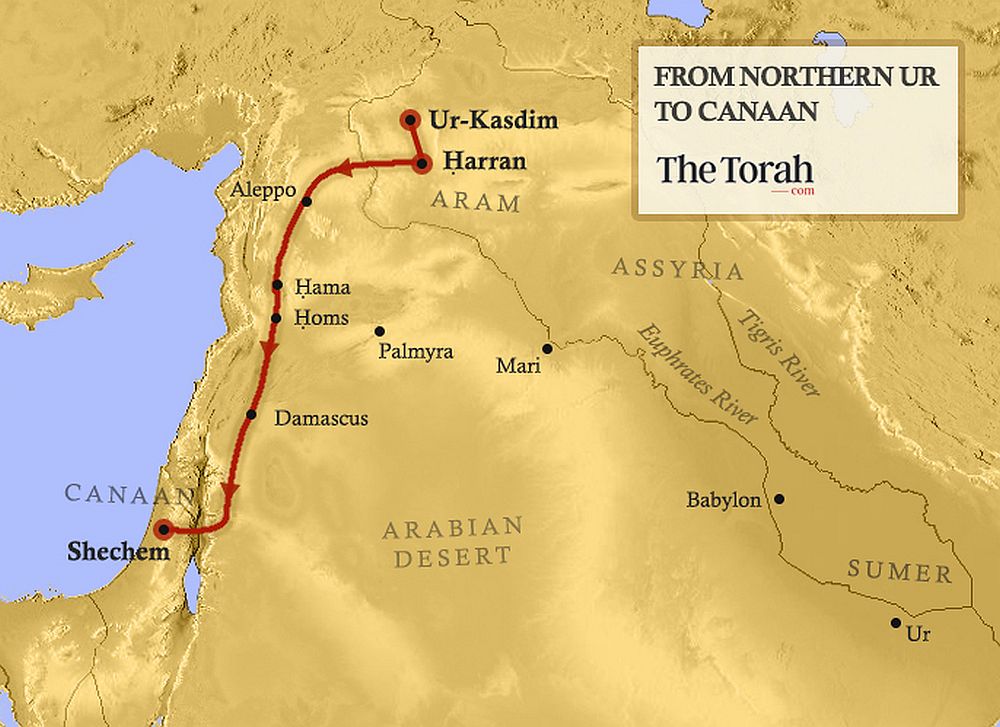
- Abraham and the Patriarchs (c. 2000–1800 BCE): Traditional dating places Abraham, Isaac, and Jacob in this era, seen as semi-nomadic figures around the ancient Near East. However, their historicity remains debated.
- See the article by Gary Rensberg at TheTorah.com titled Ur Kasdim: Where Is Abraham’s Birthplace? that makes a case for Abraham not being from Ur of the Chaldees in southeast Mesopotamia but rather the northwest. This alternate is based on the reference to their homeland being “Beyond the River”. Ur of the Chaldees is not beyond the river but on the same side. A more attractive suggestion is that Abraham’s hometown is the city of Ur in northern Mesopotamia = modern-day Urfa in southeastern Turkey, 44 km north of Ḥarran.
- See the post on this site titled Abraham – Which Ur?
- See Wikipedia here from which the following three bullets were extracted:
- Ur Kasdim is translated into English as Ur of the Chaldeans.
- Another possible location for Ur of the Chaldees (Ur Kasdim) is the ancient Assyrian and Seleucid city Edessa, now called Şanlıurfa. According to some Jewish traditions, this is the site where Abraham was cast into a furnace by Nimrod as punishment for his monotheistic beliefs, but miraculously escaped unscathed. [21]
- Gary A. Rendsburg points out that this location makes better sense of the Biblical references, especially that if Teraḥ and family left Ur-Kasdim to travel to Canaan, but stopped en route in Ḥarran, then the location of Ur-Kasdim should be to the north of Ḥarran.[24] In addition, Abraham’s grandfather Nahor and great-grandfather Serug share names with cities located near Ḥarran in northern Mesopotamia (“Til-Nahiri” and Suruç), suggesting that Abraham’s clan was well established in this area in the period before the migration from Ur-Kasdim.[25]
- Documentary Hypothesis: Scholars suggest early oral traditions (often grouped as the “J” source) emerged in this period or the subsequent Late Bronze Age, reflecting Yahwist storytelling and the early formation of Israelite identity.
- See the article Where Do Isaac and Rebecca Live When Jacob Leaves Home? by Dr. David Ben-Gad HaCohen for an in-depth discussion of those events and the confusion with the doublets as created by the interweaving of J & E.
- Scholars have long posited that the two stories (The story of the stolen blessing is from J, and that of going to find a wife is from P) derive from two different Pentateuchal sources.
- See the article Where Do Isaac and Rebecca Live When Jacob Leaves Home? by Dr. David Ben-Gad HaCohen for an in-depth discussion of those events and the confusion with the doublets as created by the interweaving of J & E.
- >>>For more details about events in this age up to 1250 BCE, see these posts:


- During Egypt’s Second Intermediate Period (c. 1802–1550 BCE), rulers of Canaanite origin, known as the Hyksos, governed parts of Egypt, particularly in the north. The Hyksos established Egypt’s Fifteenth Dynasty, reigning approximately from 1650 to 1550 BCE. Their rule is characterized by the following timeline:
- c. 1650 BCE: The Hyksos, a group of West Asian origin, began their rule over northern Egypt, marking the start of the Fifteenth Dynasty.
- c. 1630–1530 BCE: The Hyksos maintained control over northern Egypt during this period, with their capital at Avaris in the Nile Delta.
- c. 1550 BCE: The end of Hyksos rule came when native Egyptian forces from Thebes, under Pharaoh Ahmose I, expelled them, initiating the New Kingdom era.
- The Hyksos introduced several technological and cultural innovations to Egypt, including advancements in bronze working, pottery, and new weaponry such as the composite bow and horse-drawn chariot. Their presence significantly influenced Egyptian society, leading to the eventual unification of the country under native rule and the establishment of the New Kingdom.
- It’s important to note that while the Hyksos were of Canaanite origin, their rule was primarily confined to northern Egypt, and they did not control the entire country. Their expulsion by Ahmose I marked a significant turning point in Egyptian history, leading to the reunification of Egypt and the beginning of the New Kingdom period.
- While the timing of Hyksos rule and the biblical accounts of the patriarchs overlap chronologically, there is no definitive evidence—textual or archaeological—of direct interaction between Abraham’s descendants and the Hyksos. Hypotheses about such connections remain speculative and are based on broader cultural and geographical parallels rather than specific historical data.
- c. 1500 BCE or 1620 BCE – Volcanic Eruption at Thera (modern Santorini) – Click to jump to page at the site with info about the two dates plus a lot more, including a comparison to the Vesuvius eruption in 79 CE.
2. Late Bronze Age (c. 1550–1200 BCE; 350 years)
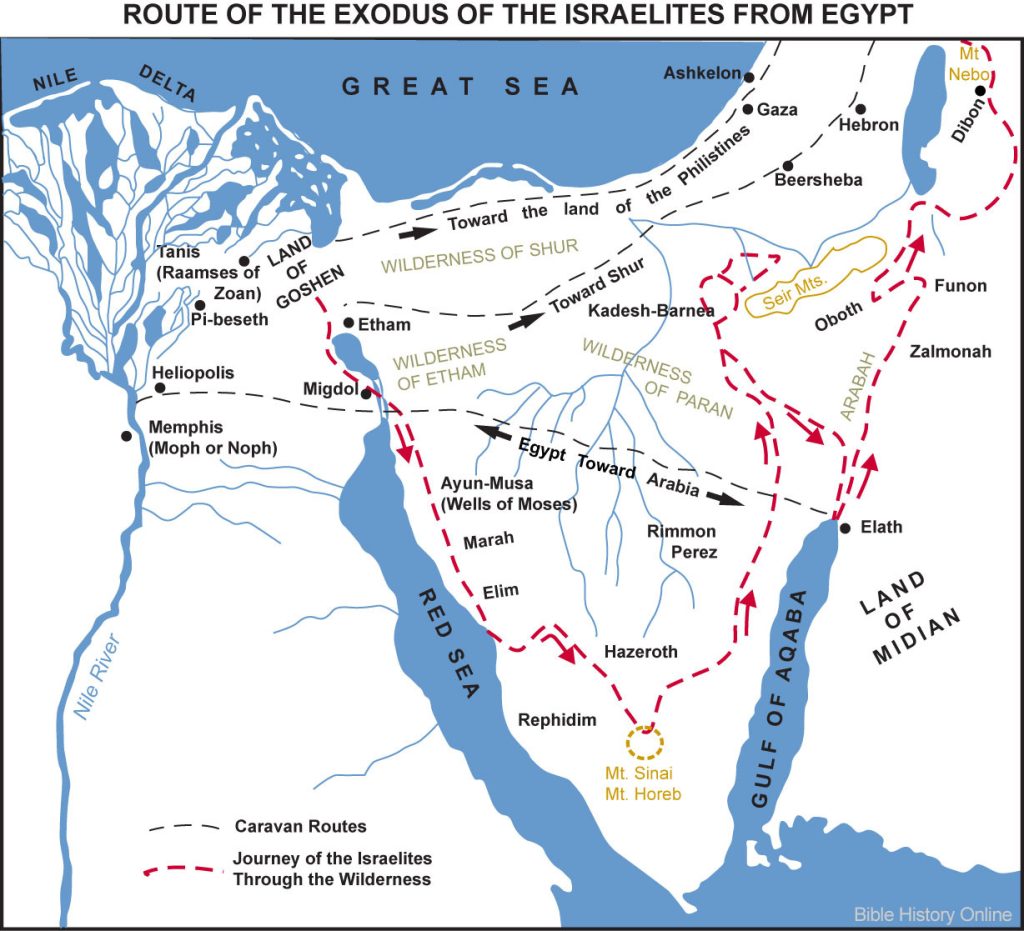
- Exodus and Conquest (c. 1300–1200 BCE): Some traditions place Moses and the Exodus in this period, though historical evidence is sparse. This period might be when the Israelites settled in Canaan.
- Early Composition of Biblical Texts: The “J” and “E” sources (Yahwist and Elohist) may have started taking form orally, reflecting early Israelite theology and folklore.
- Egyptian Control
- 1550–1400 BCE: Early New Kingdom Expansion
- Leaders: Pharaohs Ahmose I, Amenhotep I, Thutmose I–III
- Canaan: A collection of city-states (e.g., Megiddo, Hazor, Gezer) governed by local rulers under Egyptian control.
- Key Events:
- Thutmose III’s military campaigns (circa 1479–1425 BCE) against Canaanite city-states culminated in the Battle of Megiddo (circa 1457 BCE). Canaan became an Egyptian vassal region, integrated into Egypt’s administrative and trade networks.
- Egyptian Influence: Egyptian governors (e.g., “overseers of Retenu”) supervised tribute collection and local administration in Canaan.
- For additional info see BAR article When Egyptian Pharaohs Ruled Bronze Age Jerusalem and When Pharaohs Ruled Jerusalem both by Peter van der Veen
- 1400–1300 BCE: Amarna Period
- Leaders: Pharaohs Amenhotep III, Akhenaten
- Canaan: Vassal city-states ruled by local kings who sent correspondence to Egypt (e.g., the Amarna Letters).
- Key Events:
- Diplomatic exchanges recorded in the Amarna Letters (14th century BCE) reveal unrest in Canaan due to conflicts with nomadic groups (e.g., the Habiru) and rivalries among city-states.
- Egyptian Influence: Egypt maintained control through diplomacy and selective military interventions.
- Leaders: Pharaohs Amenhotep III, Akhenaten
- 1300–1200 BCE: Ramesside Period
- Leaders: Pharaohs Seti I, Ramesses II, Merneptah
- Canaan: Continued vassalage but faced growing pressure from external groups, including the Sea Peoples.
- Key Events:
- Seti I (circa 1290 BCE) and Ramesses II (1279–1213 BCE) launched campaigns to suppress rebellions and maintain Egyptian authority.
- The Battle of Kadesh (circa 1274 BCE) between Egypt and the Hittites indirectly impacted Canaan as a contested frontier.
- The Merneptah Stele (circa 1208 BCE) is the earliest known mention of “Israel” as a distinct entity, possibly a semi-nomadic group in Canaan.
- Egyptian Influence: Waning control due to external pressures and internal Egyptian decline.
- Leaders: Pharaohs Seti I, Ramesses II, Merneptah
- Leaders: Pharaohs Ahmose I, Amenhotep I, Thutmose I–III
- 1550–1400 BCE: Early New Kingdom Expansion
Late Bronze Age Collapse Also here.

During the Late Bronze Age Collapse (circa 1200–1150 BCE), the lands of Judea and Israel, situated on the Levantine coast, were also significantly affected by this period of turmoil. The area, then largely dominated by Canaanite city-states, saw many of its urban centers experience destruction and depopulation. These disruptions weakened Canaanite society, leading to diminished trade networks and the loss of Egyptian influence in the region, as Egypt’s power receded amid its own challenges during this period.

The collapse opened the way for new cultural and social groups to emerge, including the early Israelites and Philistines. The Philistines, believed to be part of the “Sea Peoples” migrations, settled in coastal areas, introducing new pottery styles, tools, and distinct cultural practices. This period also laid the groundwork for the eventual establishment of the Kingdom of Israel in the Iron Age, as smaller, more independent communities emerged from the remnants of Canaanite civilization. [These two paragraphs are from ChatGPT. The title’s link is to Wikipedia.]
For a good description of how the Collapse did not impact the first Israelites, go to History and Literatures Episode 15‘s subheading The Bronze Age Collapse Comes to Canaan.
Egyptian Control – The following three paragraphs are extracted from BAR here on page 10.
For 67 years, Ramesses II, who was also known as Ramesses the Great and whom some believe to be Pharaoh of the Exodus, reigned over Egypt. Since the discovery of the Amarna letters, archaeologists have also unearthed mounds of artifacts in Egypt and Canaan, dating to the late second millennium B.C.E., which make it clear that life in Ramesside Canaan was markedly different from that in the preceding Amarna age. In short, during the Ramesside period, the material culture of the Canaanite lowlands began to show conspicuous Egyptian influence. True, during the Amarna age, Egyptian artifacts were present in
the archaeological record of Canaan. But by the 13th century B.C.E. (Late Bronze Age IIB, which corresponds roughly to the 19th Dynasty of Egypt), the amount of Egyptian-style objects had increased significantly at Canaanite sites. Egyptian-style artifacts are similarly prevalent at Iron Age IA (between about 1200 and 1150 B.C.E.) sites; thereafter, these kinds of objects decline in frequency.
Based on this evidence, some scholars have concluded that beginning in the Ramesside period, Canaanite city-rulers no longer served as vassals to the Egyptian pharaohs. Instead, they argue, Ramesside pharaohs initiated a policy of military occupation and direct imperial administration of Canaan. This model, which we may call the “direct rule” model, was given a significant boost from an influential 1981 article by James Weinstein, who catalogued the architectural and inscriptional evidence of an Egyptian presence in Canaan. He concluded that the monuments and numerous small finds of Egyptian type indicate a shift in pharaonic policy toward the region. The gist of Weinstein’s argument is that the rise in the frequency of finds with Egyptian characteristics corresponds to the posting of large numbers of Egyptian soldiers and bureaucrats at imperial centers in Canaan.
The two principal imperial centers were Beth-Shean (south of the Sea of Galilee) in the north and Deir el-Balah (near Gaza) in the south. In addition, Egyptian installations with more strictly administrative functions were probably located at Gaza and Jaffa.
3. Iron Age I (c. 1200–1000 BCE; 200 years)

- Period of the Judges: The Judges led the tribes of ancient Israel during a period generally dated to 1200–1020 BCE, though exact dates can vary depending on historical and archaeological interpretations. This era followed the death of Joshua and preceded the establishment of the monarchy under King Saul. It was characterized by a decentralized system where individual tribes were governed by leaders—referred to as “judges”—who were raised up by God to deliver Israel from its enemies and guide the people.
- Some well-known judges include:
- Deborah: A prophetess and military leader (Judges 4–5).
- Gideon: A deliverer who defeated the Midianites (Judges 6–8).
- Samson: Known for his extraordinary strength and struggles with the Philistines (Judges 13–16).
- Scholars suggest that Samson’s activities were set during the late Bronze Age to early Iron Age (around 1100-1050 BCE), a period characterized by the decline of the central authority of the Israelite tribes and the rise of Philistine power along the coast. The Philistines were one of the “Sea Peoples” who settled along the coastal regions of Canaan.
- Samson’s birth is foretold by an angel to his mother, who had been barren, and he is set apart as a Nazirite, which includes specific vows such as not cutting his hair, not drinking wine, and not touching a dead body (Judges 13:3-5). This vow is essential for his strength, which is linked to his uncut hair.
- Samuel: Often considered the last judge before the transition to monarchy. Read more.
- Some well-known judges include:
- 1150–1000 BCE: Decline of Egyptian Control
- Leaders: Later New Kingdom and Third Intermediate Period pharaohs
- Canaan: Increasing independence of city-states, growth of Philistine cities, and the formation of early Israelite tribal groups.
- Key Events:
- By 1100 BCE, Egyptian presence in Canaan was minimal. New polities, including the Israelite confederation, began to form.
- Egyptian Influence: Virtually nonexistent, with power shifting to local groups and neighboring empires (e.g., Arameans, early Israelite tribes).
- Leaders: Later New Kingdom and Third Intermediate Period pharaohs
- Documentary Hypothesis: The “E” source is often attributed to northern Israel during this time. Oral traditions may reflect local Canaanite influence. According to Richard Elliott Friedman, the priesthood of Shiloh was the Elohist-source of the documentary hypothesis and also provided much of the material of the Deuteronomistic history, with the writer of this history (Jeremiah or somebody closely connected to him) being a descendant of these priests. If correct, this would make Shiloh a major source of the history part of the Hebrew Bible/Old Testament.
- >>>For Chats about the interface of YHWH and the Canaanite God El see the post on this site YHWH and the Canaanite god El.
- The Shiloh priests were part of the religious leadership in ancient Israel, especially prominent before the rise of the Jerusalem Temple and centralized worship under the monarchy. They were associated with the sanctuary at Shiloh, a religious center located in the central highlands of ancient Israel (modern-day West Bank). Shiloh was an important religious and cultural center where the Ark of the Covenant was housed, making it a focal point of Israelite worship from the period of the Judges until its eventual decline, likely around the 11th century BCE, around the time of Samuel and Saul.
- Eli’s Leadership as Priest and Judge (c. 1100–1060 BCE) Eli served as the high priest at Shiloh, where the Ark was housed. Shiloh was the central place of worship during this period (1 Samuel 1:3). His sons, Hophni and Phinehas were engaged in corrupt practices, leading to prophetic warnings of judgment against Eli’s house (1 Samuel 2:12–36). Samuel (c. 1075 BCE) serving under Eli at Shiloh, received a message from God that judgment was coming upon Eli’s family (1 Samuel 3:11–14). Sources: 1 Samuel 1–3.
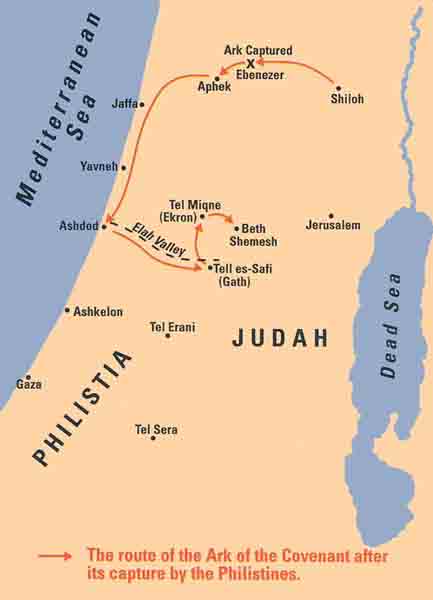
- The Battle of Aphek and the Capture of the Ark, c. 1046-47
- The battle between Israel and the Philistines:
- First defeat: The Philistines defeated Israel near Aphek, killing about 4,000 men (1 Samuel 4:2).
- The Ark taken to battle: The elders of Israel brought the Ark from Shiloh, accompanied by Hophni and Phinehas, in an attempt to secure victory (1 Samuel 4:3–4).
- The defeat at Aphek and the Ark’s capture:
- The Philistines defeated Israel again, killing 30,000 men and capturing the Ark. Hophni and Phinehas were killed (1 Samuel 4:10–11).
- Eli’s death:
- Upon hearing the news, 98-year-old Eli fell from his seat and died (1 Samuel 4:15–18).
- The Ark is returned to Israel after seven months by the Philistines with a guilt offering of golden tumors and mice (1 Samuel 6:1–12).
- See more about the Ark in this the post on this site.
- The battle between Israel and the Philistines:
- Pre-Monarchic Period: During the era of the Judges, the Shiloh priesthood held substantial religious authority. Eli, the high priest at Shiloh, is one of the notable figures from this period. He mentored the prophet Samuel, who was dedicated to service at Shiloh by his mother, Hannah. Samuel later became a prophet and judge of Israel, bridging the period between the Judges and the early monarchy.
- >>>>Click here for a post on this site with a comparison of the four Priestly “dynasties”: Aronide, Zadokite, Shilonite, and Shechem.
4. Iron Age II (c. 1000–586 BCE; 414 years)
- Context:
Iron Age II was characterized by the consolidation of monarchies in Israel and Judah, increasing regional power struggles, and intermittent involvement of external powers, including Egypt, Assyria, and Babylon. Egypt, under the Libyan and Kushite dynasties, sought to reassert influence but was largely limited by Assyria’s dominance. - United Monarchy – c. 1047–931 BCE. The approximate length was roughly 120 years.
- c. 1047 BCE: The Ark is returned to Israel after seven months by the Philistines with a guilt offering of golden tumors and mice (1 Samuel 6:1–12).
- Documentary Hypothesis: During and after Solomon’s reign, early written traditions (J and E) likely began being recorded, forming the first iterations of Israelite history.
- The United Monarchy, the period during which the tribes of Israel were united under a single king, is traditionally associated with the reigns of King Saul, King David, and King Solomon. The exact dates are approximate, as they are derived from Biblical texts, archaeological findings, and historical reconstructions. Here’s a summary of the estimated dates for each king’s reign and the length of the United Monarchy:

- 1. King Saul (circa 1047–1010 BCE)
- Dates: Saul’s reign is often dated to approximately 1047–1010 BCE.
- Length: Saul reigned for about 37 years.
- Details: Saul, from the tribe of Benjamin, was anointed as Israel’s first king by Samuel. His reign ended in conflict and his death at the Battle of Mount Gilboa against the Philistines.
- 2. King David (circa 1010–970 BCE)
- Dates: David’s reign is generally dated to approximately 1010–970 BCE.
- Length: David ruled for about 40 years.
- Details: David established Jerusalem as the capital of Israel and expanded the kingdom. His reign was marked by both military success and internal family conflict.
- An internal family conflict was the actions of his son Adonijah who tried to usurp the throne from Solomon.
- 3. King Solomon (circa 970–931 BCE)
- Dates: Solomon’s reign is dated to approximately 970–931 BCE.
- Length: Solomon ruled for about 39–40 years.
- Details: Solomon, known for his wisdom and the construction of the First Temple in Jerusalem, presided over a period of prosperity and relative peace.
- Solomon’s unfair policies with the northern tribes caused the coming division.
- >>>See the post on this site titled Solomon’s Policy Toward Northern Israel & the Split
- End of the Monarchy: After Solomon’s death around 931 BCE, the kingdom split into the northern Kingdom of Israel and the southern Kingdom of Judah.
- Sources and Methodology about the Three Kings. These dates are generally derived from biblical sources (1 and 2 Samuel, 1 Kings, and 1 Chronicles) and from archaeological data. Scholars often use synchronized data from Egyptian and Mesopotamian chronologies, which provide external dating anchors, though the exact years are still subject to debate. Key archaeological findings, such as the Tel Dan Stele and the Mesha Stele, offer additional but indirect support for the existence of David’s dynasty. For further information:
- Dever, William G. What Did the Biblical Writers Know and When Did They Know It? (2001)
- Finkelstein, Israel, and Silberman, Neil Asher. The Bible Unearthed (2001)
- Miller, J. Maxwell, and Hayes, John H. A History of Ancient Israel and Judah (2006)
- These sources discuss the historical and archaeological context that supports the general timeframes for the United Monarchy.
- >>>Go to The Kings post on this site for personality traits of the three kings of the United Monarchy and the first two in the Divided Monarchy.
- Priests – >>>Click here for a post on this site with a comparison of the four Priest sects: Aronide, Zadokite, Shilonite, and Shechem
- Zadok: Appointed by King Solomon, Zadok served as the High Priest in Jerusalem at the newly constructed First Temple. Zadok’s lineage, known as the Zadokite priesthood, remained a dominant priestly family throughout the monarchy.
- Abiathar: Initially served under King David, but was later exiled by Solomon due to his support of Adonijah. Abiathar and Zadok’s brief rivalry reflected the political importance of the High Priesthood.
- Background from Wikipedia
- 1 Samuel and 2 Samuel mention Abiathar several times. According to these books, Abiathar was the only one of the priests to escape from Saul‘s (reigned c. 1020–1000 BCE) massacre in Nob, when his father and the priests of Nob were slain on the command of Saul. He fled to David (reigned c. 1003–970 BCE) at Keilah, taking with him the ephod [a type of apron that, according to the Hebrew Bible, was worn by the High Priest of Israel,] and other priestly regalia.[4] Rabbinical literature that linked the later extermination of the male descendants of David with the priests of Nob, also link the survival of David’s descendant Joash with that of Abiathar.[5][6]
- The Biblical account says Abiathar joined David, who was then in the cave of Adullam. He remained with David, and became priest of the party of which he was the leader. He was of great service to David, especially at the time of the rebellion of Absalom. When David ascended the throne of Judah, Abiathar was appointed High Priest and the “king’s counselor”. Meanwhile, Zadok, of the house of Eleazar, had been made High Priest. Another version says he was Co-Pontiff with Zadok during King David. These appointments continued in force until the end of David’s reign. In 1 Kings 4:4, Zadok and Abiathar are found acting together as priests under Solomon.
- >>>Click here for a post on this site with a comparison of the three Priesthoods.
- Location: The First Temple in Jerusalem became the central worship site and the location of the High Priesthood.
- A Second Temple in First Temple Jerusalem?
- Archaeologists identify previously unknown cultic site: BAS article by Nathan Steinmeyer January 20, 2025. Solomon’s Jerusalem Temple is easily one of the most central and important buildings in the Hebrew Bible. However, an archaeological discovery suggests that for much of the First Temple period (c. 1000–586 BCE), Solomon’s Temple was not the only place of worship in Jerusalem. On the eastern slopes of the City of David, just a few hundred yards away from the Temple Mount, archaeologists with the Israel Antiquities Authority claim to have uncovered a second temple.
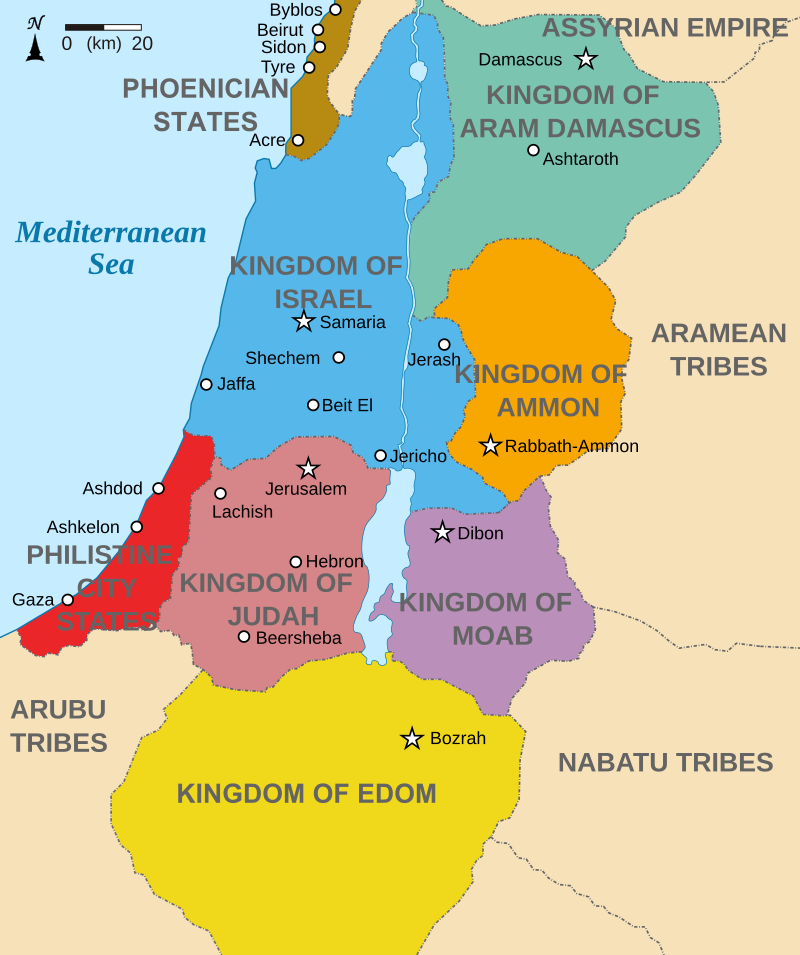
- Divided Monarchy (c. 930–722 BCE, 208 years):
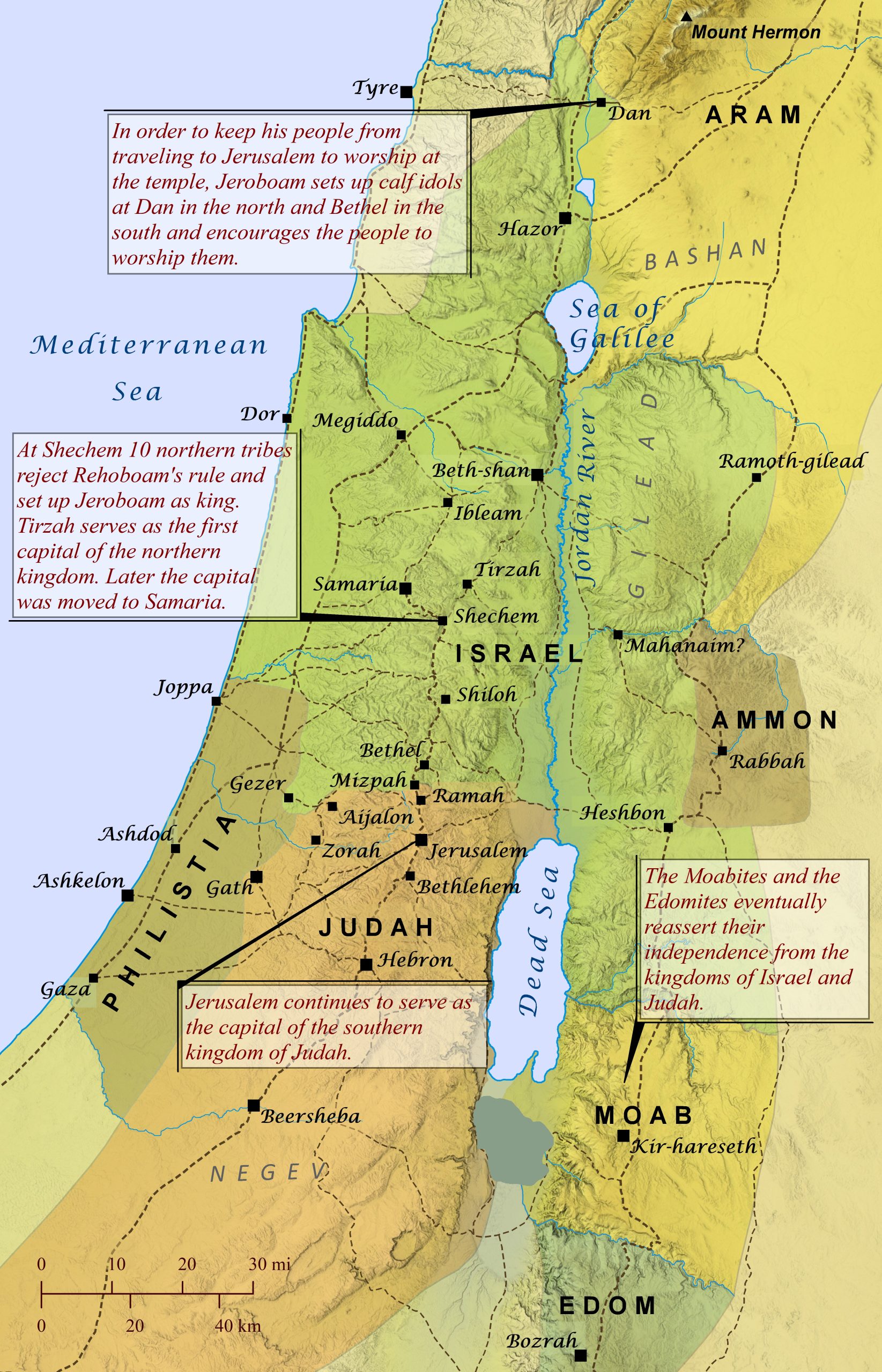
- Kingdoms of Israel (North) and Judah (South): Israel and Judah split, with separate kings and prophetic traditions. The north (Israel) often conflicts with surrounding nations, while the south (Judah) houses the Temple.
- Jeroboam I (c. 930–909 BCE) – Founder of the Northern Kingdom.
- Rehoboam (c. 930–913 BCE) – Son of Solomon; first king of Judah.
- >>>For a list of the many kings that followed them in both kingdoms go to this page.
- >>>For personality traits of the three kings of the United Monarchy and the first two in the Divided Monarchy go The Kings post at this site.
- Solomon’s unfair policies caused the split.
- >>>See the post on this site titled Solomon’s Policy Toward Northern Israel & the Split
- Prophets: Figures like Elijah, Elisha, Amos, and Hosea speak out, especially in the north, condemning idolatry and injustice.
- Documentary Hypothesis:
- J & E Source – The most important point is that both J and E were written before the Assyrians destroyed Israel in 721-722 BCE.
- D Source – Deuteronomy was likely composed in Judah in the late 7th century BCE, during the reign of King Josiah of Judah (640–609 BCE). Portions of the text may have been revised or expanded during the Babylonian Exile (597-539 BCE) to address the exilic community’s struggles with maintaining identity and covenant loyalty. The internal structure of Deuteronomy (e.g., its legal codes and sermonic style) suggests contributions from Levite priests or court scribes advocating for reform. Deuteronomy seeks to establish Jerusalem as the exclusive site of worship, forbidding local shrines and altars.
- >>>Click Outline of the Writing of the Book of Deuteronomy on this site for more details.
- Kingdoms of Israel (North) and Judah (South): Israel and Judah split, with separate kings and prophetic traditions. The north (Israel) often conflicts with surrounding nations, while the south (Judah) houses the Temple.

- Northern Kingdom (Israel)
- From at least the ninth century BCE, the Northern Kingdom of Israel had been more powerful and dominant than the small and relatively isolated Southern Kingdom of Judah. It was larger, more prosperous, and more international in character. Yet its situation made it more vulnerable, not only to the Aramean city-states farther north, but especially to the expanding Assyrian Empire to the east. Israel stood directly in the path of the Assyrian advance to the Mediterranean. From BAR.
- By the early eighth century, the Northern Kingdom had seen its population swell to some 300,000. It had developed large and heavily defended administrative centers, such as Abel Beth Maacah, Hazor, and Kedesh. It possessed an impressive capital at Samaria, a flourishing economy dominated by a class of wealthy elites, and a sophisticated culture with strong ties to Phoenicia. Israel would seem to have been at its peak and scarcely threatened by any enemies, even neighboring Judah. From BAR.
- Worship was centered in alternative sites like Bethel and Dan to avoid sending people to Jerusalem. While they did not have a “High Priest” in the traditional sense, priests were appointed at these sites, including figures from non-Zadokite families. The role often became politically influenced and linked to idolatrous practices.
- The final days of the northern kingdom of Israel were marked by a failed gamble and a desperate gambit. The failed gamble came as an attempt by Aram and Israel to compel neighboring states (including Judah) to form an alliance against the expanding Assyrian Empire around 735 B.C. When Judah refused, Aram and Israel attacked Judah and tried to set up a man named Tabeel as king in Jerusalem, and it is likely that Edom and Philistia raided Judah as well. In desperation, King Ahaz of Judah made a costly gambit: He petitioned the Assyrian king Tiglath-pileser III (also called Pul) for help, but this help would come at the expense of a sizeable tribute and Judah’s independence. Assyria attacked Aram and Israel (annexing all of Aram and much of Israel), but thereafter Judah became a vassal, or subject kingdom, to Assyria and was required to pay them regular tribute. This time of intense fear, anxiety, and complex political maneuvering by Assyria, Aram, Israel, and Judah forms the backdrop for Isaiah’s famous prophecies in Isaiah 7-8. The northern kingdom of Israel never regained its strength after this and was completely absorbed into the Assyrian Empire by 722 B.C. From BibleMapper.com.
- Southern Kingdom (Judah): In Jerusalem, the Zadokite lineage continued at the First Temple, with descendants of Zadok serving as High Priests. Some notable High Priests included:
- Jehoiada: Known for his influence in restoring King Joash to the throne and overseeing the Temple.
- Azariah and Uriah: Key figures leading up to the fall of Jerusalem.
- Location: High Priests in the Southern Kingdom operated from the First Temple in Jerusalem until its destruction by the Babylonians in 587 BCE.
- Massive Earthquake – dating to approximately 750 BCE – First two bullets from ChatGPT.
- Numerous archaeological excavations across Israel and Jordan have uncovered evidence of a significant seismic event in the mid-eighth century BCE. Sites such as Hazor, Gezer, Tel Agol, Tell es-Safi/Gath, and Deir ‘Alla exhibit architectural damage consistent with earthquake activity from that period. Notably, in Jerusalem, excavations have revealed a layer of destruction dated to the same era, marking the first evidence of the earthquake’s impact on the Judean hill country. [see third bullet] ICR+4Wikipedia+4Biblical Archaeology Society+4 Biblical Archaeology Society
- Geological studies further support these findings. Sediment layers from the Dead Sea contain seismites—disturbed layers indicative of seismic activity—dating to approximately 750 BCE. These layers suggest an earthquake of magnitude 7.8 to 8.2, making it one of the most powerful events on the Dead Sea transform fault in the last four millennia. ICR+2Wikipedia+2Wikipedia+2 ResearchGate+1Wikipedia+1
- In addition, see A Decade of Discoveries in Biblical Jerusalem, BAR, Spring 2025. Extract follows:
- In Jerusalem, … in 2018, a building was exposed on the eastern slope of the city that suffered a severe destruction sometime in the eighth century. Smashed pottery vessels lined one of the walls. The remains of a piglet, who appeared to have been scrambling to escape, were found between the vessels. Indeed, in examining earlier archaeological reports, it became clear that other areas of Jerusalem were destroyed around the same time. Both pottery and radiocarbon analysis date the building to the mid-eighth century, leading us to believe the building and large swaths of Jerusalem were destroyed during the “Amos earthquake,” which occurred during the days of King Uzziah (Amos 1:1).
- See another BAR Post here – The evidence shows that the quake wrought devastation from Hazor in the north to Tell es-Safi in the south, a swath of destruction more than 125 miles long—certainly a powerful and remarkable event that was remembered by the biblical prophets.

- Assyrian Conquest and Exile (722 BCE then lasted for 125 years):
- See How the Ten Tribes of Israel Were Lost by William G. Dever at BAR, Winter 2024
- Extract – “Before examining the archaeological record, however, we need to reconstruct the general situation both in Assyria and in Israel and Judah in the mid-eighth century. This will allow us to understand the social, economic, and political context of those biblical events.” This is an excellent article.
- Fall of Israel: Assyria conquers the northern kingdom, exiling many Israelites. This exile begins the dispersion of the northern tribes. Following the destruction of all the key sites in the north and the deportation of thousands, the Assyrians resettled the area with displaced peoples whom they had conquered and deported from other regions of the Near East, including Syria and the Transjordan. The practice shredded the social and cultural fabric of the region so that it could never recover, while providing some revenue from a foreign population now rendered homeless. Among the settlers in the north were people later called Samaritans (preserving the name “Samaria”), whose descendants survive until this day in Israel and the West Bank. From BAR.
- Not long after the Assyrians put an end to the northern kingdom of Israel in 721 B.C.E. and deported its citizens to Assyria (2 Kings 17:5–6), Sargon II,b the Assyrian ruler, proceeded south along the Mediterranean coast all the way to the Egyptian border at Gaza, where he defeated the Egyptian army.
- Later (in 713 B.C.E.), when the ancient Philistine city of Ashdod made a rebellious alliance with neighboring rulers, Sargon attacked it (Isaiah 20:1). According to Assyrian records, Sargon replaced the ruler of Ashdod (Aziru) with his brother (Ahimetu). However, as soon as the Assyrians withdrew, the people of Ashdod rebelled again—this time against Ahimetu—and installed a new ruler, Yamani. In response, Sargon laid siege to Ashdod yet again and finally exiled its citizens as he had done with the Israelites.2 Ashdod became an Assyrian city-state. From BAR here.
- See How the Ten Tribes of Israel Were Lost by William G. Dever at BAR, Winter 2024
- 701 BCE: Assyrian King Sennacherib launched a military campaign against the Kingdom of Judah. He besieged several cities, including Jerusalem. Egypt, under Kushite Pharaoh Taharqa, attempted to support Judah but was defeated by the Assyrians at the Battle of Eltekeh. Despite these victories, Sennacherib did not capture Jerusalem. [From a different ChatGPT response here.]
- The Ten Lost Tribes were those from the Twelve Tribes of Israel that were said to have been exiled from the Kingdom of Israel after it was conquered by the Neo-Assyrian Empire around 720 BCE.[1][2] They were the following: Reuben, Simeon, Dan, Naphtali, Gad, Asher, Issachar, Zebulun, Manasseh, and Ephraim — all but Judah and Benjamin, both of which were based in the neighboring Kingdom of Judah and therefore survived until the Babylonian siege of Jerusalem in 587 BCE. Alongside Judah and Benjamin was part of the Tribe of Levi, which was not allowed land tenure, but received dedicated cities. (this bullet is from Wikipedia)
- Prophets: Isaiah and Micah are active in Judah, prophesying against both external enemies and internal corruption during King Hezekiah’s reform.
- Documentary Hypothesis: All italicized text is from Friedman.
- The most important point is that both J and E were written before the Assyrians destroyed Israel. At that time, the Assyrians carried out a deportation of the Israelite population. Also, there would of course have been many Israelites who fled south to Judah as refugees. The City of David archeological excavations in Jerusalem confirm that the population of Jerusalem grew substantially in this period. The likely historical scenario is that the E text came to Judah in this flow of people and events. Levites fleeing the Assyrians would hardly leave their valuable documents behind. The assimilation of recently arrived Israelites into the Judean population after 722 B.C. need not have presented insurmountable difficulties in itself. The Israelites and the Judeans were kin. They spoke the same language: Hebrew. They worshiped the same God: Yahweh. They shared ancestral traditions of the patriarchs and historical traditions of exodus and wilderness. But what were they to do with two documents, each purporting to recount sacred national traditions, but emphasizing different persons and events—and occasionally contradicting each other? The solution, apparently, was to combine them. (Friedman’s Pg. 87). In short, the editing of the two works into one was as much tied to the political and social realities of its day as the writing of the two had been in their days. The uniting of the two works reflected the uniting (better: the reuniting) of the two communities after two hundred years of division. (Freidman Pg 88)
- P was produced after 722 and before 609 B.C. How much more specific can we get? Can we say in which king’s reign it was? I think we can. The evidence points to Josiah’s great-grandfather, King Hezekiah. P emphasizes the centralization of religion: one center, one altar, one Tabernacle, one place of sacrifice. Who was the king who began centralization? King Hezekiah. Both the books of Kings and Chronicles attest that there was no effective centralization before him. P is a work of the Aaronid priesthood.
- See Hezekiah’s religious reform at BAR’s great article What was King Hezekiah’s reform like on the ground? by David Rafael Moulis; December 12, 2024.
- One of the most significant changes in the religious life of ancient Israel occurred during the reign of the Judahite king Hezekiah, in the late eighth century B.C.E. The Hebrew Bible provides us with this image: “He removed the high places, broke down the pillars, and cut down the sacred pole (asherah). He broke in pieces the bronze serpent that Moses had made, for until those days the people of Israel had made offerings to it” (2 Kings 18:4). In doing so, explains the Bible, the faithful king Hezekiah simply “did what was right in the sight of the Lord.” But was Hezekiah really motivated only by “the commandments that the Lord commanded Moses”? What was his reform like on the ground?
- Hezekiah’s cult centralization had many aspects. Primarily, it had political and economic aims. At the end of the eighth century, it was simply necessary for Hezekiah to centralize the government, military, and religion in the capital city of Jerusalem. Hezekiah prepared the kingdom of Judah for the Assyrian attack and made sure that taxes and revenues from cultic activities were collected centrally (from pilgrims coming to Jerusalem from across the kingdom).
- Hezekiah also initiated new building projects aimed at protecting Jerusalem:
- He fortified Jerusalem’s western hill and secured the Siloam Pool, and
- he built a new tunnel from the Gihon Spring and new storehouses at Lachish and other sites.
- These projects required money, which the centralization was able to provide.
- Without a doubt, Assyria—as an enemy of Judah—had a role in Hezekiah’s cultic reforms.
- Hezekiah’s reign as the 13th king of Judah, was from around 715–686 BCE. His great-grandson Josiah (the 16th king of Judah) reigned much later, from about 640–609 BCE, Josiah continued Hezekiah’s reforms. See post here at this site for more.
- The 46 years between the reigns of Hezekiah and Josiah – Hezekiah had a son named Manasseh, who succeeded him as king of Judah. Manasseh’s son, Amon, was the father of Josiah. Therefore, Hezekiah was Josiah’s great-grandfather, and their reigns were separated by two generations.
- The Assassination of Sennacherib and the fall of the Assyrian Empire
- On January 22, 680 BCE, Sennacherib, king of Assyria, was assassinated in his capital city of Nineveh during a coup spearheaded by several of his own sons.
- 610 BCE – Although Assyria maintained hegemony in the Near East for nearly a century after the assassination of Sennacherib, the political and psychological effect of the event would continue to be felt until the final fall of the Assyrian Empire in c. 610 BCE, splintering the empire and pitting brother against brother.

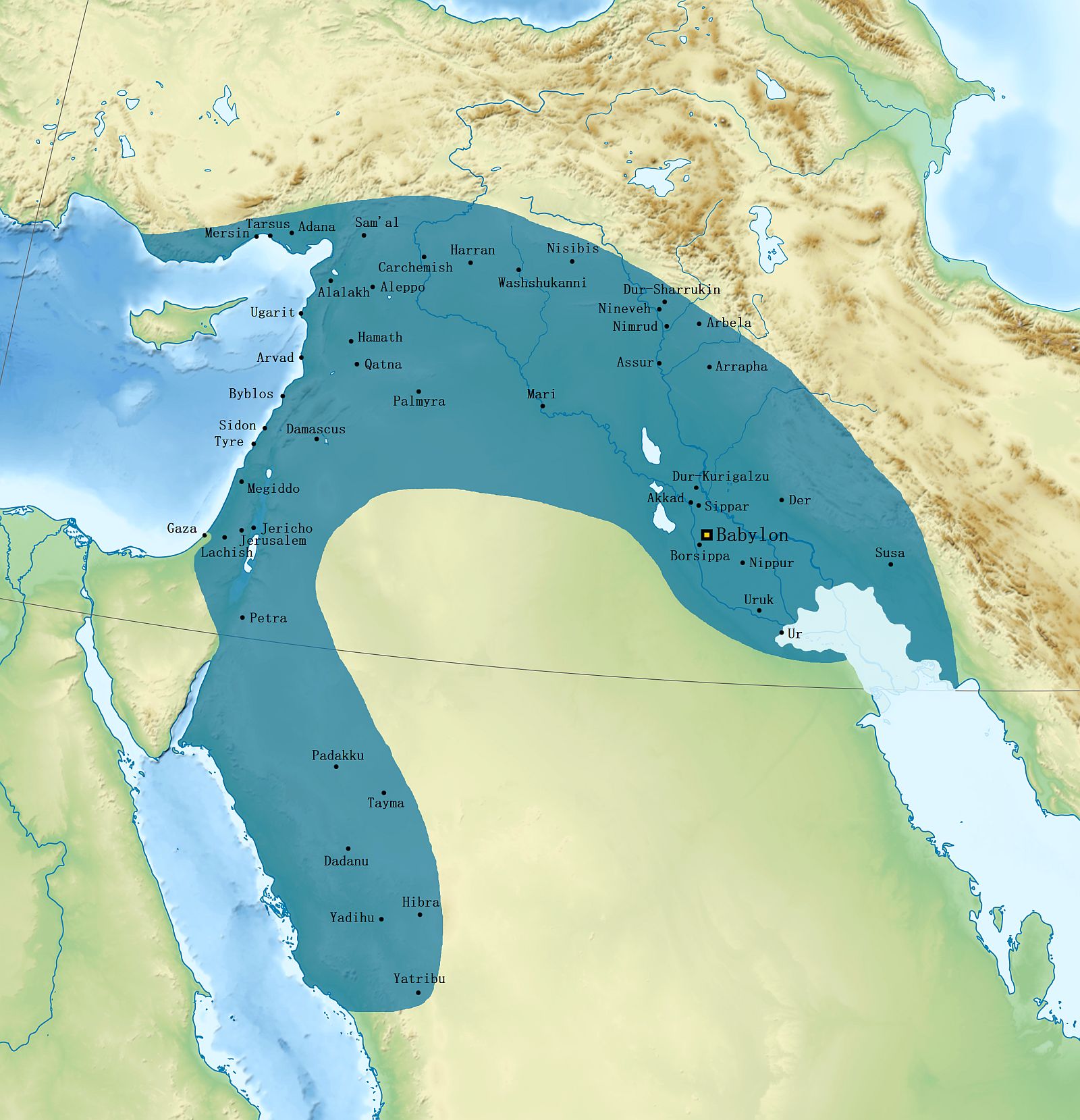
- The History Leading Up to the Destruction of Judah – Caught Between the Great Powers — 609 to 586 BCE, 23 years — Between the end of King Josiah’s reign in 609 BCE, and the Babylonian invasions of Judah in 597 BCE, and the second invasion and destruction in 586 BCE, the kingdom experienced political instability and external threats, primarily due to shifting allegiances between Egypt and Babylon.
- 609 BCE — Newly enthroned, Pharaoh Necho II of the 26th Dynasty was rushing north in support of his former rival, the Assyrians, in their deteriorating struggle against the newly rising Babylonians. Necho’s army had to march through Judah if it was to engage the Babylonians. Judah’s King Josiah (640–609 B.C.E.) decided to block this—to attack the mighty Egyptian army after it passed through his land. According to 2 Chronicles 35:21, Necho sent a message to Josiah saying he only wanted to pass through the land, that he did not intend to attack Judah. But this did not stop Josiah. In the summer of 609 B.C.E., on the plain of Megiddo, Josiah’s troops attacked the Egyptian forces—and were decisively defeated. Whether Josiah was killed in the battle or only seriously wounded and later died in Jerusalem depends on whether we credit the account in 2 Kings 23:29 or 2 Chronicles 35:23–24. In any event, he died as a result of this ill-considered attack on the Egyptian forces.
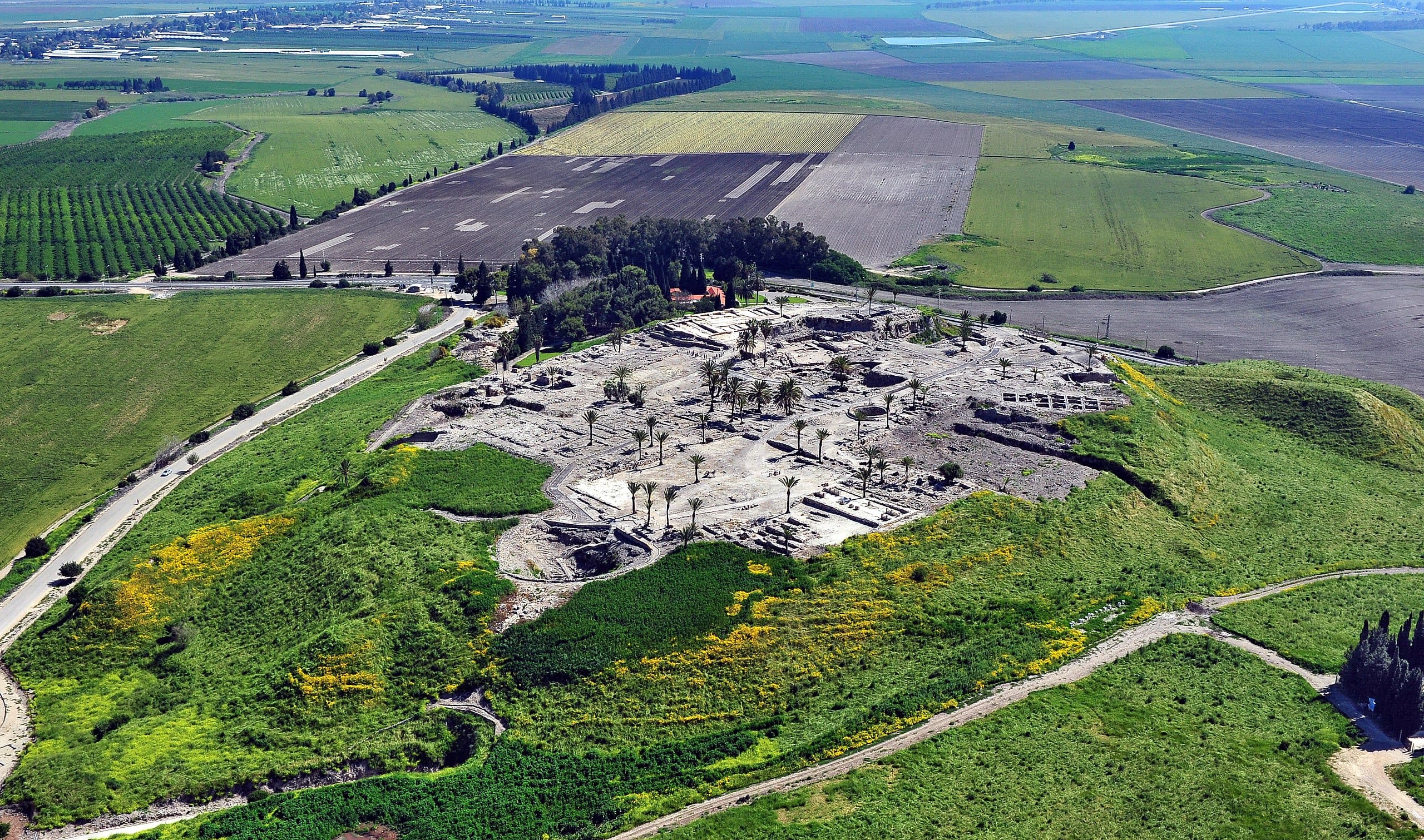

- Additional context from BAS article Necho and Josiah at Megiddo: Although no destruction layer was identified at the end of Assyrian control over the site (mid- to late seventh century), there was a sudden change in ceramic remains, with the inclusion of a large amount of imported Egyptian and eastern Greek pottery. Dating to the late seventh century BCE, these ceramic finds perfectly matched the period of Josiah’s death. According to the excavators, no other site in the region has such a large amount of Egyptian pottery, and no non-coastal site has as much Greek pottery.
- Post-Josiah Leadership: After Josiah’s death at the hands of Pharaoh Necho II at Megiddo, his son Jehoahaz briefly ruled Judah. However, Jehoahaz opposed Egyptian dominance, leading Necho to depose him after only three months. Necho then installed Jehoiakim, another son of Josiah, as a vassal king loyal to Egypt (609 BCE).
- Babylonian Ascendancy: In 605 BCE, Babylon, under Nebuchadnezzar II, defeated Egypt at the Battle of Carchemish. This marked Babylon’s dominance over the region, including Judah. Initially, Jehoiakim submitted to Babylon, but he later rebelled, possibly under pressure from Egypt, causing renewed tensions.
- Rebellion and Jehoiakim’s Death: Judah’s pro-Egyptian stance and Jehoiakim’s rebellion prompted Babylonian campaigns against Judah. Jehoiakim died under unclear circumstances around 598 BCE, possibly during a Babylonian siege. His son, Jehoiachin, succeeded him but faced immediate military action from Nebuchadnezzar.
- Babylonian Invasion (597 BCE): Nebuchadnezzar besieged Jerusalem, leading to its surrender in 597 BCE. Jehoiachin, the royal family, and many elites were deported to Babylon, marking the first wave of exile. Nebuchadnezzar installed Zedekiah, Jehoiachin’s uncle, as a puppet ruler over Judah.
- This period set the stage for Judah’s final collapse in 586 BCE, as Babylonian control intensified and internal divisions persisted between exiles and those who remained in the land.
- Sources for these sub-bullets:
- TheTorah — The History Leading Up to the Destruction of Judah
- The BAS Library — *** Caught Between the Great Powers with a sidebar containing a concise chronological list of events in that period titled Judah’s Road to Ruin.
- Babylonian Seige & Deportation (597 BCE) & 2nd Deportation in 586 BCE – 125 years after the Assyrians):
- Fall of Judah in 597 BCE: Babylon destroys Jerusalem and the Temple, exiling the Judahite elite to Babylon. This period is key in reshaping the Israelite identity.
- Go here for the Wikipedia article about the Fall in 587 BCE.
- During the late 7th century BC, Judah became a vassal kingdom of Babylon. In 601 BC, Jehoiakim, king of Judah, revolted against Babylonian rule despite the strong remonstrances of the prophet Jeremiah.[2][3] Jehoiakim died for reasons unclear, and was succeeded by his son, Jeconiah.[4][5] In 597 BC, the Babylonians besieged Jerusalem, and the city surrendered.[2][6] Nebuchadnezzar pillaged Jerusalem and deported Jeconiah and other prominent citizens to Babylon; Jeconiah’s uncle, Zedekiah, was installed as king.[2][7] Later, encouraged by the Egyptians, Zedekiah launched a second revolt, and a Babylonian army was sent to retake Jerusalem.[2]
- On Tisha B’Av, July 587 or 586 BC, the Babylonians took Jerusalem, destroyed the First Temple and burned down the city.[1][2][8] The small settlements surrounding the city, and those close to the western border of the kingdom, were destroyed as well.[8] According to the Bible, Zedekiah attempted to escape, but was captured near Jericho. He was forced to watch the execution of his sons in Riblah, and his eyes were then put out.[9]
- Jewish exiles to Babylon in 597 and 587 BCE.
- The numbers of those who were deported to Babylon or made their way to Egypt and the remnants that remained in Judah and surrounding countries are subject to academic debate. The Book of Jeremiah reports that a total of 4600 were exiled to Babylon. To such numbers must be added those deported by Nebuchadnezzar in 597 BCE after the first siege to Jerusalem, when he deported the king of Judah, Jeconiah. His court, other prominent citizens, craftsmen, and a sizable portion of the Jewish population of Judah, numbering about 10,000. The Book of Kings also suggests 8000. Further information: Babylonian captivity at Wikipedia.
- The deportations occurred in multiple waves: After the siege of Jerusalem in 597 BCE, around 7,000 individuals were deported to Mesopotamia. Further deportations followed the destruction of Jerusalem and Solomon’s Temple in 587 BCE.[1]These two bullets are from Wikipedia here.
- During the Babylonian Captivity (606 to 536 BCE), those Judahites who remained in the Kingdom of Judah re-established the altar at Shechem (SHEE-kehm) to keep the Israelite worship system going when access to the Temple in Jerusalem was cut off.[15] From Wikipedia.
- Documentary Hypothesis: The “P” source (Priestly) is likely compiled during and after the exile, emphasizing rituals, laws, and the covenant.
- Egyptian Influence: This timeline illustrates how Egypt’s once-dominant role in Canaan declined over centuries, with intermittent revivals, before being eclipsed by emerging empires.
- 1000–925 BCE: Egyptian influence resurfaced briefly under Shoshenq I during the decline of the united monarchy in Israel.
- 925–800 BCE: Internal struggles in Egypt coincided with the rise of regional powers like Israel, Judah, and Aram-Damascus.
- 800–700 BCE: Assyria dominated Canaan, with Egypt playing a minor role in anti-Assyrian coalitions.
- 700–605 BCE: Egypt attempted a resurgence as Assyria weakened but was overshadowed by Babylon.
- 605–586 BCE: Egypt’s influence in Canaan ended definitively as Babylon established supremacy.

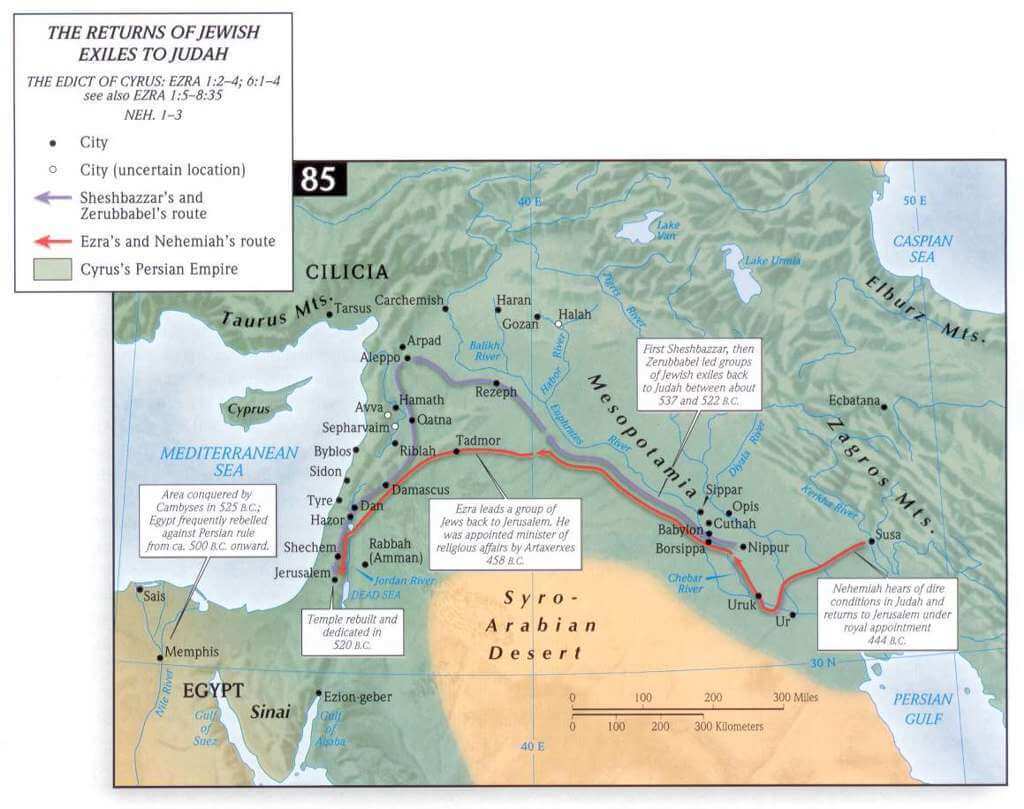
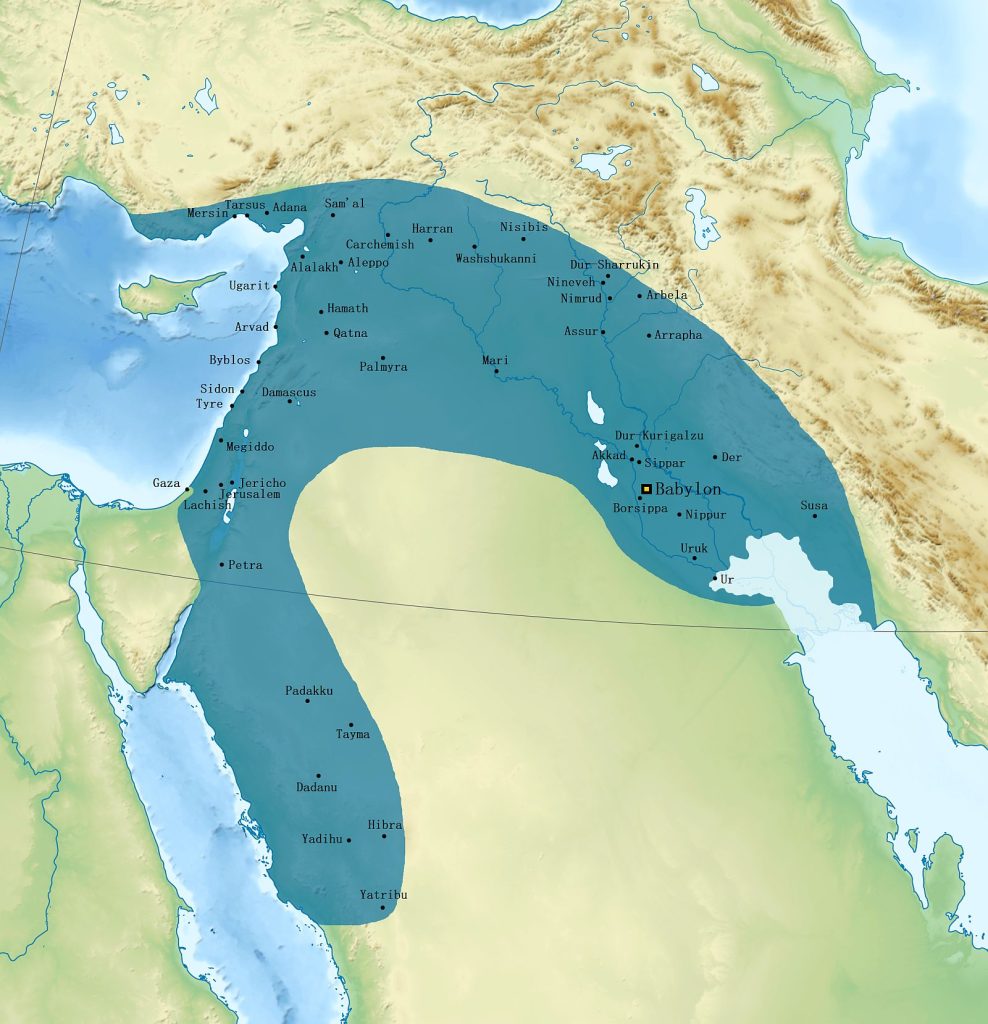
5. Persian Period (c. 539–332 BCE; 207 years). Began 59 years after the Babylonian Siege.
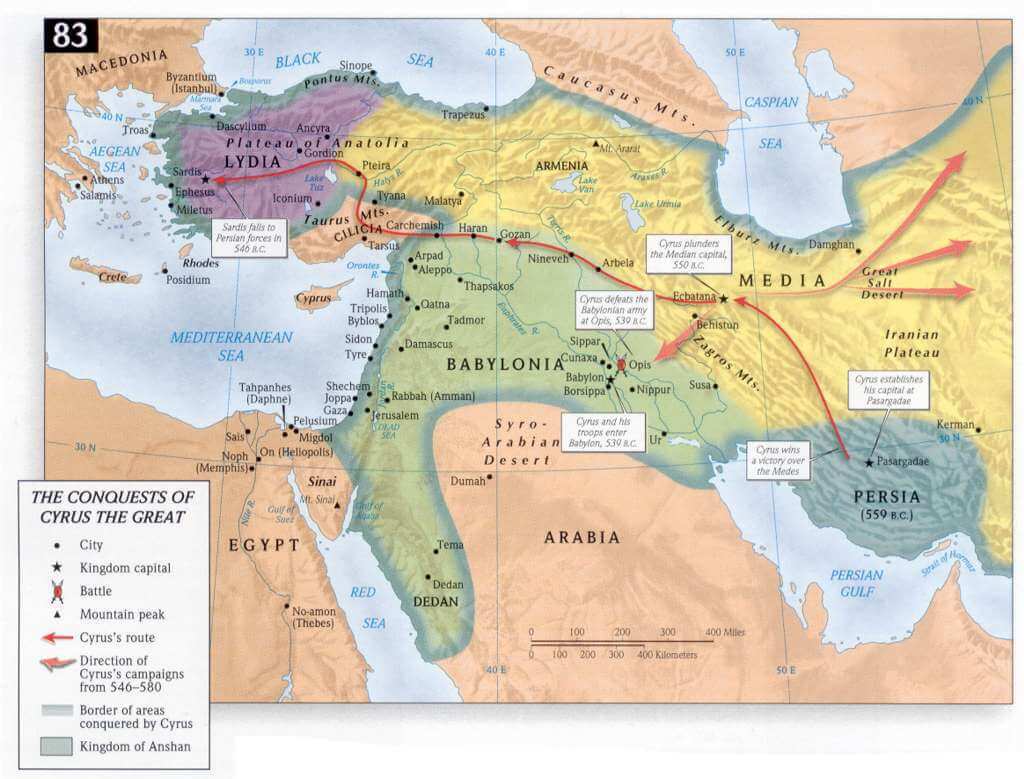
- Following the Persian conquest of Babylon, [539 BCE] Cyrus issued the Edict of Restoration, in which he authorized and encouraged the return of the Jewish people to what had been the Kingdom of Judah, officially ending the Babylonian captivity. He is mentioned in the Hebrew Bible and left a lasting legacy on Judaism due to his role in facilitating the return to Zion, a migratory event in which the Jews returned to the Land of Israel following Cyrus’ establishment of Yehud Medinata [Aramaic term that translates to “the Province of Judah” (or Judea). Also, see the post at this site here] and subsequently rebuilt the temple in Jerusalem, (completed 516 BCE) destroyed by the Babylonian siege of Jerusalem. According to Isaiah 45:1,[13] Cyrus was anointed by Yahweh for this task as a biblical messiah; he is the only non-Jewish figure to be revered in this capacity.[14] [This bullet is from Wikipedia here.]
- The Edict of Cyrus*** appears in 2 Chron 36:22-23 of the Second Book of Chronicles in the Hebrew Bible
- A great text about these times, texts, and personalities is at the WayBackMachine titled Messiah (4) here by Jona Lendering, a Dutch historian who has a related article and many more on his site https://www.livius.org/articles/concept/israel/.
- When Persia invaded Babylon in 539, the age of the clay tablet ended and a new one of phonetic alphabets and more perishable writing materials began. From Literature & History.
- Return from Exile and Second Temple Construction:
- After Cyrus the Great of Persia allowed the exiles to return, the Second Temple was built in Jerusalem and completed in 516 BCE. Ezra and Nehemiah led reforms, promoting strict adherence to the Law.
- Nehemiah returned to Jerusalem in 445 B.C. as the provincial governor of Judah/Yehud. Esra returned likely a few years later. From BAS’s article “Nehemiah—The Man Behind the Wall” here.
- Prophets: Haggai, Zechariah, and Malachi are active, encouraging the community to rebuild and remain faithful.
- Documentary Hypothesis: The Torah is compiled in its near-final form. Deuteronomy, J, E, and P are woven into a single narrative, giving rise to the Pentateuch. Richard Freidman believes that might have been done by Ezra. (fl. 480–440 BCE)[a][b] who was a Jewish scribe (sofer) and priest (kohen). >>>See Ezra and Nehemiah page at this site for info about Ezra’s literacy.
- In Jewish history, the Persian period marks the start of the Second Temple period. Governor Zerubbabel, who led the first Jewish returnees, laid the foundation of the Second Temple. Other Jewish leaders followed, such as Ezra and Nehemiah, and their efforts to rebuild Jewish life in the region are chronicled in biblical books named after them. Another significant Persian-period achievement was the canonization of the Torah, traditionally credited to Ezra and playing an important role in shaping the Jewish identity.[12] This bullet is from Wikipedia.
- The italicized text in this bullet is from Christine Elizabeth Hayes’ book Introduction to the Bible (The Open Yale Courses Series) (p. 362). Yale University Press. Kindle Edition. It is included here to provide a summary, i.e. the “periodization”, of the other info on this web page. — The exiles returned to what was now a Persian province—Yehud—where they held a certain degree of self-determination. The periodization of Jewish history centers on these events. The period from 586 to the 530s B.C.E. is known as the exilic period, a time in which—most scholars would maintain—the traditions of P and D reached their final form; the period following the return of the exiles is known as the Restoration, the Persian period, or the beginning of the Second Temple period, since the Second Temple is completed somewhere between 521 and 515 (in contrast to the First Temple period from the time of Solomon, about 950 to 586). The following list is based on her info.
- First Temple period from the time of Solomon, about 950 to 586)
- Exilic period from 586 to the 530s B.C.E. —the traditions of P and D reached their final form.
- Second Temple period, Restoration, the Persian period begins somewhere between 521 and 515 since the Second Temple is completed. Period ended 70 CE.
For more details about the transition, go to the post at this site; Cyrus the Great to Alexander the Great.


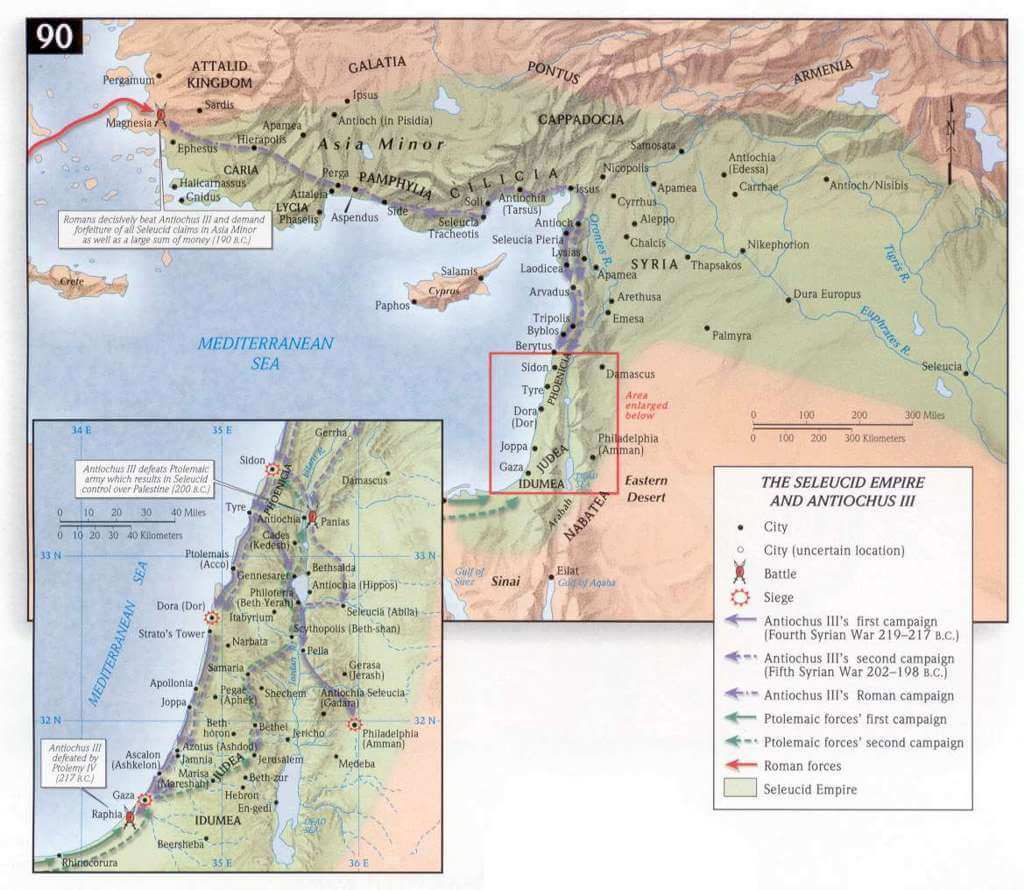
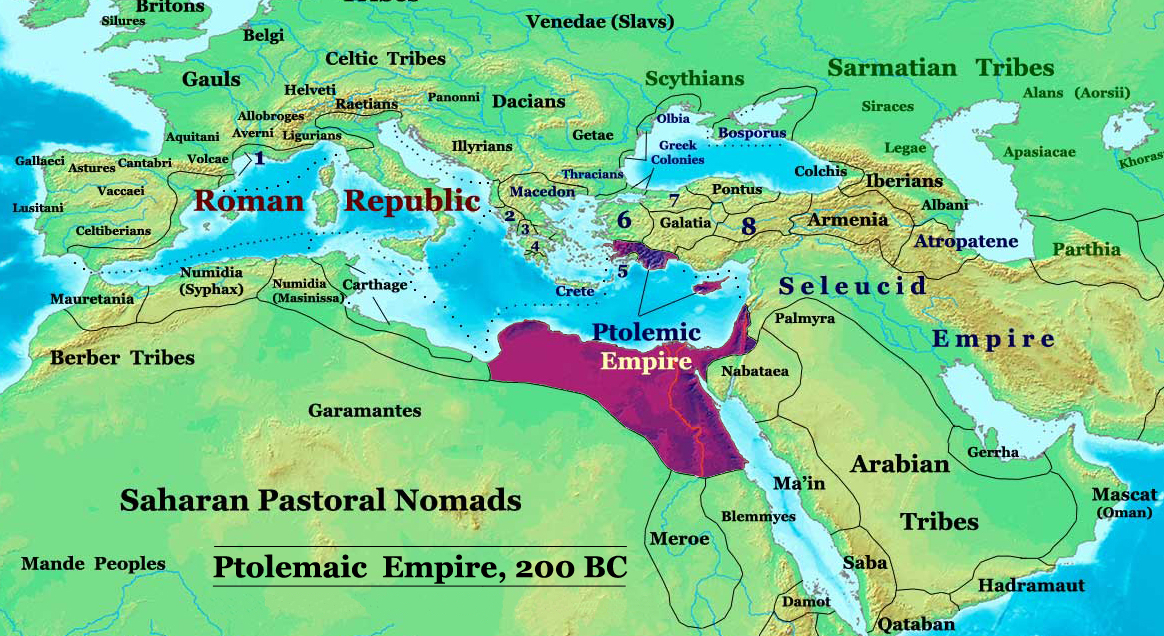
6. Hellenistic Period (c. 332–63 BCE; 269 years)
- Alexander the Great’s Conquest: Greek culture and language spread across the region.
- Here is a historical timeline of Alexander the Great’s conquest of the Holy Land and the subsequent transition of power to the Seleucid Empire and finally the Roman Empire.
- >>>Go to this site’s post here for a detailed timeline of the 100 years before and after Alexander’s death.
- 334–332 BCE: Alexander’s Conquest
Alexander the Great began his campaign against the Persian Empire in 334 BCE. After his victory at the Battle of Issus in 333 BCE, he marched southward, taking control of cities along the Mediterranean coast, including Tyre and Gaza, to prevent Persian naval resistance. He eventually entered Judea (the land of Israel) but largely allowed the local governance and religious customs of the Jewish people to continue undisturbed, as described in historical accounts such as those by Josephus. - 323 BCE: Alexander’s Death and Division of Empire
Alexander died in 323 BCE, which led to the fragmentation of his empire among his generals, known as the Diadochi. The territories of the Near East, including Palestine, became a focal point for rival claims. Initially, Judea fell under Ptolemaic control, part of Egypt’s sphere, while the Seleucid Empire controlled other parts of Syria.- 323 BCE: The Partition of Babylon divides Alexander’s empire among his generals (the Diadochi). This marks the start of the Wars of the Diadochi.
- 321 BCE: Perdiccas, the regent of Alexander’s empire, is assassinated; further divisions occur in the empire.
- 306–305 BCE: The Diadochi declare themselves kings, officially fracturing the empire into several Hellenistic states:
- Ptolemaic Kingdom in Egypt.
- Seleucid Empire in Persia and the Near East.
- Antigonid Dynasty in Macedonia and Greece.
- 301 BCE: The Battle of Ipsus solidifies the division of Alexander’s empire, with Antigonus I Monophthalmus killed in battle. His forces occupied the region along with other parts of southern Syria. The conflict between the Ptolemaic and Seleucid empires over this territory was a point of contention, leading to a series of conflicts known as the Syrian Wars.
- 283 BCE: Ptolemy I Soter dies, and Ptolemy II Philadelphus assumes the throne in Egypt, promoting cultural and scientific achievements, including the Library of Alexandria.
- 275 BCE: The Seleucid Empire stabilizes under Antiochus I.
- 247 BCE: Foundation of the Parthian Empire under Arsaces I, challenging the Seleucids.
- 223 BCE: Antiochus III (“the Great”) becomes king of the Seleucid Empire, initiating a resurgence in its power.
- 200 BCE: Seleucid Control Established
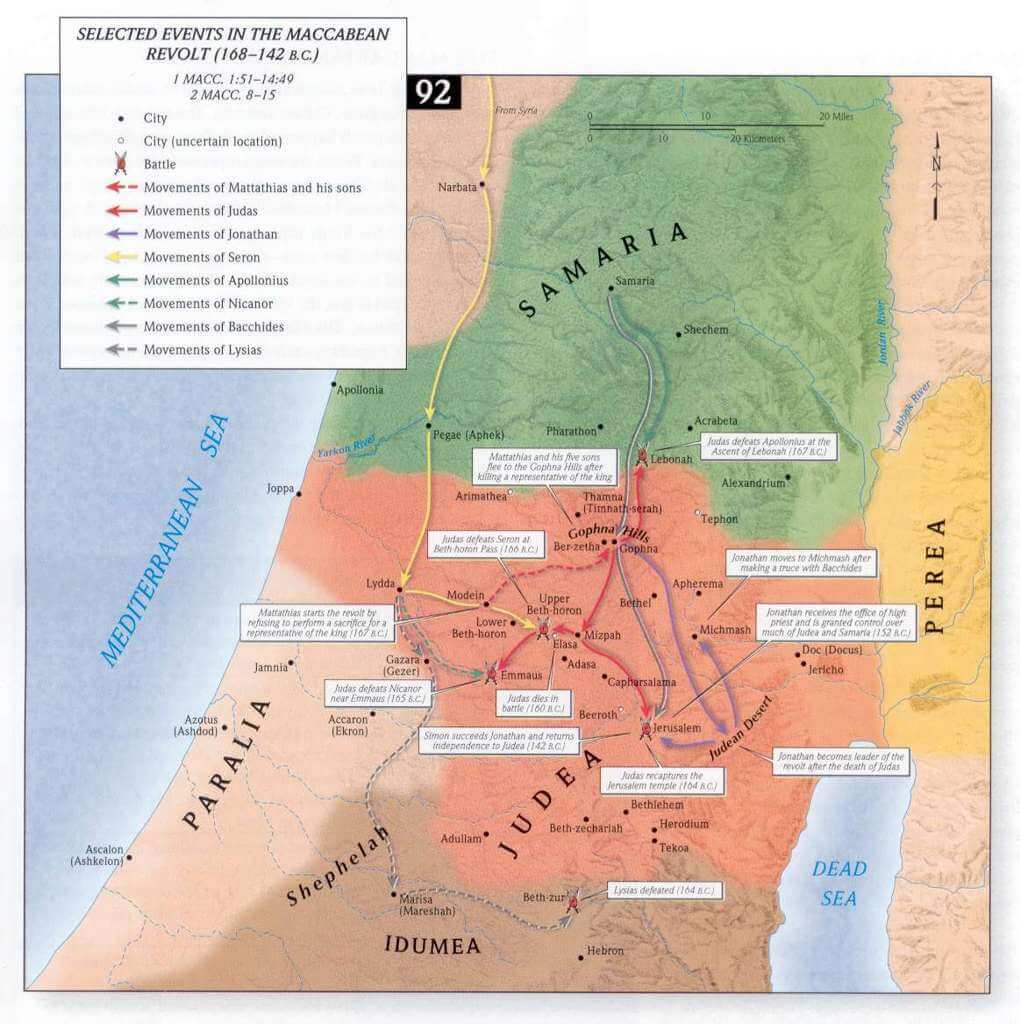
During the Fifth Syrian War (202–195 BCE), Seleucid King Antiochus III defeated the Ptolemies and took control of Judea. This marked the beginning of Seleucid rule over the region, as formalized by 200 BCE, bringing increased Hellenistic influence and policies that sometimes clashed with local Jewish practices. This tension eventually sparked the Maccabean Revolt (167–160 BCE), which established a period of relative autonomy under the Hasmonean dynasty.
- Summary of the Seleucid Empire – founded in 312 BC by the Macedonian general Seleucus I Nicator, following the division of the Macedonian Empire founded by Alexander the Great,[12][13][14][15] and ruled by the Seleucid dynasty until its annexation by the Roman Republic under Pompey in 63 BC. (From Wikipedia).

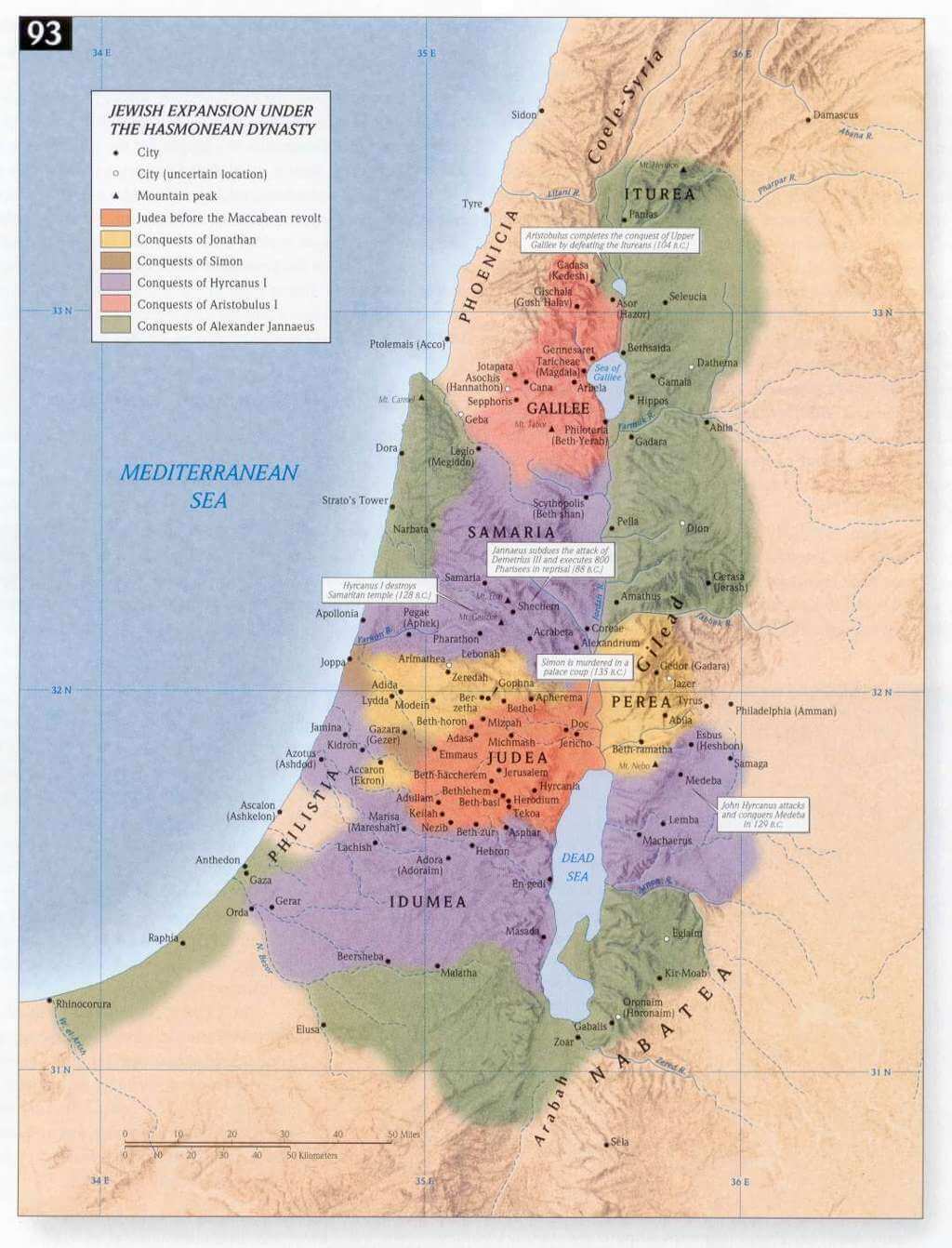
- Maccabean Revolt and Rule (c. 167–37 BCE; 130 years): Judah Maccabee led a revolt against the Seleucid Empire, leading to the brief Hasmonean dynasty and greater religious independence.
- >>>For details see the page at this site titled Timeline of the Maccabean Revolt. Also, see the post on this site titled Transition from Seleucids to the Hasmoneans and Rome’s Conquest.
- The Maccabean Revolt was a Jewish rebellion led by the Maccabees against the Seleucid Empire and against Hellenistic influence on Jewish life. The main phase of the revolt lasted from 167 to 160 BCE and ended with the Seleucids in control of Judea, but conflict between the Maccabees, Hellenized Jews, and the Seleucids continued until 134 BCE, with the Maccabees eventually attaining independence. See the timeline from Wikipedia below.
- The Maccabees were handed an opportunity as the Seleucids broke into infighting in a series of civil wars, the Seleucid Dynastic Wars. The Seleucid rival claimants to the throne needed all their troops elsewhere, and also wished to deny possible allies to other claimants, thus giving the Maccabees leverage. In 153–152 BCE, a deal was struck between Jonathan and Demetrius I. King Demetrius was fending off a challenge from Alexander Balas, and agreed to withdraw Seleucid forces from the fortified towns and garrisons in Judea, barring Beth-Zur and Jerusalem.[35] The hostages were also released. Seleucid control over Judea was weakened, and then weakened further; Jonathan promptly betrayed Demetrius I after Alexander Balas offered an even better deal. Jonathan was granted the title of both High Priest and strategos by Alexander, essentially acknowledging that the Maccabee faction was a more relevant ally to would-be Seleucid leaders than the Hellenist faction.[30] Jonathan’s forces fought against Demetrius I, who would die in battle in 150 BCE.[35]
- Timeline from Wikipedia here.
- 167–160 BCE – Rebellion fought under the leadership of Judas Maccabeus
- 160–152 BCE – Seleucid authority in major cities reestablished
- 152–141 BCE – Judean autonomy
- 141 BCE – Simon Thassi appointed High Priest, the start of the independent Hasmonean kingdom
- 37 BCE – The Hasmonean dynasty would last until 37 BCE, when Herod the Great, making use of heavy Roman support, defeated the last Hasmonean ruler to become a Roman client king.
- 63 BCE: Roman Conquest and End of Seleucid Rule in Judea
Internal conflicts and weakening leadership in the Seleucid Empire left it vulnerable, and in 63 BCE, Roman general Pompey the Great intervened in a dispute over Judea, bringing the region into the Roman sphere of influence. This marked the end of the Seleucid Empire and the beginning of Roman rule over Judea, which continued under the Herodian dynasty and later as a directly administered Roman province. - Influence on Texts: Some late Old Testament texts (e.g., Daniel) reflect Hellenistic influences, interpreting earlier prophecies as applied to contemporary Greek rulers.
Go to the post Alexander the Great to King Herod on this site for more details about this time,
Go to the post How Jewish was Jesus’ Galilee for a chronology from 336 BCE to 300 CE.
7. Roman Period (63 BCE–135 CE) – In addition to the below, see on this site “Second Temple Judaism & the Origins of Christianity“.
The list below is only up to 135 CE, although the Western Empire collapsed in 476 CE, and the Eastern Empire lasted until the fall of Constantinople in 1453 CE.

- Herod the Great (37–4 BCE): Herod, a client king under Rome, renovates the Second Temple, expanding its grandeur.
- After Herod the Great died in 4 BCE, revolts broke out. The Syrian legate Publius Quinctilius Varus sent forces into Galilee. Josephus states explicitly that the Romans captured Sepphoris, “made its inhabitants slaves,” and burned the city. This is the clearest primary-source evidence that the Roman response to the 4 BCE unrest included the enslavement of Galileans. Antiquities of the Jews — Book XVII. Some scholars like Tabor believe this is when young Saul/Paul and his family were sent to Tarcus. For more on Saul/;Paul go to post here.
- Herod Archelaus, Herod the Great’s son, initially ruled Judea until the Emperor replaced him. See Second Temple Judaism & the Origins of Christianity on this site for more from Fredriksen and Collins.
- Herod the Great’s son Herod Antipas (4 B.C. until 39 A.D.) ruled the Galilee, see Antipas—The Herod Jesus Knew by Morten Hørning Jensen]. He did not match his father either as a tyrant or as a builder. On the other hand, it is significant that we get no reports in the Gospels or otherwise of any riots caused by bad government or religious oppression during Antipas’s rule in Galilee.
- 20’s CE – Herod Antipas takes over fishing in the Sea of Galilee: Crossan’s Observation. The transformation of the Sea of Galilee into the Sea of Tiberias was an act of imperial conquest. Herod Antipas, during the reign of Emperor Tiberius, built a new capital city on the coast of the Sea of Galilee and named it Tiberias. That was part of a wholesale reorganization of the fishing economy. Fishing in the Sea of Galilee was essentially subsistence fishing. Local might have sold some of their catch, but mostly they fished to feed their families. That changed dramatically and deliberately. Crossan describes Antipas’s calculated commercialization in stark terms: “All of a sudden, you’re probably going to be taxed on your boat. You’re probably going to be taxed on your catch, and you may have to sell it to his fish factories. He’s going to have salted fish; he’s going to have dried fish; he’s going to make a fish sauce the Romans loved called garum. He went into the export business, and that was not good news for peasant fishers. Many of Jesus’ disciples were fishermen.
- Jesus of Nazareth (c. 4 BCE–30 CE): Jesus begins his ministry in the late 20’s in Capernaum and major fishing villages around the Sea of Galilee following Antipas’ takeover of the fishing industry and later into Judea, challenging existing religious and social norms. His crucifixion under Pontius Pilate becomes a focal point for his followers.
- Paul the Apostle (c. 5–67 CE): Paul spreads Christianity [beginning about 15 years after Jesus], writing epistles that shape early Christian theology, particularly among Gentiles.
- The Earthquake of 62 AD – In 62 CE, a devastating earthquake struck the Roman cities of Pompeii and Herculaneum in Campania, Italy. The earthquake was estimated to have a magnitude of 5.5 on the Richter scale and was one of the deadliest earthquakes in the recorded history of Italy. [See more below]
- 62 or 69 CE: Murder of James the Just – Per Josephus: In Antiquities of the Jews (20.9.1), Josephus reports that James was condemned by the high priest Ananus and stoned to death in approximately 62 CE. Another account is from Hegesippus, a second-century Christian writer, who describes James being thrown from the temple pinnacle and beaten to death in 69 CE.
- Jewish-Roman War (66–73 CE): Jewish revolt against Roman rule resulted in the destruction of the Second Temple in 70 CE. This event is a turning point in Jewish history, leading to significant dispersion and changes in religious practice.
- Mount Vesuvius erupts in 79 CE, destroying the Roman cities of Pompeii, Herculaneum, Oplontis, Stabiae, and other settlements.

- Diaspora Revolt” (115–117 CE) – From Wikipedia here. Also see the BAS article published Spring 2026, The Diaspora Revolt: Cyprus’s Forgotten Jewish Uprising, by Thomas W. Davis. The PDF copy is in his directory in DropBox.
- Also known as the Trajanic Revolt and sometimes as the Second Jewish–Roman War, refers to a series of uprisings that occurred in Jewish diaspora communities across the eastern provinces of the Roman Empire during Emperor Trajan’s reign. These revolts occurred while Trajan was engaged in his Parthian campaign in Mesopotamia, which provided a favorable opportunity. The ancient sources do not specify the exact motivations, but they were likely influenced by the destruction of the Second Temple in 70 CE, long-standing tensions between Jews and Greeks, the Fiscus Judaicus tax, messianic expectations, and hopes for a return to Judaea.
- The uprisings unfolded almost simultaneously across various provinces of the Roman East. In Egypt, Libya and Cyprus, Jewish actions were primarily directed against local populations rather than the Roman authorities,[9] with accounts from historians like Cassius Dio, as well as epigraphical evidence, documenting extreme violence, including mass killings and the destruction of temples. In contrast, the rebellion in Mesopotamia seems to have been part of a broader resistance against Roman expansion into Parthian-ruled territories.
- Bar Kochba Rebellion (132–135 CE): The final Jewish revolt against Rome, led by Simon Bar Kochba. This rebellion ends in Roman victory, the expulsion of Jews from Jerusalem, and the renaming of the city to Aelia Capitolina, marking a major point in the Jewish Diaspora.
- For the impact of the rebellions on religious practices see the post at this site Religious practice after the Jewish revolt in 70 CE that contains a ChatGPT response.
- In 62 AD, a devastating earthquake struck the Roman cities of Pompeii and Herculaneum in Campania, Italy. The earthquake was estimated to have a magnitude of 5.5 on the Richter scale and was one of the deadliest earthquakes in the recorded history of Italy. The earthquake caused extensive damage to buildings and infrastructure in Pompeii, Herculaneum, and surrounding towns. Many structures were either partially or completely destroyed, leading to a lengthy period of reconstruction that was still ongoing when Mount Vesuvius erupted 17 years later. From here.
- In the year 178 AD, the city of Cyrene in North Africa was hit by a devastating earthquake. The earthquake had a magnitude of 7.5 on the Richter scale and caused enormous damage to the city and its surrounding areas. The earthquake resulted in the loss of many lives and caused extensive property damage. It is estimated that the earthquake killed around 50,000 people and injured many more. The economic damage caused by the earthquake was also significant, with many businesses and homes destroyed. From here.
- July 21, 365 AD, a massive earthquake, estimated to be of magnitude 8 or higher, struck the eastern Mediterranean, centered around the island of Crete. (From here.)
- The earthquake triggered a powerful tsunami that spread across the Mediterranean, hitting the coasts of Greece, Italy, Egypt, and beyond. The tsunami caused widespread devastation, particularly in the city of Alexandria in Egypt, where it is estimated to have killed tens of thousands of people.
- Coastal cities across the Roman Empire suffered heavy casualties and infrastructure destruction. The earthquake and tsunami also disrupted trade and agriculture in the region, contributing to the economic difficulties of the later Roman Empire. The disaster is recorded by several ancient historians, including Ammianus Marcellinus, who described the sea retreating before returning as a massive wave that overwhelmed coastal cities.
- The combined effects of the earthquake and tsunami had long-lasting consequences for the Roman Empire. The loss of life and destruction of property weakened the empire’s economic and military power in the eastern Mediterranean.
>>>Click to review the post on this site: Timeline-Roman, Jewish, & Christian Leaders (63 BCE – 476 CE).
>>>Click to review the post on this site: Timeline: Seleucid empire, the Macabeans &, the Qumran/DSS community

