From ChatGPT on 11/10/2024.
Prompt Series – Prepare an outline of the events in the Middle Bronze Age (c. 2000–1550 BCE) related to
Abraham and the Patriarchs and their descendants noting the location of the events and any related NRSV bible scripture. Provide a list of sources at the end of the paper.
Five Follow-up prompts that expanded and focused the final response below plus the fifth that is a separate post as linked below.
- Add to the above response the Documentary Hypothosis writer J, P, or E of the scripture cited.
- Add to the last response the dates scholars believe the events occurred and cite the name of the scholars.
- Add to the last response the event of Joseph and the coat of many colors story. Cite the related scripture using the NRSV.
- Add to the last response the return of the family to Canaan from Egypt citing dates, locations, routes and sources. [This takes the outline into the Late Bronze Age.]
A fifth “Add” was asked; “Add to the last response more on the timing and details of the Exodus tradition.” That response did not insert the additional material and is in a separate post here.
Here is an expanded outline that includes the return of Jacob’s family from Egypt to Canaan, with details on dates, locations, routes, and sources.
Outline of Events in the Middle Bronze Age Related to Abraham and the Patriarchs (c. 2000–1550 BCE) [The 4th prompt took this outline to 1250 BCE; the Late Bronze Age.]

1. Introduction to the Patriarchal Period and its Historical Setting
- Timeframe: Middle Bronze Age (c. 2000–1550 BCE)
- Context: This period, marked by urban growth, trade, and migrations, aligns with the patriarchal narratives in Genesis.
- Scholars: William F. Albright, a prominent biblical archaeologist, placed the Patriarchal Age around 2100–1800 BCE, correlating with the Middle Bronze Age period of significant regional migration and sociopolitical complexity in Canaan (Albright, From the Stone Age to Christianity, 1940).
2. The Call of Abraham
- Estimated Date: ca. 2000–1900 BCE
- Event: God’s call to Abram (Abraham) to journey to Canaan.
- Location: Ur of the Chaldeans to Haran, then Canaan.
- Scripture: Genesis 12:1-4, NRSV (J Source) – “The Lord said to Abram, ‘Go from your country and your kindred and your father’s house…”
- Scholars: Albright suggested a date of around 2000 BCE for Abraham’s departure, linking this migration to broader patterns of semi-nomadic movements from Mesopotamia to Canaan during this time.
3. Abram’s Journey through Canaan
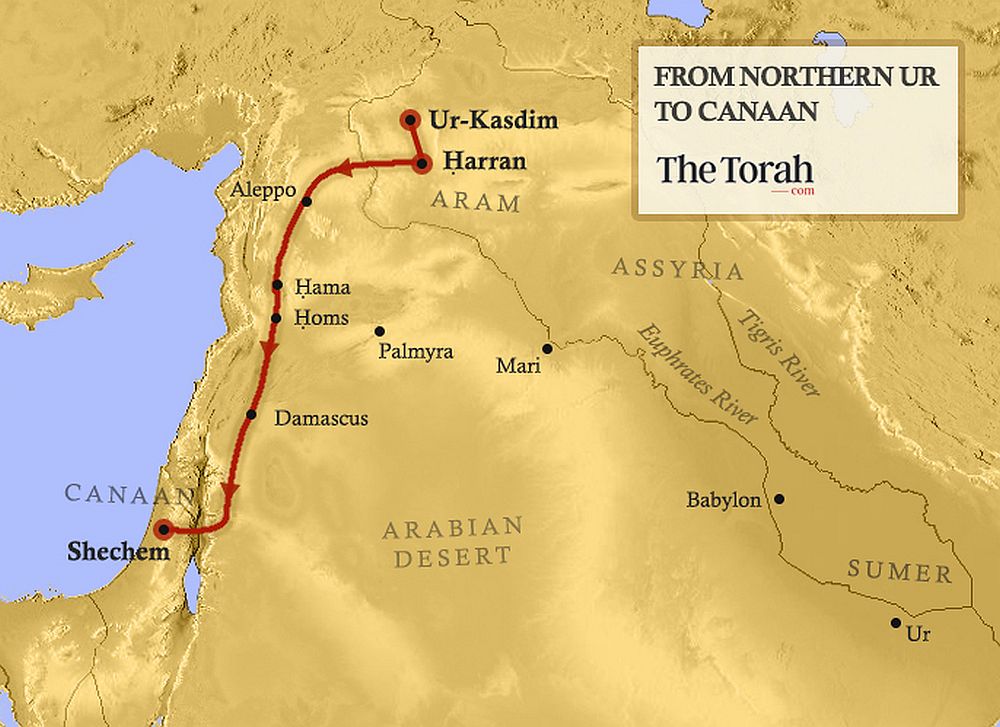
- Estimated Date: ca. 1900 BCE
- Event: Abraham’s journey through Canaan, receiving promises from God.
- Locations: Shechem, Bethel, and the Negev.
- Scripture: Genesis 12:6-9, NRSV (J Source)
- Scholars: John Bright, in A History of Israel (1972), dates Abraham’s movements in Canaan to around 1900 BCE, aligning with archaeological evidence of city-state activity in Shechem (SHEE-kehm) and Bethel.
>>>For more on this route vs. the traditional route from the southern Ur go to this page, Abraham-Which Ur?.
4. The Covenant with Abraham
- Estimated Date: ca. 1900–1800 BCE
- Event: God’s covenant with Abraham.
- Location: Hebron or near Beersheba.
- Scripture: Genesis 15:1-18, NRSV (J Source)
- Scholars: Albright and Bright both placed the covenant within the early Middle Bronze Age (c. 1900–1800 BCE), noting parallels with contemporary covenants and treaty practices found in nearby cultures.
5. The Birth of Ishmael
- Estimated Date: ca. 1870 BCE
- Event: Hagar bears Abram’s son, Ishmael.
- Location: Canaan, possibly in Hebron or the Negev.
- Scripture: Genesis 16:1-16, NRSV (P Source)
- Scholars: Donald B. Redford, in Egypt, Canaan, and Israel in Ancient Times (1992), dates Ishmael’s birth around 1870 BCE based on his analysis of Middle Bronze Age cultural practices and family structures.
6. The Birth of Isaac and the Covenant of Circumcision
- Estimated Date: ca. 1850 BCE
- Event: The birth of Isaac and the covenant of circumcision.
- Location: Hebron.
- Scripture: Genesis 17:1-21, NRSV (P Source)
- Scholars: Albright and Bright both placed Isaac’s birth around 1850 BCE, given Abraham’s chronological placement and the covenant’s alignment with ancient regional customs.
7. Sodom and Gomorrah
- Estimated Date: ca. 1800 BCE
- Event: The destruction of Sodom and Gomorrah.
- Location: Plains of Jordan, near the Dead Sea.
- Scripture: Genesis 18:16-33, 19:1-29, NRSV (J Source)
- Scholars: Some archaeologists, including Bryant G. Wood, suggest that events resembling the destruction of Sodom and Gomorrah may reflect seismic activity in the Dead Sea region around 1800 BCE (Biblical Archaeology Review, 1999).
8. The Binding of Isaac (Akedah)
- Estimated Date: ca. 1800 BCE
- Event: Abraham’s test of faith in offering Isaac.
- Location: Moriah (near Jerusalem).
- Scripture: Genesis 22:1-19, NRSV (E Source)
- Scholars: Scholars such as Albright date this event around 1800 BCE, aligning it with Abraham’s life span within the Middle Bronze Age timeline.
9. Isaac’s Marriage to Rebekah
- Estimated Date: ca. 1780 BCE
- Event: Abraham’s servant finds Rebekah for Isaac.
- Location: Haran (Paddan-Aram).
- Scripture: Genesis 24:1-67, NRSV (J Source)
- Scholars: Kitchen and Albright suggest a date of around 1780 BCE for Isaac’s marriage, tying it to kinship practices typical of this era (On the Reliability of the Old Testament, 2003).
- See Abraham-Which Ur? for more info.
10. Jacob and Esau: Birth and Blessing
- Estimated Date: ca. 1750 BCE
- Event: The birth of Isaac’s sons Jacob and Esau, and Jacob’s acquisition of the birthright.
- Location: Canaan.
- Scripture: Genesis 25:19-34 (P Source), 27:1-45 (J Source), NRSV
- Scholars: Bright places the birth and conflict of Jacob and Esau around 1750 BCE, coinciding with Middle Bronze Age practices regarding family inheritance (A History of Israel, 1972).
11. Jacob’s Dream and Covenant Renewal at Bethel
- Estimated Date: ca. 1730 BCE
- Event: Jacob’s vision of a ladder and God’s covenant.
- Location: Bethel.
- Scripture: Genesis 28:10-22, NRSV (E Source)
- Scholars: Bright estimates Jacob’s journey and Bethel experience around 1730 BCE, reflecting his alignment with the Middle Bronze Age timeline.
12. Joseph and the “Coat of Many Colors”
- Estimated Date: ca. 1700 BCE
- Event: Jacob gives Joseph a “coat of many colors,” inciting jealousy among his brothers. This leads to Joseph’s eventual sale into slavery.
- Location: Dothan and later Egypt.
- Scripture: Genesis 37:1-36, NRSV (J Source) – “Now Israel loved Joseph more than any other of his children… and he made him a long robe with sleeves” (Genesis 37:3).
- Scholars: Scholars such as K. A. Kitchen place Joseph’s story around 1700 BCE, tying it to known Semitic migrations into Egypt during the Middle Bronze Age (On the Reliability of the Old Testament, 2003). Bright also dates the Joseph narrative to this period, correlating it with the historical movements of Semitic peoples into the Nile Delta.
13. Jacob’s Family and Migration to Egypt
- Estimated Date: ca. 1700 BCE
- Event: Jacob’s family migrates to Egypt due to famine.
- Location: Egypt, Goshen.
- Scripture: Genesis 46:1-7, NRSV (P Source) – “I myself will go down with you to Egypt, and I will also bring you up again…”
- Scholars: Donald Redford suggests a migration of Jacob’s family around 1700 BCE, coinciding with Egyptian records of Semitic migrations during this period.
14. The Return to Canaan from Egypt
- Estimated Date: Uncertain; the traditional story of the Exodus is dated around c. 1250 BCE.
- Event: The eventual return of Jacob’s descendants from Egypt, traditionally known as the Exodus.
- Location and Route: From Goshen in Egypt to Canaan. Possible routes discussed include the Way of Horus (along the Mediterranean coast) and the southern route through the Sinai Peninsula.
- Scripture: Exodus 13:17-18, NRSV (P Source) – “When Pharaoh let the people go, God did not lead them by way of the land of the Philistines, although that was nearer…”
- Scholars: Scholars such as James K. Hoffmeier (Israel in Egypt, 1999) and Kenneth Kitchen (On the Reliability of the Old Testament, 2003) explore the date and route, suggesting that the Exodus could correlate with New Kingdom Egyptian records and that the southern route through the Sinai may align with archaeological findings.
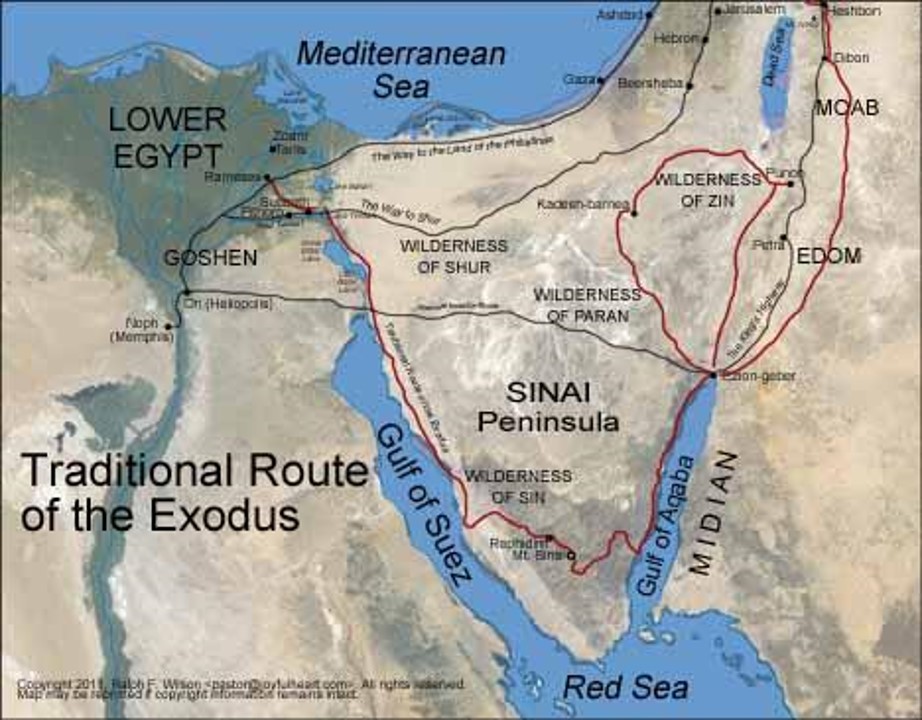
To continue this theme see the next post related to the timing and details of the Exodus tradition.
Sources
- Bible (NRSV) – Book of Genesis, Book of Exodus.
- Albright, William F. From the Stone Age to Christianity. Johns Hopkins Press, 1940.
- Bright, John. A History of Israel. Westminster Press, 1972.
- Kitchen, K. A. On the Reliability of the Old Testament. Eerdmans, 2003.
- Redford, Donald B. Egypt, Canaan, and Israel in Ancient Times. Princeton University Press, 1992.
- Hoffmeier, James K. Israel in Egypt: The Evidence for the Authenticity of the Exodus Tradition. Oxford University Press, 1999.
- Wood, Bryant G. “The Discovery of the Sin Cities of Sodom and Gomorrah.” Biblical Archaeology Review, 1999.
This outline now includes the Exodus and the family’s return to Canaan, integrating estimated dates, probable routes, and further scholarly citations. Let me know if you’d like more on the timing and details of the Exodus tradition.
