An overview and three additional responses from Google AI on 11/13/2026.
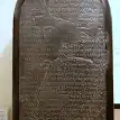
Omri was the sixth king of the northern kingdom of Israel, reigning for about 12 years (c. 885–874 BCE). Though the Hebrew Bible gives him relatively few verses and judges him harshly for religious practices, historical and archaeological records outside the Bible show that he was one of the most powerful and influential monarchs of the ancient Levant. [1, 2, 3]
Rise to Power
- Army Commander: Omri rose to power as the commander of the army during a time of extreme political instability in Israel.
- Coup and Civil War: When King Elah was assassinated by his chariot commander Zimri (who ruled for only seven days), the army proclaimed Omri king and besieged the capital of Tirzah. After Zimri committed suicide, Omri had to fight a four-year civil war against a rival claimant named Tibni before securing undisputed control. [1, 2, 3, 4]
Key Achievements
- Founding Samaria: After ruling from Tirzah for six years, Omri purchased a defensible hilltop from a man named Shemer for two talents of silver and established a brand-new capital city called Samaria, which featured massive fortifications and royal palaces. [1, 2, 3]
- Dynasty and Alliances: He founded the Omride Dynasty, which ruled Israel for roughly 40 to 50 years and included his son Ahab. He stabilized the kingdom through strategic alliances, including marrying his son Ahab to Jezebel of Tyre. [1, 2, 3, 4]
History Outside the Bible
Extra-biblical sources reveal that Omri was a major regional superpower whose name permanently defined the northern kingdom in ancient diplomacy:
- The Mesha Stele (Moabite Stone): This 9th-century BCE stone inscription (on display in the Louvre) explicitly mentions Omri as king of Israel and notes that he oppressed and subjugated Moab, annexing territory north of the Arnon River. [1, 2]
- Assyrian Records: Assyrian royal inscriptions from later decades routinely referred to the northern kingdom of Israel not by its geographic or royal name, but as Bit-Humria (the “House of Omri”). Assyrian scribes continued using this designation decades and even generations after Omri’s dynasty was overthrown by Jehu. [1, 2, 3, 4]
Would you like to know more about Omri’s son Ahab and Jezebel, or the archaeological ruins found at Samaria and Jezreel?
Excavations at Samaria (modern Sebastia) and Tel Jezreel (https://www.google.com/search?kgmid=%2Fm%2F0dlk1fs) have uncovered the monumental royal architecture of the 9th-century BCE Omride Dynasty. While Samaria served as the opulent political capital, Jezreel functioned as a heavily fortified secondary residence and military base. [1] (https://en.wikipedia.org/wiki/Samaria_(ancient_city)), [2] (https://biblical-archaeology.org/en/locations/jezreel/)
Samaria (The Royal Capital)
Constructed on a previously uninhabited hilltop purchased by King Omri, the ruins of Samaria demonstrate immense wealth and elite Phoenician craftsmanship. [1] (https://armstronginstitute.org/748-uncovering-the-bibles-buried-cities-samaria), [2] (https://en.wikipedia.org/wiki/Samaria_(ancient_city))
- The Royal Palace Complex (https://www.google.com/search?q=The+Royal+Palace+Complex). Archaeologists uncovered the foundations of a massive palace complex built directly onto the bedrock using finely dressed Phoenician-style ashlar masonry. Expanded by Omri’s son Ahab, the acropolis was enclosed by a strong casemate wall and featured a large open courtyard and monumental reception rooms. [1] (https://www.biblicalarchaeology.org/daily/biblical-sites-places/biblical-archaeology-sites/the-palace-of-the-kings-of-israel-in-the-bible-and-archaeology/), [2] (https://armstronginstitute.org/748-uncovering-the-bibles-buried-cities-samaria), [3] (https://en.wikipedia.org/wiki/Samaria_(ancient_city))
- The Samaria Ivories (https://www.google.com/search?q=The+Samaria+Ivories). Excavations yielded over 500 intricately carved ivory fragments—some inlaid with gold, lapis lazuli, and colored glass—that once decorated royal furniture and wall panels. These finds directly match the biblical description of King Ahab’s famous “ivory house”. [1] (https://christianheritage.info/places/palestine/judea-and-samaria/deir-sharaf/museum-secular/omride-palace-sebastia-samaria/), [2] (https://www.biblicalarchaeology.org/daily/biblical-sites-places/biblical-archaeology-sites/the-palace-of-the-kings-of-israel-in-the-bible-and-archaeology/)
- The Samaria Ostraca (https://www.google.com/search?q=The+Samaria+Ostraca). Over 100 broken pottery shards inscribed with Paleo-Hebrew ink were discovered in a royal administrative building. Dating to the early 8th century BCE, these receipts track shipments of wine and olive oil sent to the palace from surrounding villages, revealing an organized tax and bureaucratic system. [1] (https://www.biblicalarchaeology.org/daily/biblical-artifacts/inscriptions/samaria-inscriptions-from-king-omris-dynasty/), [2] (https://en.wikipedia.org/wiki/Samaria_(ancient_city)), [3] (https://christianheritage.info/places/palestine/judea-and-samaria/deir-sharaf/museum-secular/omride-palace-sebastia-samaria/)
- Water Systems and Tombs. Rock-cut cisterns, a large plastered pool near the summit, and stepped elite burial chambers carved beneath the palace area highlight advanced urban engineering. (Note: Many visible surface ruins at Sebastia today—such as the theater, colonnaded street, and Augusteum temple—date to King Herod’s later Roman reconstruction). [1] (https://www.jewishvirtuallibrary.org/jsource/judaica/ejud_0002_0017_0_17381.html), [2] (https://armstronginstitute.org/748-uncovering-the-bibles-buried-cities-samaria), [3] (https://www.academia.edu/327327/The_Tombs_of_the_Kings_of_Israel_Two_Recently_Identified_9th_Century_Tombs_From_Omride_Samaria), [4] (https://www.youtube.com/watch?v=wM6KE0V0CTE&t=99)
Jezreel (The Military Fortress & Winter Palace)
Located roughly 30 miles (50 km) north of Samaria overlooking the Jezreel Valley, Tel Jezreel (https://www.google.com/search?kgmid=%2Fm%2F0dlk1fs) was built on the exact same architectural blueprint as Samaria, but on a much larger military scale. [1] (https://bibleinterp.arizona.edu/articles/2013/08/fra378012), [2] (https://biblical-archaeology.org/en/locations/jezreel/), [3] (https://wol.jw.org/en/wol/d/r1/lp-e/2000165)
- Massive Fortifications and Dry Moat. The Omrides leveled a massive rectangular compound measuring roughly 950 by 500 feet (290 by 150 meters). It was surrounded by a thick casemate wall, four projecting corner towers, a six-chambered southern gate, and an unprecedented rock-cut dry moat up to 20 feet (6 meters) deep.
- Chariot Parade Ground. Unlike typical crowded ancient cities, the interior of Jezreel’s massive compound was largely empty of residential houses. Archaeologists brought in tons of soil to create a flat raised podium, suggesting the enclosure served as the central training and staging ground for the Omride dynasty’s massive chariot force.
- Ancient Winery and Agricultural Installations. Surveys and digs led by the Jezreel Expedition uncovered an Iron Age rock-cut winery—complete with treading floors, fermentation vats, and storage pits—immediately adjacent to the fortress. This aligns with the biblical account of Naboth’s vineyard situated right beside Ahab’s palace.
- Rapid Destruction Layer. Archaeological evidence shows that the fortress at Jezreel was a “single-period” site that stood for only a few decades. It was violently burned and abandoned around 841 BCE, matching the timeline of Jehu’s bloody coup against the House of Omri and the Aramean invasions. [1] (https://armstronginstitute.org/227-omride-royal-estate-found-in-northern-israel), [2] (https://www.biblicalarchaeology.org/daily/biblical-sites-places/biblical-archaeology-sites/jezreel-expedition-sheds-new-light-on-ahab-and-jezebels-city/), [3] (https://armstronginstitute.org/874-touring-the-bibles-buried-cities-jezreel), [4] (https://biblical-archaeology.org/en/locations/jezreel/), [5] (https://wol.jw.org/en/wol/d/r1/lp-e/2000165), [6] (https://hebrewexplorer.com/archaeology/jezreel-omride-enclosure/), [7] (https://www.youtube.com/watch?v=0bYaTd50IW0&t=116)
Summary Comparison
Feature Samaria Jezreel
Primary Role Political, administrative, and religious capital Royal winter residence and military chariot base
Key Architecture Ashlar royal palace, casemate walls, monumental courtyards Massive rectangular enclosure, 4 corner towers, rock-cut dry moat
Notable Artifacts Carved Phoenician ivories, Hebrew tax ostraca Iron Age rock-cut wine presses, royal storage jars
Lifespan Occupied as capital until the Assyrian conquest (720 BCE) Short-lived; destroyed/abandoned after ~40 years (c. 841 BCE)
Would you like to explore how the Omride dynasty’s architecture compares to other biblical sites like Megiddo and Hazor, or read more about the Tel Dan Stele and the fall of Omri’s dynasty?
Excavations at Megiddo and Hazor reveal that the Omride dynasty transformed both strategic hubs into monumental military and administrative fortresses during the 9th century BCE. While biblical tradition credits King Solomon with building these cities, modern radiocarbon dating and pottery analysis indicate that their most famous Iron Age structures actually belong to King Omri and his son Ahab.
Megiddo (The Chariot & Cavalry Fortress)
Located at a vital mountain pass overlooking the Jezreel Valley, Tel Megiddo (Stratum VA-IVB and Stratum IVA) underwent massive state-sponsored reconstruction under the Omrides.
- The Pillared Stables. Archaeologists uncovered two large complexes of long, tripartite pillared buildings fitted with stone hitching posts and limestone feeding troughs. Most scholars identify these as royal stables capable of housing roughly 450 horses, reflecting Assyrian records that credit Ahab with fielding an enormous force of 2,000 chariots.
- Ashlar Palaces. Two grand royal residences (Palaces 1723 and 6000) were built using finely cut Phoenician-style ashlar masonry and decorative proto-Aeolic capitals. This identical stone craftsmanship directly links Megiddo’s royal quarter to the Omride palaces at Samaria and Jezreel.
- Massive City Walls and Water System. Following a violent destruction, the Omrides rebuilt Megiddo with a thick solid-inset wall (offset-inset wall) and an impressive subterranean water tunnel. Engineers carved a vertical shaft 120 feet (36 meters) deep and a horizontal tunnel 230 feet (70 meters) long through solid bedrock to safely access an underground spring during sieges.
Hazor (The Northern Stronghold)
Positioned north of the Sea of Galilee, Tel Hazor (Stratum VIII) was expanded into a heavily defended bastion to guard Israel’s northern border against the rival kingdom of Aram-Damascus.
- Doubled City Size. Under Ahab, Hazor was expanded to cover the entire upper tell, nearly doubling the fortified area from the previous century. Builders encircled the city with a massive solid wall over 13 feet (4 meters) thick.
- The Royal Citadel. At the western edge of the mound, the Omrides erected a towering multi-story fortress featuring thick walls, long storehouses, and proto-Aeolic stone capitals. This citadel commanded a clear view of the Hula Valley and incoming northern trade and invasion routes.
- Monumental Water Works. Much like at Megiddo, Omride engineers constructed a massive rock-cut water system at Hazor. It featured a vast vertical shaft leading down to a sloped, vaulted tunnel that allowed residents to reach the water table without leaving the city walls.
Architectural Comparison Across Omride Cities
| Feature | Megiddo | Hazor |
|---|---|---|
| Strategic Role | Central military garrison and chariot hub | Northern border fortress against Aram-Damascus |
| Fortifications | Solid offset-inset city wall | Massive solid wall (13+ ft thick) doubling city size |
| Signature Structures | Tripartite horse stables, ashlar palaces | Western royal citadel, large royal storehouses |
| Engineering | Deep bedrock shaft and horizontal water tunnel | Vaulted rock-cut water system reaching water table |
The Solomonic vs. Omride Debate
For decades, archaeologists attributed the famous six-chambered gates and ashlar palaces at Megiddo, Hazor, and Gezer to King Solomon (10th century BCE), based on a verse in 1 Kings 9:15. However, Low Chronology research—led by archaeologist Israel Finkelstein using radiocarbon dating—demonstrated that many of these monumental ashlar buildings and stables date a century later to the Omride Dynasty (9th century BCE).
If you want to explore the fall of this dynasty, I can break down the Tel Dan Stele inscription and Jehu’s bloody coup against Omri’s descendants. Would that be helpful?
Around 841 BCE, Israelite army commander Jehu launched a swift, ruthless coup that completely wiped out the Omride Dynasty, ending roughly 45 years of Omride rule over Israel. Both biblical accounts (2 Kings 9–10) and external 9th-century BCE inscriptions document this violent turning point in Levantine history.
The Catalyst and Conspiracy
- Frontier Weakness. King Joram of Israel (Omri’s grandson) was wounded while fighting King Hazael of Aram-Damascus at the border fortress of Ramoth-Gilead. He retreated to the royal compound at Jezreel to recover, leaving his military forces stationed at the front.
- Anointing at Ramoth-Gilead. According to 2 Kings 9, the prophet Elisha sent a messenger to secretly anoint Jehu—one of Joram’s top chariot commanders—as the new king of Israel. Jehu’s fellow officers immediately pledged their loyalty, and Jehu raced toward Jezreel in his chariot to strike before news of the revolt could spread.
The Purge at Jezreel and Samaria
Jehu systematically eliminated every surviving member of the royal family and their political allies to prevent any future claim to the throne.
- Assassination of Two Kings. Riding out from Jezreel to meet Jehu, King Joram of Israel and his visiting nephew, King Ahaziah of Judah (also an Omride descendant through his mother Athaliah), were ambushed. Jehu shot Joram through the heart with an arrow and had Ahaziah mortally wounded as he fled.
- Death of Queen Jezebel. Upon entering Jezreel, Jehu ordered palace eunuchs to throw Jezebel—the Phoenician queen mother and widow of Ahab—from an upper window, trampling her beneath his horses.
- Massacre of the Royal House. Jehu sent letters to the officials and elders in the capital city of Samaria, demanding the heads of King Ahab’s 70 male descendants. Terrified of Jehu’s army, the leaders executed all 70 princes and sent their heads in baskets to Jezreel.
- Religious Purge. Jehu later lured all the priests and prophets of Baal—the Phoenician deity promoted by Jezebel—into Samaria’s main temple under the guise of a grand festival, where his guards slaughtered them and destroyed the temple.
Historical Evidence Outside the Bible
Two famous ancient Near Eastern artifacts shed dramatic extra-biblical light on Jehu’s coup and its aftermath:
- The Tel Dan Stele. Discovered in northern Israel in 1993, this fragmentary Aramaic inscription was erected by King Hazael of Aram-Damascus. In it, Hazael boasts of defeating and killing both “Joram, son of Ahab, king of Israel” and “Ahaziah, son of Jehoram, king of the House of David.” While the Bible credits Jehu with killing both kings, scholars widely view Jehu and Hazael as opportunistic allies who coordinated their strikes against the House of Omri.
- The Black Obelisk of Shalmaneser III. Excavated at Nimrud (in modern Iraq) and now housed in the British Museum, this limestone monument depicts Jehu kneeling on the ground before the Assyrian king Shalmaneser III in 841 BCE. By wiping out the Omrides, Jehu shattered Israel’s powerful diplomatic alliances with Phoenicia and Judah, leaving his newly isolated kingdom forced to pay heavy tribute of silver, gold, and lead to Assyria for protection. Ironically, the Assyrian scribe still labeled Jehu as “son of Omri” (mar Humri), showing how deeply Omri’s name remained tied to Israel’s identity.
Aftermath of the Coup
- Loss of Regional Power. While Jehu successfully founded a dynasty that ruled Israel for nearly a century, the immediate result of his coup was severe military and economic decline. Without Phoenician trade or Judean support, Israel lost significant territory east of the Jordan River to Aram-Damascus.
Prompt – Look closer at the Black Obelisk of Shalmaneser III and its depiction of Jehu
The Black Obelisk of Shalmaneser III is a 6.5-foot-tall (1.98 m) Neo-Assyrian black limestone monument erected around 825 BCE. Discovered in 1846 at Nimrud in northern Iraq and now housed in the British Museum, it features the earliest known visual depiction of an Israelite king.
Overview of the Monument
- Discovery and Structure. British archaeologist Sir Austen Henry Layard unearthed the four-sided, stepped pillar in the central square of ancient Kalhu (Nimrud). It is the most intact Assyrian obelisk ever recovered.
- Carved Reliefs. All four faces are divided into five horizontal registers, creating 20 bas-relief panels. Together, these scenes illustrate five vassal regions bringing wealth and exotic animals—including Bactrian camels, elephants, and monkeys—to the Assyrian court.
- Cuneiform Annals. Over 190 lines of Akkadian cuneiform text wrap around the top and bottom of the reliefs, glorifying 31 years of military campaigns led by King Shalmaneser III (reigned 858–824 BCE).
The Depiction of King Jehu
The second register from the top depicts the subjugation of the northern kingdom of Israel in 841 BCE, shortly after Jehu seized the throne:
- Royal Submission. Jehu (or his royal envoy) is shown kneeling on hands and knees with his face touching the ground before Shalmaneser III, who stands beneath a winged sun disc holding a ceremonial bowl.
- Israelite Attire. The relief provides a rare contemporary snapshot of 9th-century BCE Israelite fashion. Jehu and his attendants wear short-sleeved tunics, fringed shawls draped over one shoulder, soft conical caps, and pointed shoes.
- Tribute List. Behind Jehu, 13 Israelite porters carry heavy platters, buckets, and bags. The accompanying cuneiform caption reads: “The tribute of Jehu (Ia-ú-a), son of Omri (Hu-um-ri); I received from him silver, gold, a golden bowl, a golden vase with pointed bottom, golden tumblers, golden buckets, tin, a staff for a king, and spears”.
Historical Significance
- Enduring Omride Legacy. Even though Jehu brutally exterminated Omri’s bloodline, Assyrian scribes still referred to him as “son of Omri” (mar Humri). To Mesopotamian diplomats, “House of Omri” remained the standard political name for the kingdom of Israel.
- Political Isolation. The relief highlights the immediate geopolitical cost of Jehu’s coup. By assassinating the Phoenician queen Jezebel and King Ahaziah of Judah, Jehu destroyed Israel’s regional defensive alliances and was forced to submit to Assyria for protection against Aram-Damascus.
Prompt – Explore how Assyria eventually conquered Samaria in 722 BCE?
The Neo-Assyrian Empire conquered Samaria in 722–720 BCE, bringing a permanent end to the northern kingdom of Israel—the state Omri had elevated to regional prominence over a century and a half earlier. Both the Hebrew Bible (2 Kings 17) and Assyrian royal annals document the three-year siege, the fall of Omri’s capital, and the mass deportation of its population.
Background to the Fall
- Vassal Rebellion. In the 730s BCE, Assyrian king Tiglath-Pileser III annexed northern Israelite territories (Galilee and Gilead) and reduced the kingdom to a rump state centered around Samaria. Israel’s last king, Hoshea, initially ruled as a loyal Assyrian vassal paying heavy annual tribute.
- Fatal Alliance with Egypt. Around 725 BCE, following the death of Tiglath-Pileser III, Hoshea stopped paying tribute and secretly negotiated an alliance with Egypt (“So, king of Egypt”) to throw off Assyrian rule.
The Siege and Conquest (725–720 BCE)
- Three-Year Siege. Tiglath-Pileser’s successor, Shalmaneser V, marched on Israel, captured King Hoshea, and laid siege to the heavily fortified hilltop of Samaria. Because Omri and Ahab had built formidable casemate walls and rock-cut water systems, Samaria resisted the Assyrian war machine for nearly three years.
- Competing Assyrian Claims. Shalmaneser V died in 722 BCE right around the time Samaria fell, and his successor, Sargon II, seized the Assyrian throne. Both the Babylonian Chronicles (which credit Shalmaneser V) and Sargon II’s own palace inscriptions at Dur-Sharrukin (Khorsabad) claim credit for the conquest, suggesting the city fell during the chaotic transition between the two kings in 722 BCE and was pacified by Sargon II in 720 BCE.
Assyrian Records of the Conquest
Sargon II’s Great Summary Inscription provides a vivid extra-biblical account of the city’s capture:
- Deportation Figures. Sargon boasts: “I besieged and conquered Samaria (Samerina), led away as booty 27,290 inhabitants of it.” He also states that he conscripted 50 royal Israelite chariots directly into his elite imperial army.
- Final Mention of “House of Omri”. In his records, Sargon II refers to the conquered territory both as Samerina (Samaria) and Bit-Humria (“House of Omri”), noting that he completely subdued the entire land of the House of Omri and turned it into an Assyrian province ruled by a royal governor.
Aftermath: The “Lost Tribes” and the Samaritans
- Two-Way Population Transfer. Following standard Assyrian imperial policy to crush future rebellions, Sargon II deported tens of thousands of skilled Israelites to northern Mesopotamia and Media (modern Iraq and Iran). In their place, Assyria resettled conquered peoples from Babylon, Cuthah, Hamath, and Arabia into the province of Samaria.
- Cultural Legacy. The deported northern tribes assimilated into Mesopotamian society, giving rise to the historical tradition of the Ten Lost Tribes of Israel. Meanwhile, the remaining native Israelites who intermarried with the newly settled populations developed into the Samaritans, preserving a distinct version of the Torah centered on Mount Gerizim rather than Jerusalem.
Would you like to examine the Tel Dan Stele and its connection to the House of David, or see how Judah survived the Assyrian invasion under King Hezekiah?
