Personal Papers of Babatha of Maoza by Ross Shepard Kraemer (ed.)
Abstract
In the late 1950s, Israeli archaeologists excavating a cave associated with Simeon bar Kokhba, leader of the second Jewish revolt against Rome (ca. 132–35 c.e.), found a set of papyrus documents rolled up in a leather bag. These turned out to contain the personal papers of a Jewish woman named Babatha, who was probably born around the year 100 c.e., and who may have died in the revolt. Although the find was described quickly in preliminary publications, the first volume of the papyri was not published until 1989, and a second volume is still awaited. Named for the lead archaeologist, Yigael Yadin, these papyri include marriage contracts, loan documents, guardianship papers, land registrations, and more.
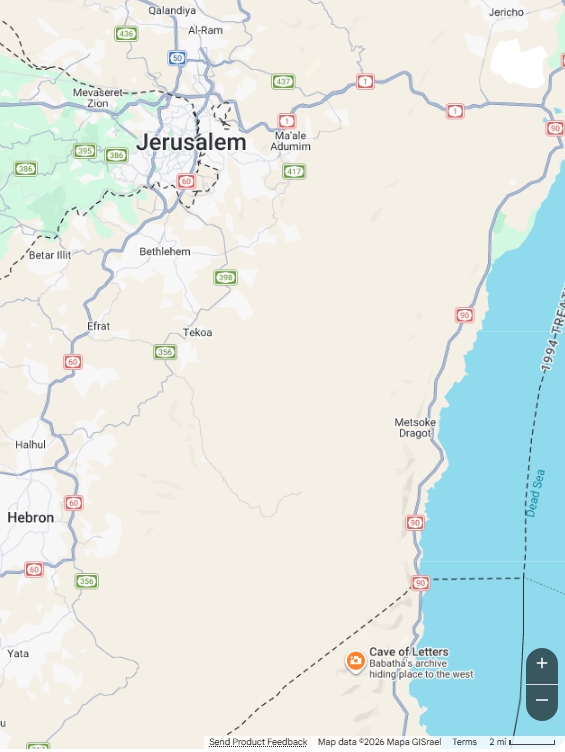
Written in Greek, Aramaic, and the regional language of Nabatean, transacted in diverse legal jurisdictions, and involving Jews, Roman citizens (who may or may not have been Jews), and Nabateans, these papyri throw into sharp relief the diverse cultural and legal environments in which Babatha and those around her lived their lives. They offer us the most detailed portrait yet of an actual Jewish woman from Greco-Roman antiquity (although it should be noted that a few scholars have raised questions about Babatha’s ethnicity/”religion”).
Frustratingly, though, these papyri speak indirectly at best to questions of religious practice. translation and text: Naphtali Lewis, Yigael Yadin and Jonas C. Greenfield, eds., The Documents from the Bar Kokhba Period in the Cave of Letters, Judean Desert Studies 2 (Jerusalem: Israel Exploration Society; Hebrew University: Shrine of the Book, 1989); Yigael Yadin, [posthumously], Jonas C. Greenfield, and Ada Yardeni, “Babatha’s Ketubbah,” IEJ 44, nos. 1–2 (1994): 75–101 (for 62A). bibliography: Hannah M. Cotton and J. C. Greenfield, “Babatha’s Property and the Law of Succession in the Babatha Archive,” ZPE 104 (1994): 211–24; Hannah Disputes between Babatha and Her Co-widow, Miriam P. Yadin 26July 9, 131 c.e.
https://doi.org/10.1093/oso/9780195170658.003.0063, Pages 143–151, Published: 04 March 200
Babatha of Maoza: A Life Preserved in the Cave of Letters – Contains a short video about her.
By Olga Sakharov on September 22, 2026 2:00 pm
Book – Babatha’s Orchard: The Yadin Papyri and an Ancient Jewish Family Tale Retold by Philip F. Esler. Published: 23 February 2017
Abstract
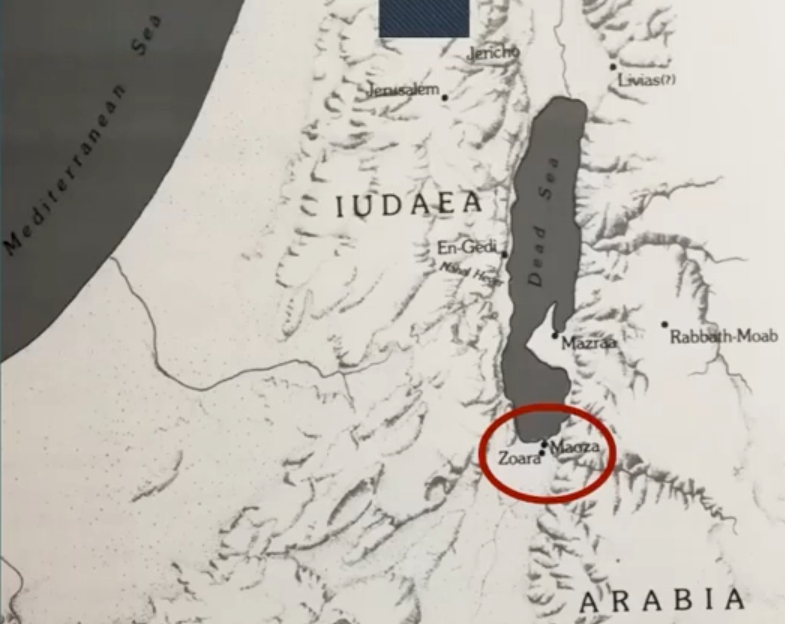
In 1961 archaeologists discovered a family archive of legal papyri in a cave near the Dead Sea where their owner, the Jewish woman Babatha, had hidden them in 135 ce at the end of the Bar Kokhba revolt. This book analyses the oldest four of these papyri to argue that underlying them is a hitherto undetected and surprising train of events concerning how Babatha’s father, Shim‘on, purchased a date-palm orchard in Maoza on the southern shore of the Dead Sea in 99 ce that he later gave to Babatha.
The central features of the story, untold for two millennia, relate to how a high Nabatean official had purchased the orchard only a month before, but suddenly rescinded the purchase, and how Shim‘on then acquired it, in enlarged form, from the vendor. Teasing out the details involves deploying the new methodology of archival ethnography, combined with a fresh scrutiny of the papyri (written in Nabatean Aramaic), to investigate the Nabatean and Jewish individuals mentioned and their relationships within the social, ethnic, economic, and political realities of Nabatea at that time.
Aspects of this context which are thrown into sharp relief by this book include: the prominence of wealthy Nabatean women and their husbands’ financial reliance on them; the high returns and steep losses possible in date cultivation; the sophistication of Nabatean law and lawyers; the lingering effect of the Nabateans’ nomadic past in lessening the social distance between elite and non-elite; and the good ethnic relations between Nabateans and Jews. — Philip F. Esler
