From ChatGPT on 12/20/2025.
When did Moses go to Midian, marry, and hear his pagan father-in-law praying to YHWH?
Short answer (critical-scholarly view)
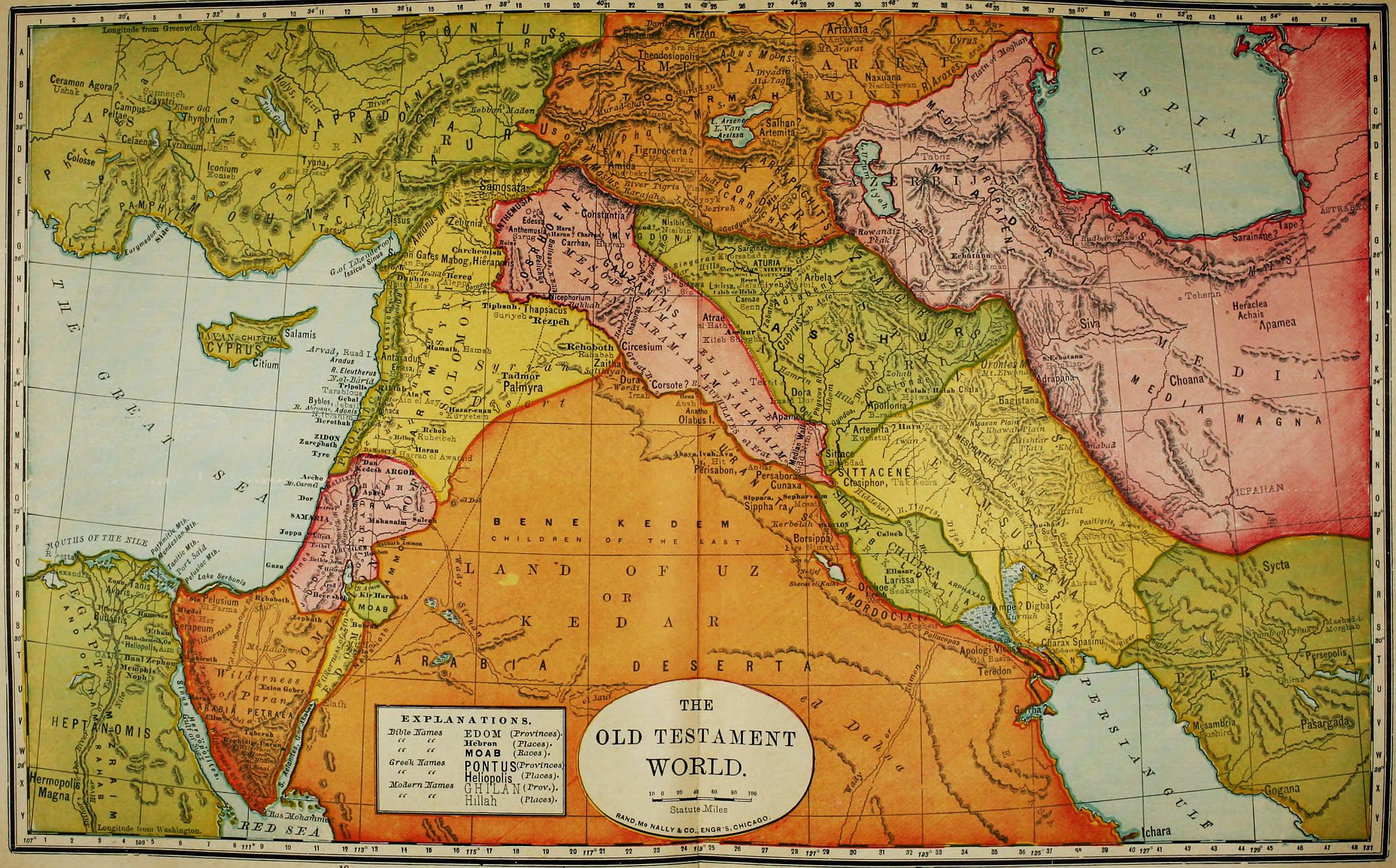
Most critical scholars place Moses’ flight to Midian, his marriage, and his exposure to YHWH worship there in the late Middle Bronze / early Late Bronze transition, roughly ca. 1400–1250 BCE, depending on whether one assumes an earlier or later Exodus tradition. The key point is not an exact year but the southern, non-Egyptian setting in which Moses first encounters YHWH through a Midianite priest.
What the biblical text actually says
- Flight to Midian: Moses flees Egypt after killing an Egyptian (Exod 2:11–15, NRSV).
- Marriage: He marries Zipporah, daughter of Jethro (also called Reuel), explicitly identified as “priest of Midian” (Exod 2:16–21).
- YHWH revelation: While tending Jethro’s flock, Moses encounters YHWH at Horeb (Exod 3:1–6).
- Jethro’s worship: Jethro later offers sacrifices to YHWH, and Aaron and the elders eat a sacred meal with him (Exod 18:10–12), showing that Jethro already knows and honors YHWH.
How critical scholars interpret this
- Midian precedes Sinai
- Scholars widely argue that Moses learns the name and worship of YHWH in Midian, not Egypt. Martin Noth described this as a “Midianite-Kenite transmission” of YHWH worship (Noth, The History of Israel).
- Frank Moore Cross emphasized that YHWH appears first as a southern warrior deity, associated with Seir, Edom, and Midian (Cross, Canaanite Myth and Hebrew Epic).
- Jethro is not portrayed as a convert
- Jethro does not “convert” in Exodus 18; he already functions as a priest who recognizes YHWH’s power. William Dever notes that this implies YHWH worship existed outside Israel before Moses (Dever, Did God Have a Wife?).
- The text never depicts Jethro abandoning other gods, which fits ancient Near Eastern priestly pluralism rather than later Israelite monotheism.
- Chronological placement
- If Moses belongs to a 13th-century Exodus tradition, then his Midian period would fall ca. 1300–1250 BCE.
- If one assumes an earlier 15th-century tradition, then Midian would fall ca. 1450–1400 BCE.
- In both cases, the setting aligns with the MBA–LBA transition, a time of population movement, weakening Egyptian control in Canaan, and rising semi-nomadic groups (Kitchen, On the Reliability of the Old Testament).
Why scholars think Jethro’s YHWH is “pagan” (anachronistically speaking)
- Jethro is a non-Israelite priest, outside the covenant, temple, or Torah.
- His YHWH worship lacks later Israelite markers (no Sinai law, no prohibition of other gods).
- Mark S. Smith argues that early YHWH was one deity among others, later elevated to exclusivity in Israelite theology (Smith, The Early History of God).
So when Moses hears YHWH named and honored in Midian, he is encountering an older, southern form of YHWH worship, not yet Israel’s national God.
Bottom line
- When: During Moses’ exile in Midian, roughly 1400–1250 BCE.
- Where: Southern Transjordan / northwest Arabia (Midian).
- From whom: Jethro, a Midianite priest, already worshiping YHWH.
- Why it matters: In critical scholarship, this is where Israel’s YHWH tradition begins, later reshaped at Sinai into a national covenant faith.
If you want, I can next map this Midian episode directly onto J/E source layers or show how Deuteronomy 33:2 preserves this southern YHWH memory verbatim (ASV/NRSV). DO BOTH.
1. Mapping Moses-in-Midian and YHWH to J / E source layers
J (Yahwist, southern-oriented)
- Core assumption: YHWH is already known by name before Sinai.
- Key texts:
- Exodus 3:1–6 (burning bush at Horeb) — YHWH speaks directly and personally; no concern about first revelation of the name.
- Exodus 18:10–12 — Jethro blesses YHWH and offers sacrifice without controversy.
- Scholarly reading:
- J preserves an older southern YHWH tradition, rooted in Midian/Edom/Seir. Frank Moore Cross argues J reflects a warrior-god from the south adopted by Israel (Canaanite Myth and Hebrew Epic).
- In J, Moses does not introduce YHWH; he encounters an already-established deity in Midian.
- Implication:
- J fits cleanly with the idea that Moses learns YHWH worship during his Midian exile, mediated through Jethro.
E (Elohist, northern-oriented)
- Core assumption: The divine name is newly revealed to Moses.
- Key texts:
- Exodus 3:13–15 — emphasis on “What is his name?” and the revelation “I AM WHO I AM.”
- Exodus 6:2–3 — “By my name YHWH I did not make myself known to them” (NRSV).
- Scholarly reading:
- E reframes Midianite YHWH worship as partial or incomplete, reserving full disclosure for Moses. Martin Noth and Richard Friedman see this as a theological correction layered over older tradition (The History of Israel; Who Wrote the Bible?).
- Implication:
- E tries to domesticate the Midian tradition, turning Moses into the official revealer of YHWH rather than a recipient of a foreign cult.
Resulting tension (J vs. E)
- J: YHWH is known, worshiped, and active in Midian before Sinai.
- E: YHWH’s name and identity are formally revealed only to Moses.
- This tension strongly suggests traditions were merged, not invented whole, with Midianite YHWH worship being the older stratum.
2. Deuteronomy 33:2 as a preserved southern YHWH memory
Text (ASV)
“Jehovah came from Sinai,
And rose from Seir unto them;
He shined forth from mount Paran,
And he came from the ten thousands of holy ones…”
Why scholars see this as crucial
- Geography:
- Seir = Edom
- Paran = southern wilderness (often linked with Midian)
- Sinai is not the origin, but one stop in YHWH’s movement northward.
Mark S. Smith argues this verse preserves a pre-Israelite hymn depicting YHWH as a southern storm-warrior whose cult predates Israel (The Early History of God). The poetic structure does not present Sinai as the beginning, but as a waypoint.
Connection to Moses in Midian
- Moses meets YHWH at Horeb while tending sheep in Midian (Exod 3:1, NRSV).
- Deuteronomy 33:2 aligns with this by locating YHWH’s emergence south of Israel, not in Egypt or Canaan.
- William Dever notes that such texts make best sense if YHWH worship existed among southern nomadic groups before Israel (Did God Have a Wife?).
Why Deuteronomy keeps this older memory
- Deuteronomy is late, but it often quotes archaic poetry unchanged.
- Scholars widely treat Deut 33 as one of the oldest textual layers in the Hebrew Bible, preserving early theology even when later theology had moved toward exclusivity.
Bottom-line synthesis
- Historically (critical view):
Moses goes to Midian during the MBA–LBA transition (ca. 1400–1250 BCE), marries into a priestly family, and encounters YHWH worship already practiced there. - Literarily:
- J preserves this memory openly.
- E reworks it to protect Moses’ authority.
- Poetically:
- Deuteronomy 33:2 preserves the clearest trace of YHWH’s southern origin, fully consistent with the Midian episode.
If you want next, I can lay this out in a tight side-by-side table (J / E / Deut 33 / Exodus 3 / Exodus 18) or trace how later prophets (Habakkuk 3; Judges 5) reuse this same southern-YHWH imagery.
Reuse of southern-YHWH imagery in Judges 5 and Habakkuk 3
(critical-scholarly tracing, with texts and interpretation inline)
1. Judges 5 (Song of Deborah) — earliest reuse
Text (Judg 5:4–5, ASV)
“Jehovah, when thou wentest forth out of Seir,
When thou marchedst out of the field of Edom,
The earth trembled, the heavens also dropped,
Yea, the clouds dropped water.
The mountains quaked at the presence of Jehovah,
Even yon Sinai at the presence of Jehovah, the God of Israel.”
Southern imagery reused
- Seir / Edom: identical southern geography to Deut 33:2.
- Marching deity: YHWH advances north as a warrior.
- Storm-theophany: rain, quaking mountains, cosmic disturbance.
Scholarly assessment
- Most critical scholars date Judges 5 to the pre-monarchic or early monarchic period, making it one of the oldest Hebrew poems. Frank Moore Cross argues that its language and imagery preserve a pre-Israelite storm-warrior hymn later nationalized (Canaanite Myth and Hebrew Epic).
- Mark S. Smith notes that Sinai is not presented as YHWH’s origin but as a station along his march (The Early History of God).
Connection to Midian
- Edom and Seir lie directly adjacent to Midianite territory.
- The poem assumes the audience already knows YHWH as a southern deity, not one newly revealed at Sinai.
2. Habakkuk 3 — prophetic reuse of archaic hymnody
Text (Hab 3:3–4, NRSV)
“God came from Teman,
the Holy One from Mount Paran.
Selah
His glory covered the heavens,
and the earth was full of his praise.
His brightness was like the sun;
rays came forth from his hand,
where his power lay hidden.”
Southern imagery reused
- Teman: a region in Edom.
- Paran: same wilderness zone named in Deut 33:2.
- Radiant storm-god: light, power, cosmic scale.
Expanded theophany (Hab 3:6, 8, NRSV)
“He stood and shook the earth…
Was your wrath against the rivers, O Lord?
Or your anger against the rivers, or your rage against the sea…?”
This is classic storm-warrior language, comparable to Baal imagery, now fully applied to YHWH.
Scholarly assessment
- Habakkuk 3 is widely regarded as a very old poem reused by a late prophet. John J. Collins and Mark S. Smith both emphasize that the chapter is not exilic innovation but archaic tradition repurposed for new crisis (Introduction to the Hebrew Bible; The Early History of God).
- The prophet assumes the audience recognizes YHWH’s southern origin imagery without explanation.
3. How these texts reuse Deuteronomy 33:2 (line-of-tradition)
Deut 33:2 (ASV)
“Jehovah came from Sinai,
And rose from Seir unto them;
He shined forth from mount Paran…”
Reuse pattern
- Geography:
- Deut 33 → Seir / Paran
- Judg 5 → Seir / Edom
- Hab 3 → Teman / Paran
- Movement: YHWH advances northward, not descending from heaven or emerging from Jerusalem.
- Role: Warrior-king and storm-god, not lawgiver.
Cross describes this as a “processional hymn” tradition, reused whenever Israel faced military or cosmic threat (Canaanite Myth and Hebrew Epic).
4. Theological development (what changes, what doesn’t)
What stays constant
- YHWH originates in the southern wilderness.
- YHWH appears as a storm-warrior.
- Sinai is a meeting place, not a birthplace.
What changes
- Early poetry (Judg 5): YHWH fights for tribes.
- Deut 33: YHWH becomes covenant patron of Israel.
- Hab 3: YHWH becomes cosmic judge, ruler of all creation.
Mark S. Smith notes that this shows continuity without uniformity: Israel does not invent YHWH late, but reinterprets an inherited southern deity across centuries (The Early History of God).
Bottom line
Judges 5 and Habakkuk 3 do not introduce new imagery. They deliberately reuse an ancient southern-YHWH tradition already visible in Deuteronomy 33:2 and rooted in the Midian-Edom-Paran zone where Moses first encounters YHWH. The prophets preserve this memory because it still functioned as Israel’s most powerful language for divine intervention—long after Sinai theology had matured.
If you want, I can next overlay these three poems line-by-line or show how Psalm 68 and Psalm 77 continue the same southern-march tradition.
Continuation of the southern-YHWH march tradition in Psalm 68 and Psalm 77
1. Psalm 68 — liturgical reuse of the southern march
Text (Ps 68:7–8, ASV)
“O God, when thou wentest forth before thy people,
When thou didst march through the wilderness; Selah.
The earth trembled,
The heavens also dropped rain at the presence of God:
Even yon Sinai trembled at the presence of God, the God of Israel.”
Southern-march markers
- “Wentest forth… marched”: processional movement, not enthronement in Zion.
- “Wilderness”: the same southern zone as Midian/Paran.
- Sinai trembles: Sinai is again a station, not YHWH’s origin.
Earlier layer preserved
- Most scholars see Psalm 68 as a composite psalm, but vv. 7–10 are widely regarded as very early hymn material. Frank Moore Cross identifies this as reused archaic warrior-theophany language (Canaanite Myth and Hebrew Epic).
- Mark S. Smith emphasizes that YHWH’s movement precedes kingship theology; the march imagery predates Zion focus (The Early History of God).
Why this matters
- Even in a psalm later associated with temple worship, YHWH is remembered as coming from outside Israel, advancing with his people.
2. Psalm 77 — reflective reuse during crisis
Text (Ps 77:16–18, NRSV)
“When the waters saw you, O God,
When the waters saw you, they were afraid;
the very deep trembled.
The clouds poured out water;
the skies thundered;
your arrows flashed on every side.
The crash of your thunder was in the whirlwind;
your lightnings lit up the world;
the earth trembled and shook.”
Southern-march markers
- Storm-theophany: thunder, lightning, trembling earth.
- Cosmic scope: identical language to Judges 5 and Habakkuk 3.
- Movement through waters: echoes Exodus memory framed in storm imagery.
Earlier tradition invoked explicitly
- The psalmist recalls YHWH’s ancient deeds as reassurance during present distress (Ps 77:11–12, NRSV).
- Scholars note that this psalm deliberately quotes older theophanic language rather than creating new imagery. John J. Collins highlights this as reuse of inherited hymnody (Introduction to the Hebrew Bible).
3. How Psalm 68 and 77 align with the older poems
Shared geographic logic
- Deut 33 → Seir / Paran
- Judg 5 → Seir / Edom
- Hab 3 → Teman / Paran
- Ps 68 → Wilderness / Sinai
- Ps 77 → Waters / Earth (cosmic expansion of same march)
The geography becomes broader over time, but the direction of movement remains the same: YHWH advances toward Israel.
Shared imagery
- Marching deity
- Earthquake and storm
- Divine intervention in history
Smith argues that the Psalms demonstrate how archaic southern-YHWH traditions were preserved liturgically, not just historically (The Early History of God).
4. Development without erasure
What the Psalms add
- Psalm 68 integrates the march into cultic celebration.
- Psalm 77 integrates it into lament and remembrance.
What they do not erase
- YHWH’s origin remains outside the land.
- Sinai remains a meeting point, not a birthplace.
- Storm-warrior imagery remains intact.
William Dever notes that the Psalms are especially important because they show these traditions survived temple centralization (Did God Have a Wife?).
Bottom line
Psalm 68 and Psalm 77 do exactly what Judges 5 and Habakkuk 3 do: they reuse and preserve an ancient southern-march tradition in which YHWH comes from the wilderness, shakes the cosmos, and advances on behalf of his people. The setting expands from geography to cosmos, but the memory remains the same—YHWH is the God who comes, not the God who begins in Zion.
If you want, I can next place all five texts (Deut 33; Judg 5; Hab 3; Ps 68; Ps 77) in a single chronological-tradition chart or show how Zion theology later reframes—but never deletes—this southern memory.
Chronological–tradition chart of the southern YHWH march
(ordered by tradition-history, not final book date)
| Text | Likely tradition layer (critical consensus) | Southern geography named | Core imagery | Function in Israel’s theology |
|---|---|---|---|---|
| Judges 5 (Song of Deborah) | Earliest poetic stratum (pre-monarchic; often dated 12th–11th c. BCE on linguistic grounds per Frank Moore Cross, Canaanite Myth and Hebrew Epic) | Seir, Edom | YHWH marches from the south; earthquake, storm, mountains shaking | Tribal war hymn: YHWH as southern storm-warrior fighting for Israel before kingship |
| Deuteronomy 33:2 | Early archaic poem embedded in late book (poem widely judged older than Deuteronomy’s prose; Mark S. Smith, The Early History of God) | Sinai, Seir, Paran | Processional theophany; radiant appearance | Transitions the warrior into covenant patron of all Israel |
| Psalm 68:7–8 (esp. vv. 7–10) | Early hymn fragment reused liturgically (archaic core within composite psalm; Cross; Smith) | Wilderness, Sinai | Marching deity; storm; trembling earth | Cultic celebration: brings southern march into temple worship without erasing origin |
| Psalm 77:16–20 | Reuse of ancient theophany in later lament (exilic or post-exilic psalm drawing on older imagery; John J. Collins, Introduction to the Hebrew Bible) | No named places; cosmic waters | Storm, lightning, trembling deep | Memory theology: past southern-march power invoked during crisis |
| Habakkuk 3 | Very old theophanic poem reused by a late prophet (archaic hymn adapted for 7th–6th c. BCE crisis; Smith; Collins) | Teman, Paran | Radiant storm-warrior; cosmic judgment | Universalizes the march: YHWH as cosmic judge, not only tribal defender |
How the tradition develops (step-by-step)
- Origin (Judg 5)
YHWH is remembered as a southern warrior deity advancing from Edom/Seir. No law, no temple—just divine combat and victory (Cross). - Nationalization (Deut 33)
The same march imagery is retained, but now YHWH becomes the patron of Israel as a whole, with Sinai as encounter point, not origin (Smith). - Cultic preservation (Ps 68)
Temple worship in Jerusalem still sings of YHWH coming from the wilderness, showing Zion theology did not erase older memory (Dever, Did God Have a Wife?). - Theological remembrance (Ps 77)
The march expands from geography to cosmos—waters, thunder, trembling earth—used to reassure Israel during national trauma (Collins). - Cosmic reinterpretation (Hab 3)
The southern march becomes a universal theophany: YHWH strides from Teman/Paran as judge of nations, not just Israel (Smith).
One-sentence synthesis
Across Judges 5 → Deuteronomy 33 → Psalms 68 & 77 → Habakkuk 3, Israel preserves a continuous memory of YHWH as a southern, marching storm-warrior, repeatedly reinterpreted—from tribal fighter, to covenant patron, to liturgical presence, to cosmic judge—without ever relocating his origin to Zion.
If you want next, I can overlay this chart with J/E/D/P layers, or show exactly where Exodus 3 and 18 fit into this same tradition-history line.
