From Claude.ai on 9/26/2026
Prompt: What do critical bible scholars see in Genesis Chapter 49 and the scenes therein as it relates to what is happening in the previous chapters and how do Jacob’s final words lead into Chapter 50 that flows into Exodus? Cite all sources inline.
Response:
Genesis 49 as Independent Poetry: Source and Form-Critical Background
Critical scholarship has long treated Genesis 49 — the “Testament of Jacob” or “Blessing of Jacob” — as a composite unit standing somewhat apart from the surrounding prose narrative. Julius Wellhausen and the classical Documentary Hypothesis assigned the narrative frame (49:1a, 28b–33) to a combination of P and J redaction, while the poem itself (49:2–27) is widely regarded as an older, independently transmitted piece of tribal poetry that was later inserted into the patriarchal narrative to serve as its capstone. Hermann Gunkel’s form-critical work treated it as a Stammspruch collection — a set of originally separate tribal sayings gathered under the literary fiction of a dying father’s oracle, a genre paralleled by the Blessing of Moses in Deuteronomy 33.
Frank Moore Cross and David Noel Freedman, working from archaic morphology, meter, and orthography, argued Genesis 49 preserves some of the oldest Hebrew verse in the Bible, plausibly compiled in stages between the twelfth and tenth centuries BCE — meaning parts of the poem may predate the Yahwistic narrative framework into which it was set. E. A. Speiser (Anchor Bible) and Claus Westermann both stress that the poem functions less as prediction than as vaticinium ex eventu — a retrospective commentary on tribal fortunes, written as if foretold by the eponymous ancestor, that encodes the political and territorial realities of Israel at (or after) the time of composition.
The Oracles as Narrative Payback: Reading Backward into Genesis 34–48
Critical readers consistently note that Genesis 49 functions as a moral ledger closing out plot threads laid down across the Joseph novella and the preceding patriarchal material — the “sins of the sons” narrated earlier resurface here as consequence.
Reuben — the firstborn — is stripped of primacy:
“Unstable as water, thou shalt not have the pre-eminence; because thou wentest up to thy father’s bed; then defiledst thou it” (Genesis 49:4, ASV)
This directly recalls the terse notice in Genesis 35:22 of Reuben’s liaison with Bilhah, Jacob’s concubine. Scholars such as Gerhard von Rad and Gordon Wenham (WBC) read this as an etiological explanation for why the historical tribe of Reuben, despite genealogical seniority, never achieved political dominance — the poem retrojects an explanation onto patriarchal narrative.
Simeon and Levi are jointly condemned:
“Simeon and Levi are brethren; weapons of violence are their swords… for in their anger they slew men… Cursed be their anger, for it was fierce” (Genesis 49:5–7, ASV)
This is almost universally read as a direct reflex of the Shechem massacre in Genesis 34, where the two brothers avenge Dinah’s rape by slaughtering the Shechemites. Westermann and Wenham both note the poem’s function here is aetiological on two fronts: it explains Simeon’s later disappearance as a distinct territorial tribe (absorbed into Judah) and Levi’s landlessness — though the Priestly tradition later reinterprets Levi’s “scattering” positively as consecration to priestly service, a theological retrofit critical scholars see as evidence of the poem’s antiquity relative to P’s cultic idealization of the Levites.
Judah, Monarchic Ideology, and the Poem’s Compositional Horizon
The Judah oracle is the interpretive crux for dating:
“The sceptre shall not depart from Judah, nor the ruler’s staff from between his feet, until Shiloh come; and unto him shall the obedience of the peoples be” (Genesis 49:10, ASV)
Von Rad, Speiser, and Wenham read this as reflecting the historical ascendancy of the tribe of Judah under David — language of “the sceptre” and “ruler’s staff” is royal-court idiom, suggesting this stratum of the poem reached (or was updated to) its present form during or after the establishment of the Davidic monarchy, even if older material underlies it. This is significant for the compositional logic of Genesis: it means the “blessing” retroactively legitimates Judah’s later political supremacy by projecting it back onto patriarchal prophecy, a pattern consistent with how the Judah-Tamar episode in Genesis 38 (itself widely read as safeguarding Davidic lineage through the Perez line) already primes Judah for prominence earlier in the cycle.
Joseph, correspondingly, receives the longest and most effusive blessing (49:22–26), a fruitful bough whose “arms were made strong” — widely read as reflecting the territorial and demographic dominance of the Joseph tribes (Ephraim and Manasseh) in the highlands, i.e., the later Northern Kingdom. Many source critics (e.g., Westermann) see this as evidence the poem’s core substratum originates in northern Israelite tradition, later absorbed and supplemented (with the Judah oracle) once Judah’s political fortunes rose — making Genesis 49 itself a small window into the north-south literary politics behind the Pentateuch’s formation.
From Jacob’s Death to Exodus: The Literary Hinge of Genesis 50
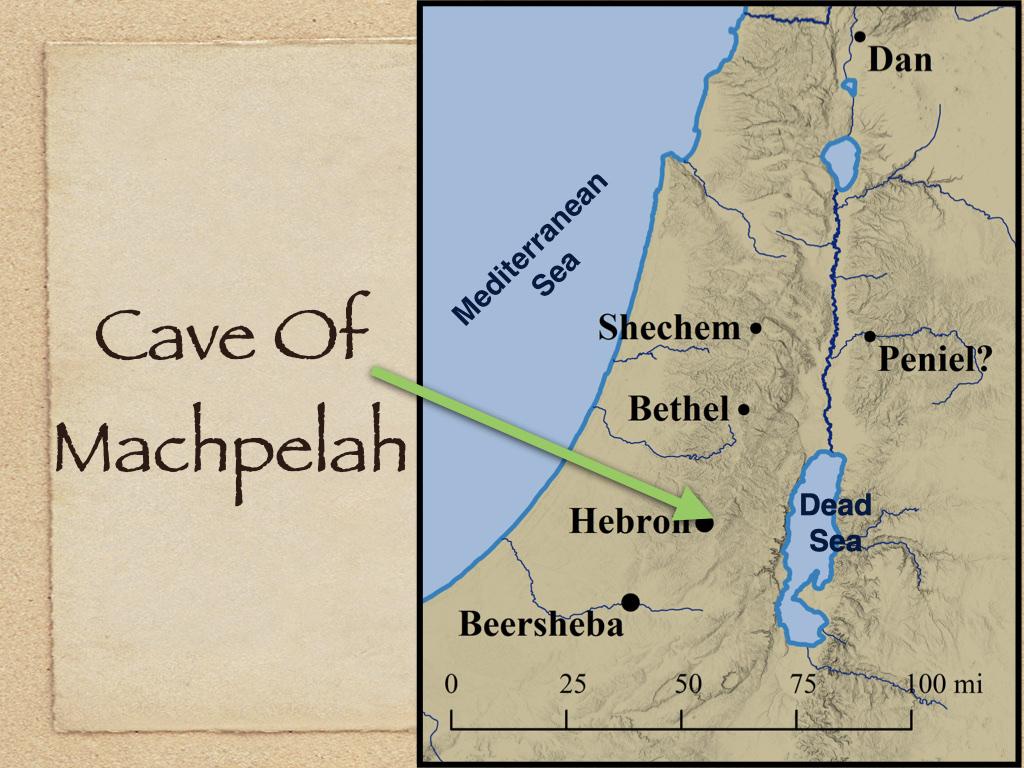
Genesis 49 closes with the patriarchal instruction for burial at Machpelah (49:29–32), and Genesis 50 executes it: Jacob’s embalming, the elaborate Egyptian-style mourning procession, and burial in Canaan. Speiser and Westermann note the embalming and seventy-day mourning notice (50:2–3) is a deliberate marker of Egyptian court custom, textured detail that source critics generally assign to J, reinforcing the novella’s interest in Joseph’s assimilation into Egyptian administration.
The chapter then delivers the theological thesis-statement of the whole Joseph story, placed in Joseph’s mouth toward his brothers:
“As for you, ye meant evil against me; but God meant it for good” (Genesis 50:20, ASV)
Von Rad reads this verse as the hermeneutical key retroactively applied to the entire Joseph narrative — a statement of providence operating through, not despite, human treachery — and many scholars (Westermann, Fretheim) treat it as evidence of wisdom-literature influence on the Joseph cycle’s final theological shaping.
Finally, the chapter closes with Joseph’s own deathbed oracle:
“God will surely visit you, and bring you up out of this land unto the land which he sware to Abraham, to Isaac, and to Jacob” (Genesis 50:24, ASV)
and his instruction that his bones be carried up out of Egypt (50:25) — a notice fulfilled explicitly at the outset of Exodus (13:19) and closed only in Joshua 24:32. Critical scholars (notably in Deuteronomistic History studies, e.g., Martin Noth, and more recently discussions of the Hexateuch question) treat this bone-notice as a deliberate redactional suture — a literary bridge deliberately engineered to link the patriarchal promise-narrative of Genesis to the deliverance-narrative of Exodus, smoothing over what was likely originally a much more disjointed set of tradition-complexes (patriarchal sagas vs. exodus/deliverance traditions) that only cohered into a continuous national history at a later compositional stage.
In this reading, Genesis 49–50 is not simply an ending but an engineered pivot: it resolves the Joseph novella’s family drama (ch. 49’s tribal verdicts, ch. 50’s reconciliation) while simultaneously reactivating the Abrahamic land-promise (50:24) as the narrative’s forward-pointing hinge into the Exodus/Sinai material — the transition from a story about a family to a story about a nation.
