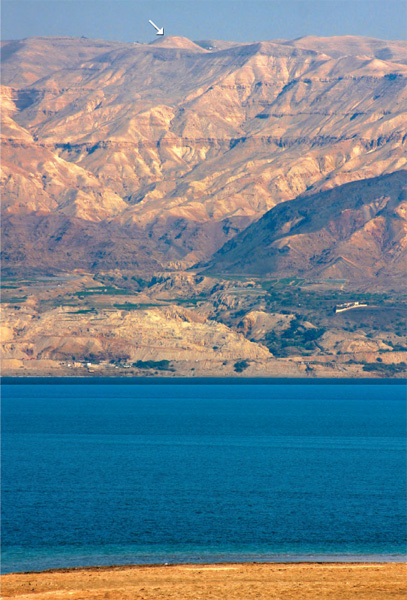
This post is an intro to a very good article at BAS titled Machaerus: Where Salome Danced and John the Baptist Was Beheaded by Győző Vörös. A PDF copy is in his directory in Dropbox. [Pronunciation with my amateurish phonics: mac-ear-us.]
Other elated articles are:
- Anastylosis at Machaerus*** Anastylosis is a Greek term used by architects and archaeologists to refer to the restoration of an ancient structure using only the original architectural elements to the greatest extent possible.
By Győző Vörös - Machaerus: A Palace-Fortress with Multiple Mikva’ot
By Győző Vörös - Restoring Herod’s Throne Niche at Machaerus
By Győző Vörös
Győző Vörös, who has a Ph.D. in architecture, has directed the Machaerus Excavations and Surveys since 2009. He is a Member and Research Director of the Hungarian Academy of Arts and a Research Professor of the Pontifical University Faculty of Biblical Sciences and Archaeology in Jerusalem.
Herod the Great was a notoriously unpopular ruler, and some think that these palace/fortresses were built to provide Herod with a safe haven in case of rebellion. To assure that he would be mourned, he ordered that “all the principal men of the entire Jewish nation, wheresoever they lived,” should be killed on Herod’s death.4 But there was another, outside danger: The Jewish area of Perea, ruled by Herod Antipas after his father’s death, lay east of the Jordan at the border of Nabatea, a potential foe. Were the Nabateans to attack, Machaerus would be the first to face the enemy.
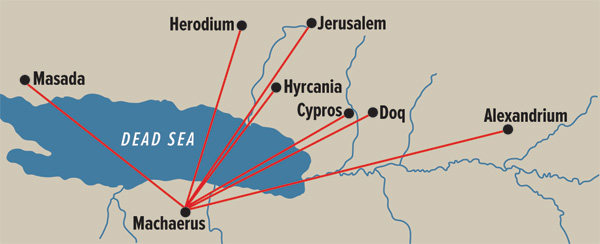
If, however, an attack from the north or the south reached Alexandrium or Masada first, Machaerus would receive a signal by smoke during the day or fire by night. The eastern fortress would then send out flares of its own, visible to all of the other western citadels. Even Jerusalem was visible from Machaerus. The smoke of the sacrificial offerings could be seen rising from the altars of the Jerusalem Temple.
MLA Citation – Vörös, Győző. “Machaerus: Where Salome Danced and John the Baptist Was Beheaded,” Biblical Archaeology Review 38.5 (2012): 30–41, 68.
Extract – The second letter to discuss is Lachish #4. While this letter, unfortunately, does not include the names of either the sender or its recipient, it does contain several important reports. Most intriguing is the mention that the sender is watching the signal fires of Lachish, for they cannot see Azekah. The exact meaning and implication of this statement are debated, but it does resemble Jeremiah 6:1, which mentions the use of signal fires to warn of the invading Babylonian army, providing a plausible date for this text.
Extract from The Lachish Letters, A Judahite archive from the First Temple period by Nathan Steinmeyer May 05, 2023.
Some of the images from the article are below.