Extracts from the BAS article by Jeffrey P. García by the same name. Jeffrey P. Arroyo García is Associate Professor of Biblical Studies at Gordon College. He specializes in the Gospels and Greco-Roman Jewish literature.
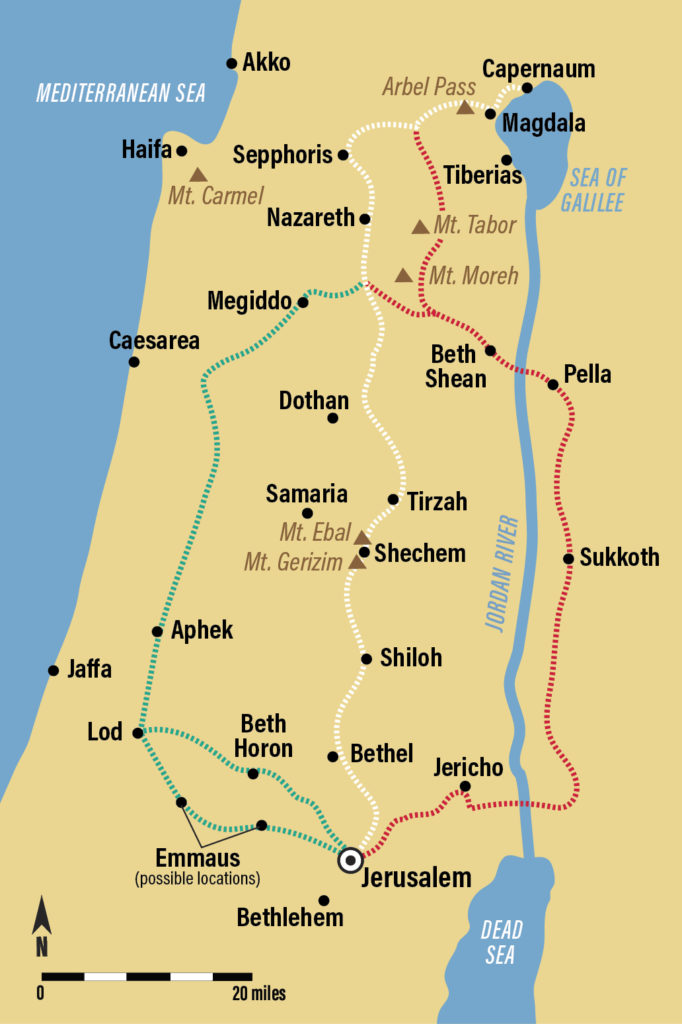
- The central—and shortest—route goes through Samaria. Pilgrims would have passed the cities of Sepphoris, Nazareth, Tirzah, Shechem, Shiloh, and Bethel. Although this route would have taken only three days by foot, many Jews chose to avoid it. They preferred longer routes that were historically safer. The Jewish historian Josephus records a violent quarrel between some Galilean Jews and Samaritans, while the Galileans were traveling through Samaria (Antiquities). Passing through this volatile region carried real risks. Yet, García observes that sometimes Jesus and his disciples did indeed travel this path (John 4).
- Skirting Samaria, the eastern route crosses the Jordan River, passes through the region of Perea, and then crosses back over the Jordan River near Jericho. It would have taken pilgrims five to seven days to traverse it. Cities along this path include Beth Shean, Pella, Sukkoth, and Jericho, as well as smaller villages like Bethpage, and Bethany. Because of the Jewish communities in Perea, this region was safer—and more hospitable—than Samaria for Galilean pilgrims.
- The third major route that García outlines is situated closer to the Mediterranean Sea. This western route also avoids Samaria, but this time in favor of the coastal plain. It was the longest way for Galilean pilgrims to reach Jerusalem. Pilgrims going this way would have passed Megiddo, Aphek, Lod, and either Emmaus or Beth Horon.
These pilgrimage paths shed light on social tensions and religious practices in the first century. Sometimes Jews took longer routes to avoid dangerous regions…
Read the full article “Jesus and His Pilgrimage Practices” by Jeffrey P. García in the Summer 2021 issue of Biblical Archaeology Review.