Were living Children Sacrificed to the Gods? Yes. The thousands of individual burials, the several mass burials and the animal burials all demonstrate that these were sacrificial offerings to the gods. By Lawrence E. Stager, Joseph A. Greene
This article at BAS is primarily about Carthage but acknowledges the Tophet at Jerusalem.
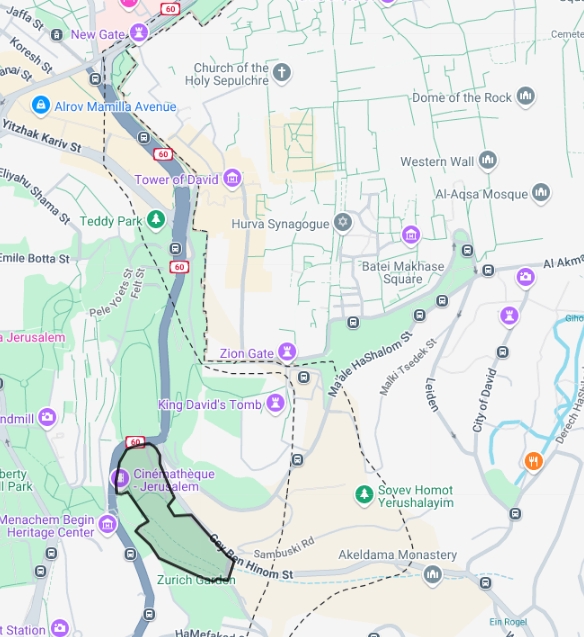
Evidence from the Hebrew Bible. The sixth-century B.C. prophet Jeremiah accused syncretizing Judahites of setting up a “high place of Tophet” in the Valley of Ben-Hinnom outside Jerusalem (Jeremiah 7:30–32), where they “burn (sharaf) their sons and their daughters in the fire (b’esh).” This is clearly not a description of sons and daughters “passing through” the fire in some sort of rite of passage from which they emerge singed but not incinerated. These children, both male and female, “burn … in the fire,” that is, they are cremated, according to Jeremiah. This testimony is not from a foreigner who accuses the Judahites of evil ways; it is from one of their own. Any Jerusalemite who thought that the prophet might have been fabricating charges of child sacrifice could have taken a short walk down the valley of Ben-Hinnom and become, like Jeremiah, an eyewitness to the human sacrifices taking place there.
The word “Tophet” can be translated “place of burning” or “roaster.” The Hebrew text does not specify that the Judahite victims were buried, only burned, although the “place of burning” was probably adjacent to the place of burial. Indeed, soil in the Carthage Tophet was found to be full of olive wood charcoal, no doubt from the sacrificial pyres. We have no idea how the Phoenicians themselves referred to the places of burning or burial or to the practice itself, since no large body of Phoenician writing—no Phoenician “Bible,” as it were—has come down to us.
The sex of the victims is unclear. We do not know for certain whether they were exclusively males, as some have asserted, or both males and females. Some biblical texts suggest that firstborn males were chosen as the ultimate sacrifice to the deity. For example, during a military engagement between the Moabites and the Israelites, the king of Moab “took his firstborn son who was to succeed him, and offered him as a burnt offering.” Upon witnessing this sacrifice, the Israelites retreated and “returned to their own land” (2 Kings 3:27). The prophet Micah lists the sacrifice of the firstborn male as the highest form of offering a human can give to a god—even better than “calves a year old,” rams or “rivers of olive oil” (Micah 6:6–7). Other texts, however, specify that both “sons and daughters” were sacrificed in the Tophet (Jeremiah 7:31 and 2 Kings 23:10).
Extracts from BAS Library – Child Sacrifice at Carthage—Religious Rite or Population Control?
by Lawrence E. Stager, Samuel Wolff
“Tophet” is a Biblical word. It is the name of a place that was on the south side of ancient Jerusalem in the Valley of Ben-Hinnom, where the Israelites sacrificed their children by fire. It may even refer to the altar on which the sacrifices took place. The book of the prophet Jeremiah describes it:
“‘The people of Judah have done evil in my sight,’ saith the Lord … ‘They built the high placea of Tophet, which is in the Valley of Ben-Hinnom, to burn their sons and their daughters in fire. Such a thing I never commanded, nor had in mind’” (Jeremiah 7:30–32).
The Biblical references associate the Tophet with idolatrous worship of Baal:
“They rejected the commandments of the Lord … and served Baal. They consigned their sons and daughters to the fire” (2 Kings 17:16–17; see also Jeremiah 32:35).
The Tophet is also mentioned in connection with the non-Israelite god Molech—or at least that is the assumption of most modern translators (2 Kings 23:10 and Jeremiah 32:35). (Later in this article we shall question that assumption.) The Jerusalem Tophet was dismantled by King Josiah in the seventh century B.C.:
“[King Josiah of Judah] defiled Tophet, which is in the Valley of Ben-Hinnom, so that no one might consign his son or daughter to the fire of Molech” (2 Kings 23:10).
Whether this was its first destruction and whether it was thereafter rebuilt, we cannot be sure.
MLA Citation – Stager, Lawrence E., and Samuel Wolff. “Child Sacrifice at Carthage—Religious Rite or Population Control?” Biblical Archaeology Review 10.1 (1984): 30–51.
