Related Post here.
A very good paper by Dr. James Tabor is available in his Dropbox directory. The file name is Wadi-el-Yabis-Pella-in-John-1.pdf. The paper was written for an SBL group in 2011 and is titled Wadi el-Yabis and the Elijah “Wadi Cherith” traditions in Relationship to John and Jesus in the Gospel of John. Extracts are below.
Opening paragraph – My focus today is on John’s intriguing geographical references to the baptismal activities of both John the Baptizer and Jesus of Nazareth. My thesis is that these references offer a possible geographical and chronological window into the movements and activities of both John and Jesus that can actually be tested “on the ground.” Not only do these references shed new light on the last winter of Jesus’ life, including Mark’s rather sparse geographical account of Jesus’ final journey to Jerusalem (Mark 8-10), but they offer a new positive spin on the tradition that Jesus’ Jerusalem followers fled to the Hellenistic city of Pella in the Decapolis in the face of the siege of Jerusalem following the outbreak aof the first Jewish revolt in 66 CE.
I consider this reference in the gospel of John to be of enormous value. The tradition that Jesus carried on his own Judean based baptismal activities, apparently with great success, whether in direct co-operation with John or in tension therewith, is not something one can easily dismiss. It is wholly unknown to the Synoptic traditions. That Jesus is associated with activities in the south, in Judea, whereas John is in the north, in the areas to the south of the Sea of Galilee and along the Jordan River is invaluable. According to John, long before Jesus sets up his strategic headquarters in Capernaum and moves his mother and brothers there, following the wedding at Cana, Jesus has already begun to carry out a highly successful preaching and baptismal thrust in Judea (John 2:12). What I find most intriguing is the cryptic reference in the gospel of John to Jesus’ retreat across the Jordan the last winter of his life. He has left Jerusalem after Hanukah and John reports:
John 10:39-42 – Again they sought to arrest him, but he escaped from their hands. He went away again across the Jordan to the place where John had been baptizing at first, and there he remained. And many came to him. And they said, “John did no sign, but everything that John said about this man was true.” And many believed in him there.
Surprisingly, Mark seems to know something of a similar retreat of Jesus to the other side of the Jordan toward the last months of his life. Jesus has begun to make his way south to Jerusalem following the revelation of his Messianic identification at Caesarea Philippi when he is on the road passing through Galilee (Mark 9:30). Mark simply notes, without expansion or comment, that he went to the other side of the Jordan (Mark 10:1).
Mar 10:1 – And he left there and went to the region of Judea and beyond the Jordan, and crowds gathered to him again; and again, as his custom was, he taught them.
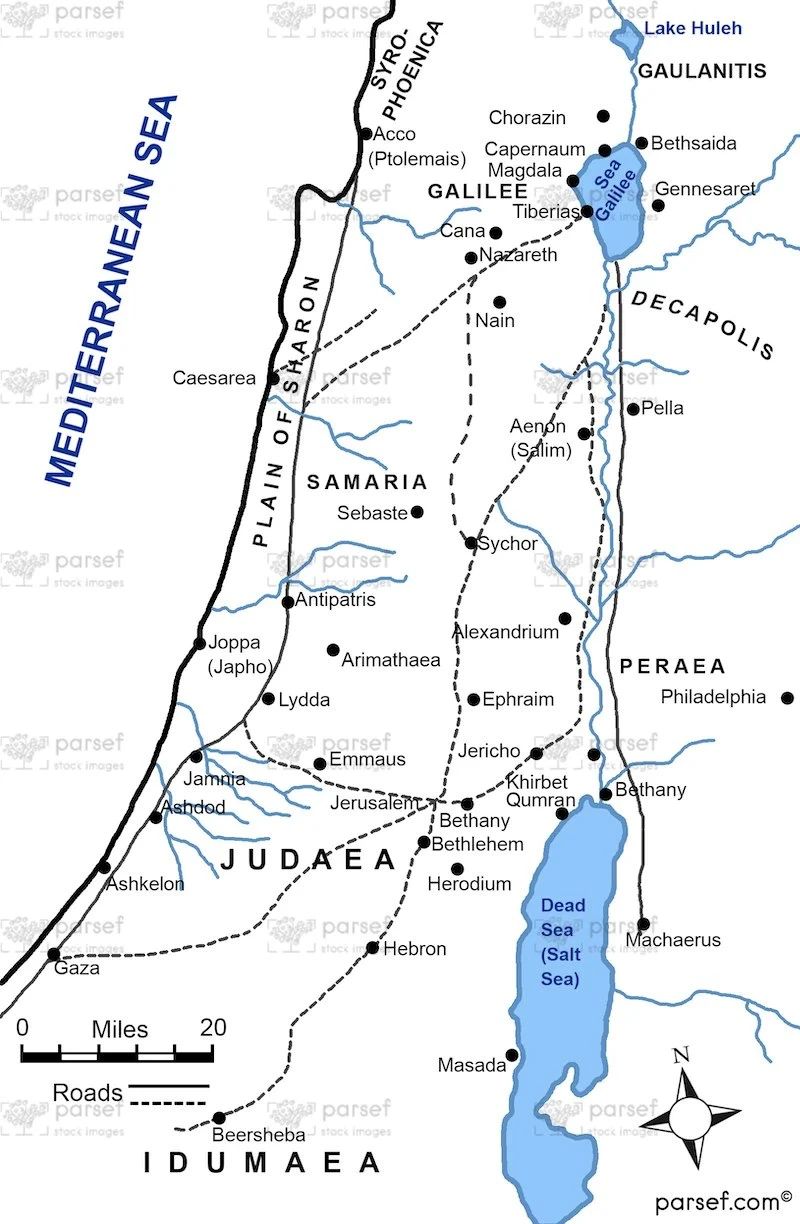
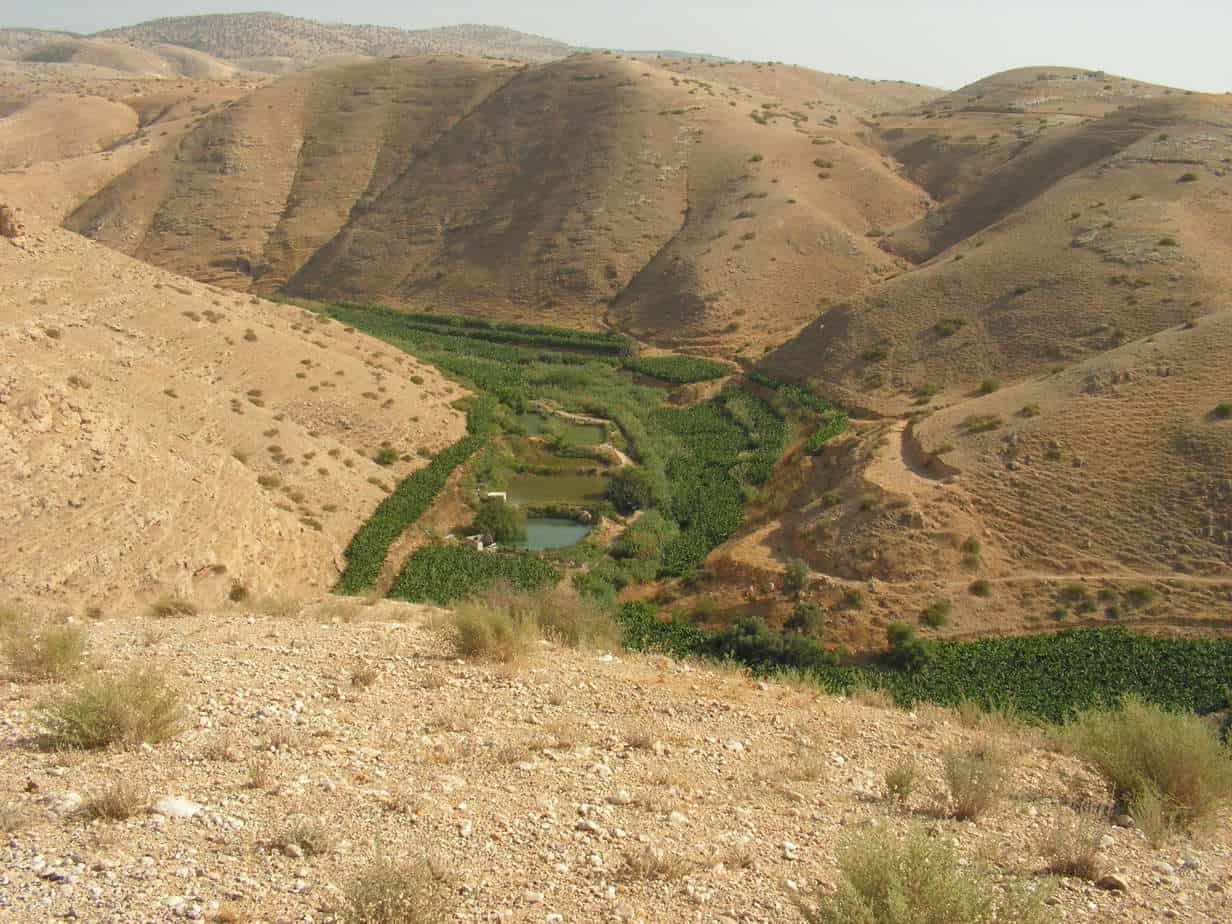
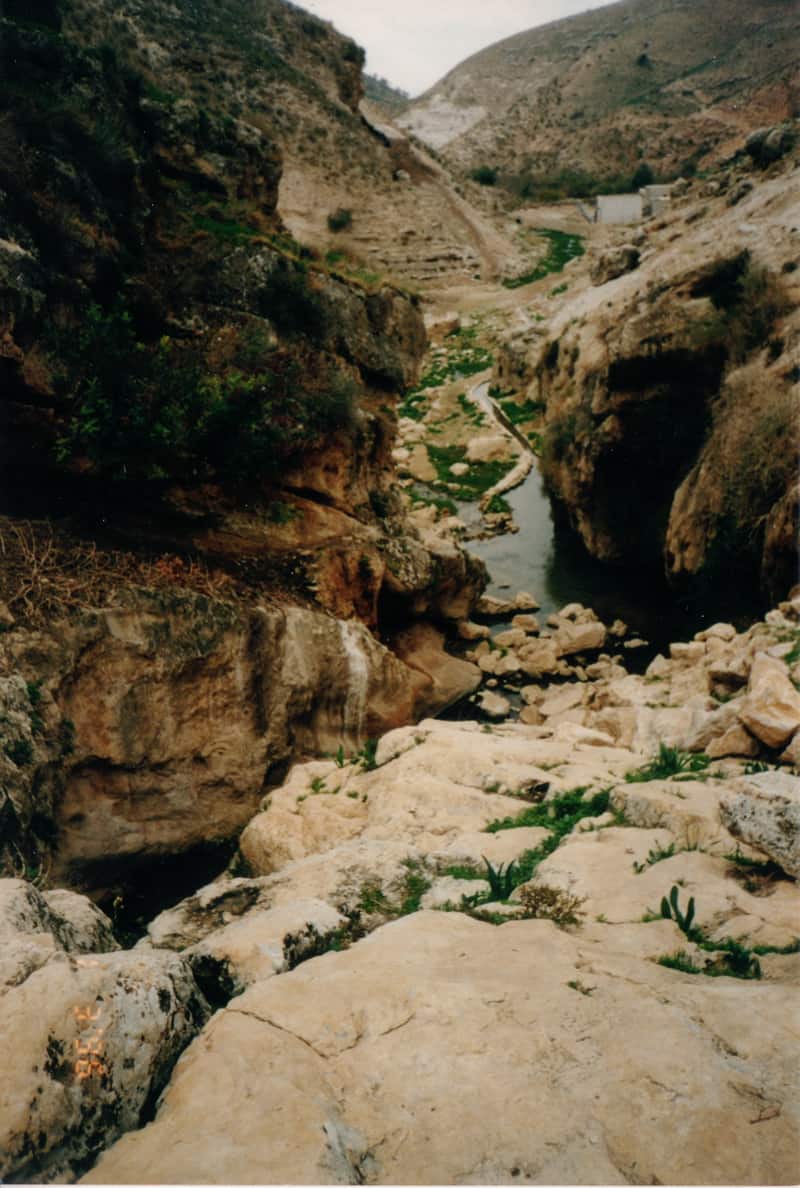
Directly across the Jordan River from the Aenon/Salim area is the rugged Wadi el-Yabis, which I take to be fairly securely identified with the famed “brook Cherith” associated with Elijah’s flight to escape death during the reign of King Ahab (1 Kings 17:1-8). Most significantly, just to the north of Wadi el-Yabis, less than two miles distant, is the Hellenistic Decapolis city of Pella. Pella became a center of Hellenistic culture under Alexander Jannaeus (Josephus, Ant. 13. 397). Pompey passed through, freed it, and made it a city of the Decapolis (Ant 14. 49; War 1. 156). It was presumably defeated by Jewish rebels in 66 CE in revenge for murder of Jews at Caesarea. Eusebius is our main source for the tradition that the followers of Jesus fled Jerusalem prior to the outbreak
of the war. He says they were commanded by a “revelation”: to leave the city and dwell “in a certain town of Perea called Pella” (HE 3.5.3). Mark’s “Apocalypse” seems to provide further background on this tradition of a flight from Jerusalem: “But when you see the abomination of desolation standing where he ought not to be (let the reader understand), then let those who are in Judea flee to the mountains” (Mark 13:14). Unless one takes the reference to the “mountains” as to the north, in Samaria, which makes little sense, the most likely location would be the rugged mountainous area beyond the Jordan in the Decapolis area just north of Perea. The book of Revelation also seems to reflect something quite similar where God’s remnant people, in escaping the persecution by the Dragon, similarly take flight: “But the woman was given the two wings of the great eagle so that she might fly from the serpent into the wilderness, to the place where she is to be nourished for a time, and times, and half a time” (Revelation 12:14). The chronological references to three and a half years further correlates with the references in Daniel to the desolating sacrilege (Daniel 9:27). I argue that the physical location of Wadi el-Yabis and its general features, as well as the historic tradition of flight associated with Elijah, offers a good geographical and archaeological fit with the reference in the gospel of John to Jesus’ flight the last winter of his life, as well as that of the Pella tradition as related to the Jerusalem community of Jesus’ followers.
Sidenotes include:
- 2 See the rich and helpful discussion of the area by Shimon Gibson, The Cave of John the Baptist (New York: Doubleday, 2004), pp. 217-237.
- 3 Rainer Riesner, “Bethany Beyond the Jordan (John 1:28). Topography, Theology and History in the Fourth Gospel,” Tyndale Bulletin 38 (1987): 29-64, also sv. “Bethany Beyond the Jordan,” in Anchor Bible Dictionary 1:703-705. Compare Michele Piccirillo, “The Sanctuaries of the Baptism on the East Bank of the Jordan River, “ in Jesus and Archaeology, ed. James H. Charlesworth (Grand Rapids: Eerdmans, 2006), pp. 433-443. baptized (John 3:22-23).
See Also: An Amazing Discovery: A “Jesus Hideout” in Jordan by Tabor, with its link to the video below.
