From ChatGPT, 12/1/2024.
Prompt – Where is the Gerasene where the Demoniac in the bible was possessed by demons?
The Gerasene region mentioned in the story of the demoniac possessed by demons is found in the Synoptic Gospels (Mark 5:1–20, Matthew 8:28–34, and Luke 8:26–39). This region is referred to as the “country of the Gerasenes” or “Gadarenes,” depending on the manuscript tradition.
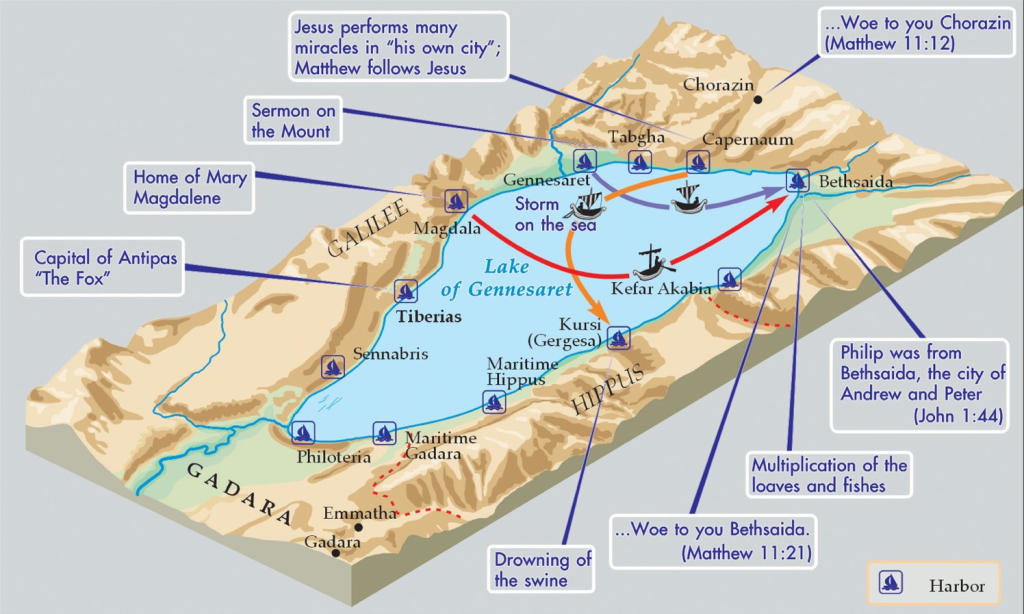
Location
- General Area: The Gerasene/Gadarene region is situated on the eastern shore of the Sea of Galilee. This area was part of the Decapolis, a group of ten Hellenistic cities known for their Greek and Roman cultural influences.
- Key City: The name “Gerasene” likely refers to Gerasa (modern-day Jerash in Jordan) or Gadara (modern-day Umm Qais in Jordan). Both were significant cities in the Decapolis, though neither is immediately on the shore of the Sea of Galilee. This has led to debates about the exact location of the event.
- Possible Site: Many scholars associate the specific location with Kursi, a site along the eastern shore of the Sea of Galilee where ancient ruins, including a Byzantine monastery, were found. Kursi is within the vicinity described in the Gospels and has geographical features consistent with the narrative (e.g., steep slopes leading into the sea, where the herd of pigs might have drowned).
Biblical Context
- The story describes Jesus crossing the Sea of Galilee and encountering a man possessed by demons who lived among the tombs. After Jesus exorcises the demons, they enter a herd of pigs, which then rush down a steep slope and drown in the sea.
Followup Prompt – Provide more historical aspects of the story, why Jesus crossed the sea and what he was doing in the Decapolis. Cite all sources in a list at the end of the response.
The story of the Gerasene demoniac (Mark 5:1–20; Matthew 8:28–34; Luke 8:26–39) is rich with historical and cultural significance. Here’s a deeper dive into the historical aspects, including why Jesus crossed the Sea of Galilee and what He was doing in the Decapolis:
1. The Historical Context of the Decapolis
- Decapolis: This was a region of ten cities east of the Jordan River, heavily influenced by Greco-Roman culture. The Decapolis cities were known for their pagan practices, polytheistic temples, and large Gentile populations.
- Cultural Distinction: Unlike the predominantly Jewish regions of Galilee and Judea, the Decapolis was predominantly Gentile, with Greek language and customs. This highlights the unique nature of Jesus’ ministry there, as He typically focused on Jewish communities.
- Pig Herding: The presence of pigs, considered unclean in Jewish law (Leviticus 11:7), underscores the Gentile character of the area. Pigs were not commonly raised in Jewish territories.
2. Why Did Jesus Cross the Sea of Galilee?
- Intentional Ministry to Gentiles: Jesus’ crossing of the Sea of Galilee demonstrates His willingness to engage with Gentiles. It reflects the broader mission hinted at in His teachings: to bring salvation beyond the Jewish people (e.g., Isaiah 49:6, John 10:16).
- Teaching Opportunity: Jesus used the journey to teach His disciples. The storm encountered during the crossing (Mark 4:35–41) and His calming of it showed His divine authority over nature, preparing the disciples for what they would witness in the Decapolis.
- Challenge to Boundaries: By entering a predominantly Gentile region, Jesus challenged the societal and religious boundaries of His day, emphasizing inclusivity in His ministry.
3. What Was Jesus Doing in the Decapolis?
- Spiritual Authority: The exorcism of the demoniac showcased Jesus’ authority over spiritual forces, a theme consistent throughout His ministry (e.g., Mark 1:21–28).
- Breaking Isolation: The demoniac, ostracized and isolated in the tombs, symbolized the brokenness of humanity. By healing him, Jesus restored his dignity and reintegrated him into society.
- Spreading His Message: Jesus instructed the healed man to tell others about his deliverance (Mark 5:19). This was significant because it marked one of the first instances where Jesus intentionally spread His message in a Gentile region. The man’s testimony likely prepared the Decapolis for later Christian missionary efforts (e.g., Mark 7:31; Acts 11:19–21).
- Confronting Economic and Religious Practices: The drowning of the pigs disrupted the local economy and possibly challenged pagan rituals. This may explain why the locals asked Jesus to leave (Mark 5:17), fearing further disruption.
4. Significance of the Story in the Historical Setting
- Foreshadowing Gentile Inclusion: The episode prefigures the inclusion of Gentiles in God’s redemptive plan, which becomes a major theme in the early Church (e.g., Acts 10).
- Symbolism of the Sea: The sea, often symbolic of chaos in Jewish thought, is calmed by Jesus, representing His dominion over both physical and spiritual realms.
- Pagan Resistance: The reaction of the townspeople reflects the tension between Jesus’ transformative power and the prevailing pagan culture, highlighting the challenge of spreading His message in hostile environments.
Sources
- Bible (NRSV) – Mark 5:1–20, Matthew 8:28–34, Luke 8:26–39
- “The Decapolis in Historical and Cultural Context,” Journal of Biblical Literature
- “The Cultural and Religious Setting of Jesus’ Ministry in Gentile Regions,” Biblical Archaeology Review
- “The Demoniac and the Herd of Swine,” The New Interpreter’s Bible Commentary
- “Greco-Roman Influences on the Decapolis and Its Role in the Gospel Narratives,” Historical Jesus Studies
Related Links
Kursi – The Gerasene Site of Jesus’ Miracle on the East Side of Lake Galilee by Vassilios Tzaferis
GERASA; GERASENES at Bible Hub
