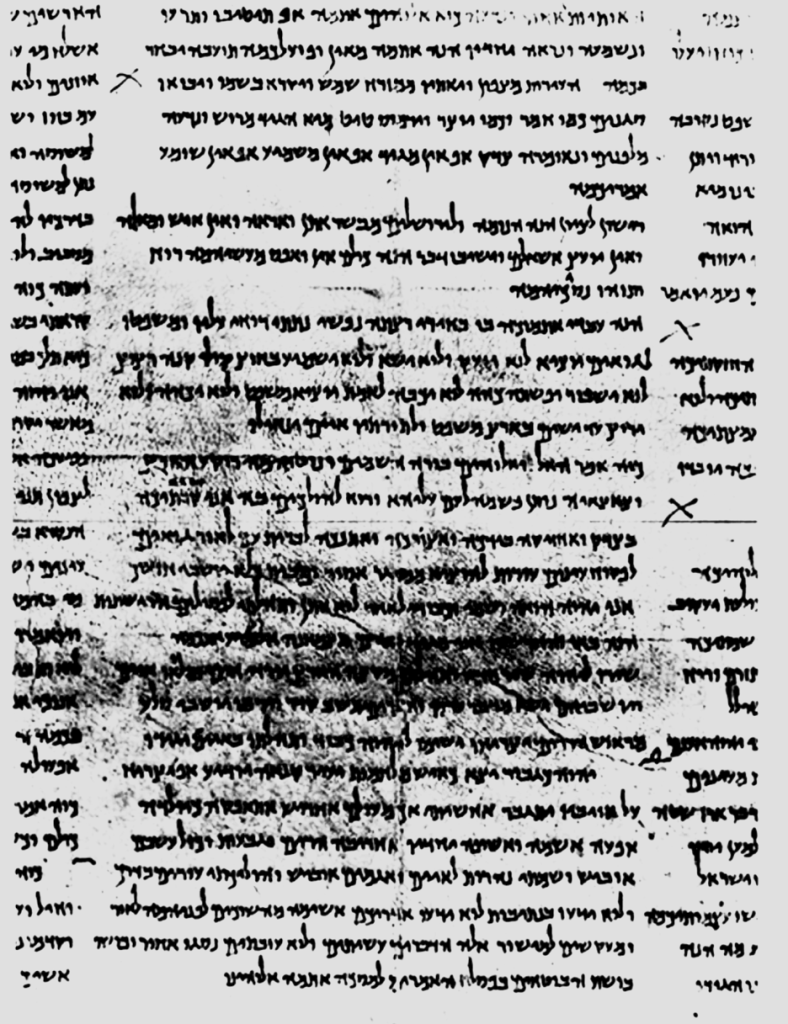
The extract below is from THE NAZARENE CORPUS, A Commentary on the Inscriptions, Volume 1 by Dr. Terry Traster (Pharm.D.) that he shared on June 3, 2026 on Tabor’s Circle platform here. The paper is 100 pages with many large images and comments with a bibliography and sources.
[Go https://www.fathersalphabet.com/paleo-hebrew-alphabet-series/tav/ for a discussion about the word Tav and how to pronounce it; i.e. “tahv” with a short a. This is not part of Terry’s paper.]
Tav
In Ezekiel 9:4, the Lord commands a mark to be placed on the foreheads of the righteous in Jerusalem before the coming judgment. The Hebrew word for this mark is tav. In paleo-Hebrew script, the letter tav was written in the shape of a cross (+ or ×). This symbol thus predates Christianity and functioned as a protective sign identifying the faithful (Shanks, 1994).
At Qumran, scribes preserved the paleo-Hebrew script for specific sacred purposes. In the Great Isaiah Scroll (1QIsaᵃ), Tav marks appear in the margins beside passages describing deliverance, suffering, and restoration. These marks signal verses of special theological significance. The same cross-shaped mark appears on some first-century ossuaries in Jerusalem. Examples include CIIP 474, CIIP 178, and CIIP 266. After the crucifixion, the ancient ‘Mark of the Remnant’ and the ‘Sign of the Messiah’ had become one.