Searching for Cana: Where Jesus Turned Water into Wine by C. Thomas McCollough
Extracts from his post at the BAS Library are below.
Khirbet Cana (“the ruins of Cana”), a bare 8.5 miles from Nazareth (and, equally important, 5 mi northeast of Sepphoris) in lower Galilee, has long been identified as New Testament Cana, although not without question. Our work here, however, has served to confirm this traditional identification.
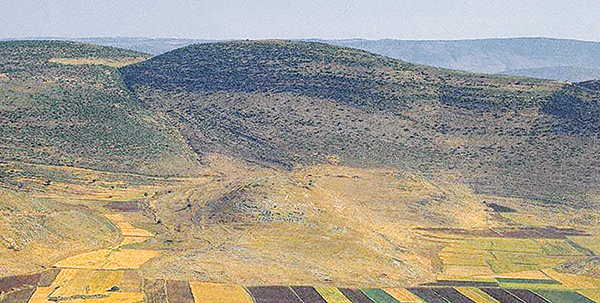
Khirbet Cana is situated on a limestone outcropping that rises 330 feet above the floor of the Bet Netofa Valley. In antiquity, the village was located at an important junction of Roman roads connecting Tarichaea on the Sea of Galilee with Ptolemais (Akko) on the Mediterranean coast.2
Architectural remains at the site go back to the Hellenistic period (323–166 B.C.E.). In the Maccabean period (166–40 B.C.E.) and in the Roman period (40 B.C.E.–324 C.E.), Khirbet Cana was a vibrant Jewish village interconnected with other Jewish villages in lower Galilee.
Perhaps the most explicit identification of Khirbet Cana with New Testament Cana comes from a fascinating cave complex we discovered on the south slope of the site. At the end of our first excavation season, somewhat by accident (as is so often the case in archaeology), we came upon an opening to a cave at the base of a fig tree. While the cave was largely filled with dirt and with sheep and goat dung, we could nevertheless see plaster on the walls and faint traces of Greek graffiti.
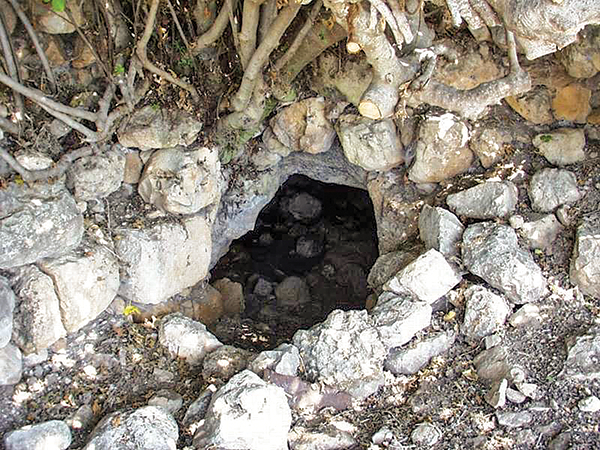
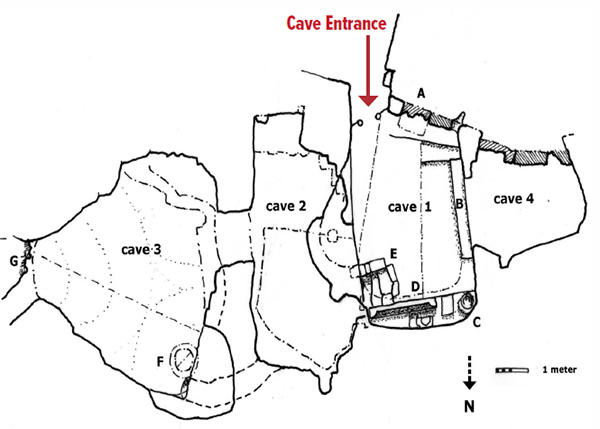
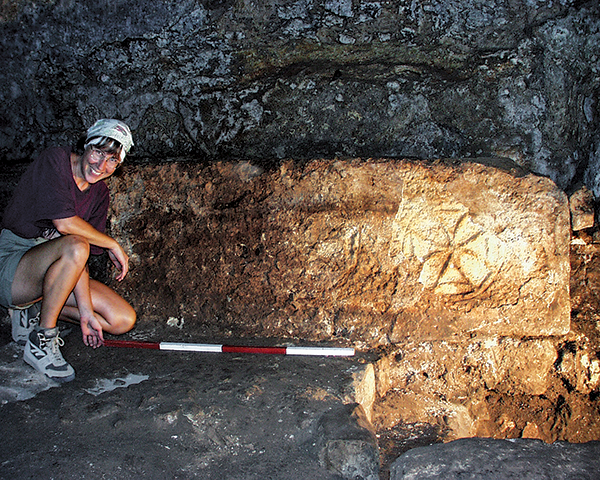
The excavated cave was roughly circular, approximately 20 feet in diameter, 8 feet high at the center point and oriented east-west. The interior was covered with several layers of plaster. The Greek graffiti, when we could make them out, read “Kyrie Iesou” (“Lord Jesus … [enter … deign to …]” and such), written on the ceiling and walls.
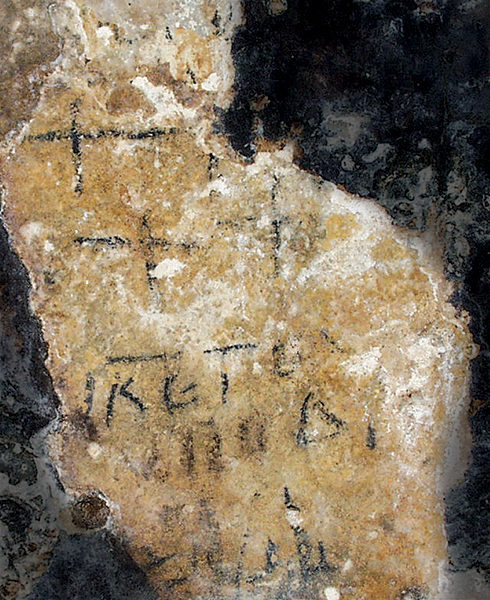
Excavation of a portion of the floor exposed three layers of lime plaster, indicating it was an important cave when laid, dating from the Byzantine period (415–654 C.E.) through the Crusader period (1024–1217 C.E.).
In conclusion, however, Khirbet Cana remains the best candidate for the location of Cana, where Christian tradition locates Jesus’ first miracle. It is the one site identified by pilgrims as Cana of Galilee before the 17th century. Moreover, the guidebooks and texts produced by Christian pilgrims from the Byzantine period through the Crusader period offer not only strong topographical indicators of Khirbet Cana as the location of Cana of Galilee, but also a description of a veneration complex that correlates strikingly with the impressive cave complex exposed at Khirbet Cana. Together this evidence supports the scholarly consensus that the site we are excavating is indeed “Cana of Galilee.”
MLA Citation
McCollough, C. Thomas. “Searching for Cana: Where Jesus Turned Water into Wine,” Biblical Archaeology Review 41.6 (2015): 31–39.
