From BAR – Another representation of the menorah that stood in the Second Temple was discovered by the late Nahman Avigad. While excavating the Jewish Quarter of Jerusalem’s Old City, Avigad found a menorah graffito incised in the plaster of a house wall just 300 yards from the Temple Mount. Measuring 8 inches tall, it dates to the first century B.C.E. Most scholars believe that it was inscribed by someone who had seen the menorah in the Second Temple. Click here for the full article.


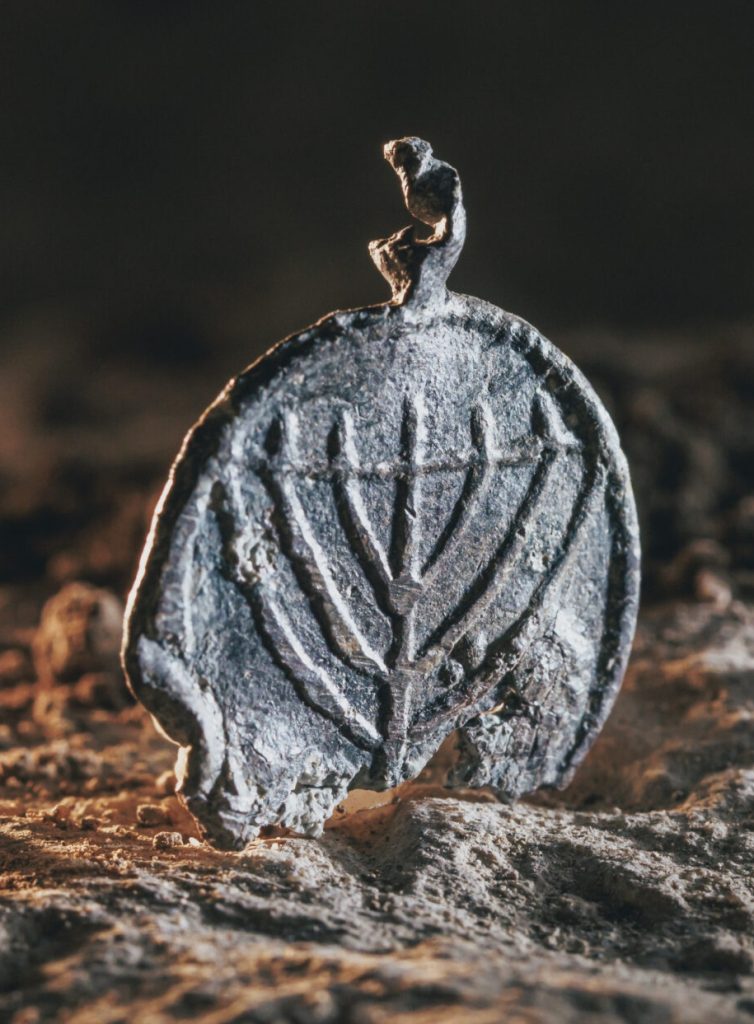
The pendant was excavated from a layer of rubble within a late Byzantine-period building, which was subsequently covered by a thick layer of fill deposited during Umayyad-period construction works. However, during the Byzantine period, Jews were not allowed into the city, let alone within reach of the Temple Mount. Although it is uncertain how the pendant ended up in the building, the archaeologists have a few ideas. The first possibility is that the restriction against Jews was not as complete as written sources suggest, and that the pendant’s owner may have come to the city as a merchant or administrator. Another possibility is that the individual hid their Jewish identity while carrying out a personal pilgrimage.
