Extracts from the BAS article Phoenicia and Its Special Relationship with Israel by Ephraim Stern.
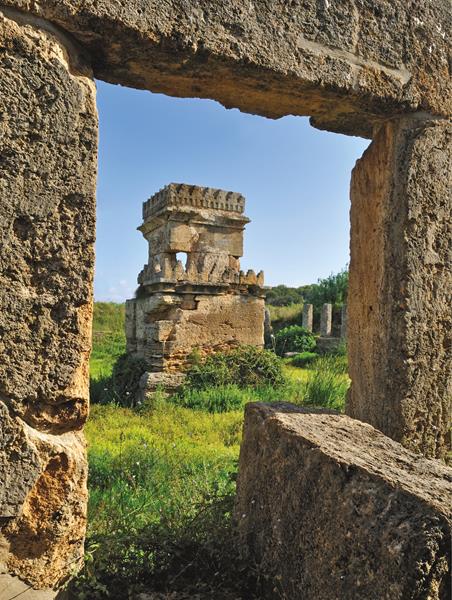
The Phoenicians were the nearest people to the ancient Israelites in every respect. They spoke the same language and wrote in the same script. Even their religion was similar, at least during the First Temple period. The Phoenicians and the Israelites built Jerusalem together, as well as several other cities, and they went on joint trading expeditions. By marriage, Phoenician royal houses and those of Israel and Judea were related. The clearest sign of the close relationship between the two peoples must have been the fact that they never went to war against each other (in complete contrast to the Israelites’ relationship with all their other neighbors).
The Phoenicians were the late Canaanites of the first millennium B.C.E. (Iron Age through Roman period), descendants of the Canaanites of the second millennium B.C.E. (Middle Bronze Age through Late Bronze Age). “Phoenicians” was the name given to this people by the Greeks, but the Phoenicians continued to refer to themselves as Canaanites or by the names of their principal cities.
This Phoenician architecture was adopted and imitated by all the peoples of Palestine—Israelites, Judahites, Philistines and all the peoples of the eastern Jordan. Each of them modified aspects of it, adding some characteristic features of their own. All faithfully followed this style in the public buildings and palaces of their capitals and main towns until the Assyrian conquest at the end of the eighth century B.C.E. The Assyrian conquest of the Israelite monarchy brought an abrupt end to the Phoenician building style. Only in Phoenicia—that is, in the narrow coastal strip running from Lebanon to western Galilee, the Carmel, and the Sharon down to Jaffa and Ashkelon—did this architectural style continue uninterruptedly through the entire Assyrian (700–530 B.C.E.) and Persian periods (530–300 B.C.E.) and perhaps even into the early Hellenistic period (300–100 B.C.E.).

Above all, the Phoenicians were renowned as master craftsmen, and there was a market for their luxury goods across the ancient Mediterranean world. From the ninth to the early sixth centuries B.C.E., the Phoenicians produced decorated objects—especially those associated with cosmetics—made of limestone, alabaster, shell, glass, faience, metals and other materials.
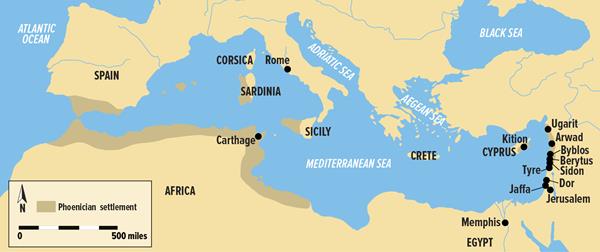
The heartland of Phoenicia was subjugated in turn by the Assyrian, Babylonian, Persian and Hellenistic empires, but their western colonies continued to enjoy autonomy until the second century B.C.E. The Phoenicians’ commercial empire was brought to an end by the Romans who came into conflict with the Phoenicians—whom they described as “Punics”—in a series of wars that became known as the Punic Wars. The Carthaginians had no standing army (they employed mercenaries) and relied on their fleet for defense. The Punic Wars culminated in the Roman destruction of the Punic capital, Carthage, in 146 B.C.E., thereby ending a millennium of Phoenician influence, success and power.
MLA Citation
Stern, Ephraim. “Phoenicia and Its Special Relationship with Israel,” Biblical Archaeology Review 43.6 (2017): 40–48.
