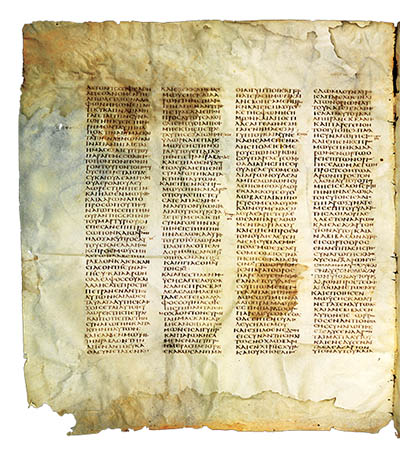
What’s Missing from Codex Sinaiticus, the Oldest New Testament? by Biblical Archaeology Society Staff
Compare differences between the King James Version and Codex Sinaiticus, March 20, 2025.
Extracts from that very good article are listed below.
- Codex Sinaiticus is from St. Catherine’s Monastery. Dating to the mid-fourth century C.E., Codex Sinaiticus is the oldest complete manuscript of the New Testament.
- The Markan Resurrection – (Mark 16: 1–14). Verses 9-14 are not in the Codex.
- The Lord’s Prayer, Matthew 6:9–13: The Codex does not have the benediction.
- The woman caught in adultery, John 7:53–8:11 is not in the Codex.
Significant omitted verses
| King James Version | Codex Sinaiticus |
| Luke 24:51: “And it came to pass, while he blessed them, he was parted from them, and carried up into heaven.” | Luke 24:51 Omits “carried up into heaven.” Leaving no ascension in the Gospels. |
| Mark 1:1: “The beginning of the gospel of Jesus Christ, the Son of God;” | Mark 1:1 Adds the phrase “the Son of God” only above the line, as a later addition. |
| Luke 9:55–56: “But he turned, and rebuked them, and said, Ye know not what manner of spirit ye are of. For the Son of man is not come to destroy men’s lives, but to save them. And they went to another village.” | Luke 9:55–56: “But he turned and rebuked them. And they went to another village.” |
For further reading at BAR see:
Who Owns the Codex Sinaiticus? – How the monks at Mt. Sinai got conned
Why Is Sinaiticus Significant?
Codex Sinaiticus, written around the middle of the fourth century A.D., is arguably the earliest extant Christian Bible. It contains the earliest complete copy of the New Testament. Only one other nearly complete manuscript of the Christian Bible—the Codex Vaticanus—is of a similarly early date. The only Christian manuscripts of scripture that are definitely of an earlier date contain relatively small portions of the text.
Codex Sinaiticus represents one of the most important witnesses to the Greek text of the Septuagint and the New Testament. It is customarily given primacy of position in the lists of surviving manuscripts consulted for establishing the oldest text of these two traditions and is usually represented as “ℵ“ or ”01” for the New Testament. The Codex Sinaiticus is relevant not only for the history of the text of the Septuagint and New Testament, but also for the history of many layers of later revisions to the text made by generations of correctors.